

Salt Spreaders

Pay in 3 interest-free payments on purchases from £20-£3000 with  . Learn more.
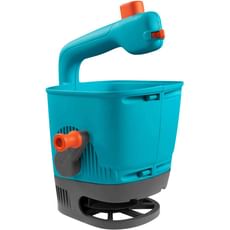
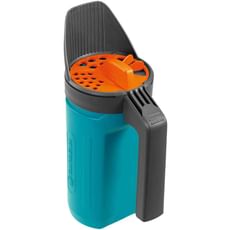
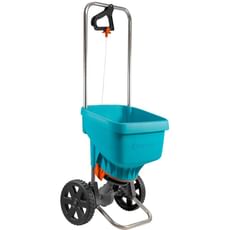
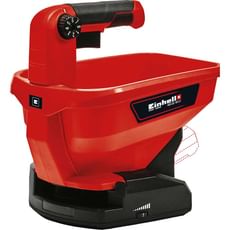

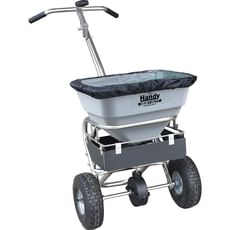
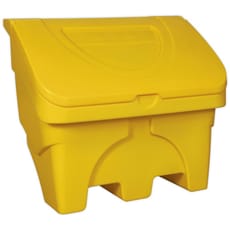
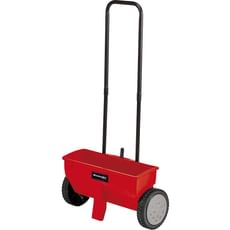
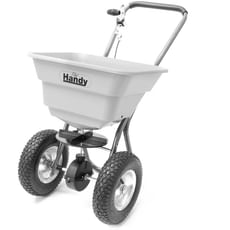
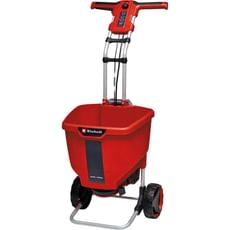
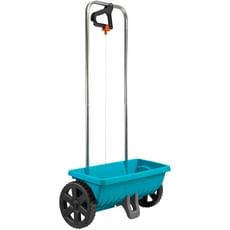
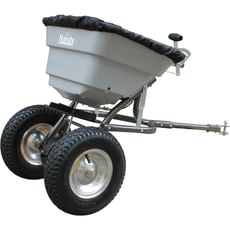
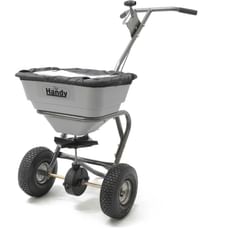
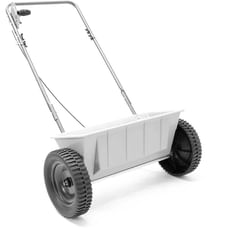
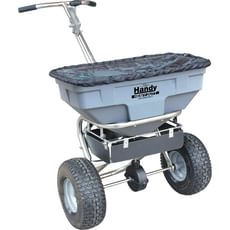
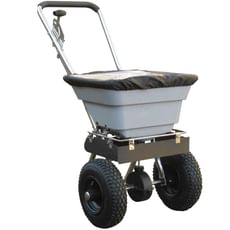
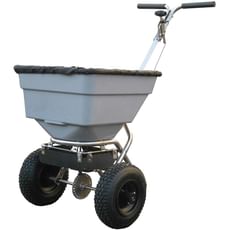
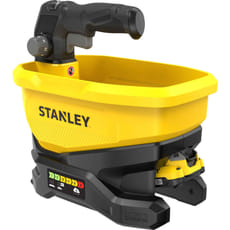
Stanley FatMax V20 STCOE300 18v Cordless Salt, Seed or Fertiliser Spreader
in stock





 Loading...
End of content
Error - No more pages to load
About Salt Spreaders
Salt spreaders are essential tools for maintaining safe surfaces during winter months and for various ground maintenance tasks throughout the year. These versatile machines distribute materials such as rock salt, grit, fertiliser, grass seed, and lawn treatment products evenly across surfaces including driveways, pathways, car parks, roads, and lawns. While their primary association is with winter gritting to prevent ice formation, modern salt spreaders serve multiple purposes for both professional groundskeepers and property maintenance teams.
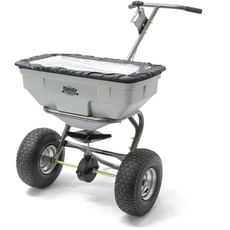
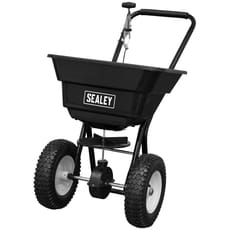
The selection at Tooled-Up.com includes push spreaders for smaller areas and pedestrian operation, broadcast spreaders that disperse materials in a wide arc for efficient coverage, drop spreaders that provide precise application in a contained pattern, and towable models designed to be attached to vehicles for covering extensive areas. Available from leading brands including Handy, Sealey, Gardena, Einhell, and Draper, these spreaders range from compact hand-held units perfect for domestic driveways to heavy-duty stainless steel models built for commercial winter maintenance operations.
When selecting a salt spreader, it's important to verify that your chosen model is compatible with the materials you intend to use. Not all spreaders can handle coarse rock salt or grit, with some designed specifically for fine materials like fertiliser or seed. Capacity, construction materials, and spread width are key considerations, alongside whether you need adjustable flow control for varying application rates across different tasks.
Jargon Buster
- Broadcast Spreader: A spreader that distributes material in a wide, fan-shaped pattern using a rotating disc or impeller. Ideal for covering large areas quickly, typically with a spread width of 1-4 metres depending on the model and walking speed.
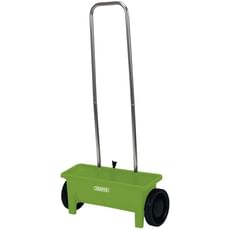
- Drop Spreader: A precision spreader that deposits material directly downward in a controlled strip matching the width of the hopper. Preferred for targeted applications where material must not stray onto adjacent areas such as flower beds or paving.
- Hopper Capacity: The volume of material the spreader can hold, typically measured in litres. Domestic models usually range from 3-12 litres, whilst professional and towable units may exceed 50 litres for extended operation between refills.
- Flow Rate/Spread Rate: The adjustable mechanism that controls how much material is dispensed as you operate the spreader. Most quality models feature calibrated settings to achieve consistent application density across different materials.
- Agitator: A mechanism inside the hopper that prevents material from clumping or bridging, ensuring consistent flow particularly when using damp or compacted materials like rock salt.
- Pneumatic Wheels: Air-filled tyres that provide better traction and manoeuvrability on uneven surfaces compared to solid polypropylene wheels, though they require occasional inflation checks.
Who Uses Salt Spreaders?
Salt spreaders are employed by a diverse range of professionals and property owners:
- Local authority highways maintenance teams and winter gritting services
- Facilities management companies responsible for commercial premises
- Groundskeepers and landscape gardeners for both winter gritting and lawn care
- Car park operators and shopping centre management teams
- School caretakers and educational facility maintenance staff
- Agricultural workers applying fertiliser and seed across fields
- Industrial site managers maintaining safe access routes
- Property maintenance contractors serving multiple clients
- Homeowners with extensive driveways, patios, or lawn areas
- Sports ground maintenance teams for pitch treatment
- Parish councils and community volunteers maintaining public spaces
How to Choose the Right Salt Spreaders
Area Size and Coverage: For domestic driveways and small paths, a push spreader with a 3-12 litre hopper provides adequate capacity. Larger properties, car parks, or commercial applications benefit from 20+ litre capacity models or towable spreaders that can cover several thousand square metres per hopper fill.
Material Compatibility: Verify that your chosen spreader can handle the materials you'll use most frequently. Rock salt and coarse grit require robust construction with corrosion-resistant components, whilst fine fertiliser or seed demands precision flow control. Some models at Tooled-Up.com feature stainless steel construction specifically for salt applications, offering superior longevity against corrosion.
Spreader Type: Broadcast spreaders excel at efficiency over large open areas, whilst drop spreaders provide precision for lawns and areas adjacent to sensitive plantings. Hand-held models suit occasional domestic use, push spreaders serve regular property maintenance, and towable models are essential for extensive coverage with vehicle assistance.
Build Quality and Durability: Consider the frame material (aluminium offers strength with light weight), hopper construction (stainless steel or heavy-duty polypropylene), and wheel type (pneumatic for rough terrain, solid for smooth surfaces). Heavy-duty models justify their investment through extended service life in demanding professional applications.
Adjustability and Control: Look for spreaders offering adjustable spread width and flow rate settings, allowing you to calibrate application for different materials and desired coverage rates. This versatility prevents waste and ensures optimal results whether spreading salt, seed, or fertiliser.
Storage and Transport: Evaluate the spreader's dimensions when considering storage space. Some models feature folding handles or detachable components for compact storage during off-season periods. Weight is also relevant if you'll regularly transport the unit between sites.
Popular Accessories
- Rock Salt and De-Icing Grit: The primary consumables for winter applications, available in various grades and bag sizes
- Weatherproof Covers: Protective covers for storing spreaders outdoors or shielding materials in the hopper from moisture
- Replacement Wheels: Spare pneumatic tyres or solid wheels to maintain manoeuvrability
- Calibration Kits: Tools for accurately setting spread rates for different materials
- Storage Bins: Weatherproof containers for bulk material storage near application areas
- Corrosion Protection Sprays: Protective coatings to extend spreader life when used with corrosive materials
- Lawn Fertilisers and Treatments: Seasonal feeds, weed and moss killers for multi-season spreader use
- Grass Seed: Various seed mixes for lawn repair and establishment
Safety Information
Material Handling: Rock salt and chemical fertilisers can cause skin irritation and eye damage. Always wear appropriate PPE including gloves and safety glasses when filling spreaders and during application. Avoid contact with skin and wash hands thoroughly after use.
Manual Handling: Filled spreaders can be heavy, particularly larger capacity models. Use proper lifting techniques when manoeuvring, and never overfill beyond the manufacturer's recommended capacity. On slopes, maintain control and consider working across gradients rather than up and down steep inclines.
Environmental Considerations: Excessive salt application damages vegetation, contaminates watercourses, and accelerates corrosion of vehicles and infrastructure. Apply only the minimum effective quantity, avoid spreading near drainage gullies leading to streams, and keep materials away from plant roots and lawn edges.
Storage Safety: Store salt and chemical materials in dry, covered areas away from metal tools to prevent corrosion. Keep all ground treatment products away from children and pets, and follow COSHH guidelines when storing quantities for commercial use. Clean spreaders thoroughly after use to prevent material build-up and corrosion.
Frequently Asked Questions
Can I use the same spreader for both salt and lawn fertiliser?
Yes, provided you thoroughly clean the spreader between applications. Salt residue can damage lawns if subsequently mixed with fertiliser. Rinse the hopper and mechanisms with water after salt use, dry completely, and verify all salt crystals are removed before switching to lawn care products.
What's the difference between a broadcast spreader and a drop spreader?
Broadcast spreaders distribute material in a wide arc for quick coverage of large open areas, whilst drop spreaders deposit material in a precise strip directly beneath the hopper. Choose broadcast for efficiency on driveways and car parks, drop spreaders for accurate lawn treatment where overspray onto paths or borders must be avoided.
How much area will one hopper fill cover?
Coverage depends on hopper capacity, material type, and spread rate setting. As a general guide, a 12-litre hopper might cover 100-200 square metres with rock salt at winter gritting rates, or treat a similar-sized lawn with fertiliser. Adjust flow rate settings to balance coverage against application density for your specific requirements.
Do I need a stainless steel spreader for salt applications?
Stainless steel construction significantly extends service life when regularly spreading rock salt, which is highly corrosive. Standard aluminium frames with polypropylene hoppers perform adequately for occasional winter use if thoroughly cleaned and dried after each application. Professional users spreading salt frequently should invest in stainless steel models available from Tooled-Up for superior durability.
Can cordless spreaders handle rock salt?
Battery-powered spreaders such as cordless models from Einhell offer convenient operation without pushing, and many are suitable for salt applications. Check the manufacturer's specifications to confirm rock salt compatibility, as some cordless units are optimised for lighter materials like seed and fine fertiliser rather than coarse, abrasive grit.