

Sander Stands
Pay in 3 interest-free payments on purchases from £30-2000 with  . Learn more.

 Loading...
End of content
Error - No more pages to load
About Sander Stands
Sander stands are specialised accessories designed to transform handheld belt sanders into stable, stationary sanding workstations. These ingenious devices provide a secure mounting platform that allows woodworkers, joiners, and DIY enthusiasts to bring the workpiece to the sander rather than manoeuvring the tool across large surfaces. By converting a portable belt sander into a bench-mounted unit, sander stands enable precision work on smaller components, sharpen tools, and tackle detailed finishing tasks that would be difficult or dangerous to perform freehand.
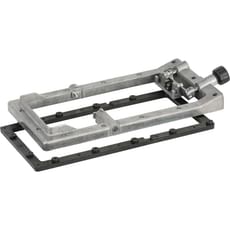
The range available from Tooled-Up.com includes sanding frames and support columns designed to work with popular belt sander models from manufacturers like Bosch Professional and Draper. Sanding frames typically attach directly to the sander body, creating a stable base that prevents tilting and ensures uniform material removal across wooden surfaces. These frames often feature tool-free assembly and may include protective inserts to safeguard delicate work surfaces. Support columns and dedicated stands elevate belt linishers to a comfortable working height, transforming them into permanent workshop fixtures ideal for shaping, smoothing, and finishing work.
Whether you're a professional cabinet maker requiring consistent surface preparation across multiple components, or a keen hobbyist looking to maximise the versatility of existing power tools, sander stands represent an economical way to expand your workshop capabilities without investing in dedicated stationary machinery. They're particularly valuable in smaller workshops where space is at a premium, allowing a single belt sander to perform double duty as both a portable finishing tool and a bench-mounted precision sanding station.
Jargon Buster
- Belt Linisher: A stationary sanding machine featuring a continuous abrasive belt running over two or more drums, used for shaping and finishing work. Often used interchangeably with belt sander when referring to bench-mounted configurations.
- Sanding Frame: A support structure that attaches to a handheld belt sander, providing a flat base that maintains consistent contact with the work surface and prevents tilting during operation.
- Support Column: A vertical mounting post that elevates a belt sander or linisher to bench height, converting it into a dedicated stationary sanding station with improved ergonomics.
- Uniform Removal Rate: The consistent amount of material removed across the entire surface being sanded, achieved through stable tool positioning and even pressure distribution provided by a sanding frame.
- Tool-Free Assembly: Design features allowing the stand or frame to be attached to the sander without requiring spanners, screwdrivers, or other tools, typically using quick-release clamps or twist-lock mechanisms.
- Platen Sanding: A sanding technique where the abrasive belt is supported by a flat backing plate (platen), ensuring flat, even results on workpieces—often facilitated by using sander stands with proper support structures.
Who Uses Sander Stands?
- Joiners and Cabinet Makers: For consistent surface preparation and precise edge finishing on furniture components and architectural woodwork.
- Carpenters and Chippies: Smoothing timber components, removing paint or varnish, and achieving flat surfaces on door frames and window components.
- Wood Turners: Shaping and finishing turned items, sharpening turning tools, and smoothing curved surfaces with controlled precision.
- Guitar Makers and Luthiers: Precise shaping of wooden instrument components where consistency and control are paramount.
- Model Makers: Fine detail work on smaller components that require the workpiece to be brought to a stationary sanding surface.
- DIY Enthusiasts: Home workshop users looking to maximise tool versatility and expand sanding capabilities without purchasing dedicated stationary machinery.
- Restoration Specialists: Furniture restorers and antique refinishers requiring controlled material removal on delicate or valuable pieces.
- Metal Fabricators: For deburring, finishing welds, and preparing metal surfaces when used with appropriate abrasive belts.
How to Choose the Right Sander Stands
Compatibility: The most critical factor is ensuring the stand or frame is designed to fit your specific belt sander model. Check manufacturer specifications carefully—sanding frames from Bosch Professional, for example, are engineered to fit particular GBS series sanders. Universal stands may offer adjustable mounting options but always verify compatibility before purchasing.
Construction Quality: Look for stands manufactured from robust materials such as cast iron, heavy-gauge steel, or reinforced aluminium. A stable base is essential for safety and precision—the stand must resist vibration and movement during operation. Check weight capacity specifications if you'll be using larger, heavier belt sanders.
Adjustment Features: Consider whether you need height adjustment, angle adjustment, or variable positioning. Support columns with multiple mounting positions allow you to configure the sander for different tasks, whilst tiltable platforms enable bevel sanding and compound angles.
Workspace Footprint: Assess the stand's dimensions against your available bench or floor space. Folding or detachable designs offer flexibility in smaller workshops, whilst permanent installations provide maximum stability for professional environments.
Assembly Method: Tool-free assembly systems save time and allow quick transitions between handheld and bench-mounted configurations. This is particularly valuable if you frequently need your sander in both portable and stationary applications.
Additional Features: Protective inserts prevent damage to work surfaces, integrated dust extraction ports improve workshop cleanliness, and brush attachments help maintain belt condition. These extras enhance usability and may justify a higher initial investment.
Popular Accessories
- Sanding Belts: Various grit grades from coarse (40-60 grit) for rapid stock removal to fine (180-320 grit) for finishing work, available in different widths to suit your sander.
- Dust Extraction Hoses: Connect your belt sander to workshop vacuum systems for cleaner, healthier working conditions.
- Clamping Systems: Bench clamps and vice attachments to secure workpieces safely whilst sanding.
- Work Lights: Adjustable LED task lighting to illuminate the sanding area for precision work.
- Push Sticks and Blocks: Safety devices to guide small workpieces past the abrasive belt whilst keeping fingers at a safe distance.
- Graphite Stick: Used to clean and maintain sanding belts, extending their working life and preventing loading.
- Bench Mats: Anti-slip rubber matting to protect work surfaces and prevent workpiece movement.
- Replacement Parts: Spare drive belts, switches, and carbon brushes to maintain your sander in peak condition.
Safety Information
Always ensure your belt sander is disconnected from the 240v mains supply before mounting or removing it from a stand. Secure all locking mechanisms fully before operation—an inadequately fastened sander can vibrate loose with potentially dangerous consequences. Wear appropriate PPE including safety glasses or a face shield to protect against flying particles, and consider hearing protection as belt sanders generate significant noise levels, particularly in enclosed workshop environments.
Ensure adequate dust extraction or ventilation, as fine wood dust poses respiratory hazards and certain hardwoods can cause allergic reactions. The HSE provides guidance on wood dust exposure limits—aim to minimise airborne particles through effective extraction systems. Never wear loose clothing, gloves, or jewellery that could become caught in the moving belt. When using a bench-mounted configuration, always feed workpieces against the direction of belt travel to maintain control.
Check that the sander stand is positioned on a stable, level surface and securely fastened to your workbench if permanent mounting is intended. Inspect sanding belts before each use for tears, fraying, or excessive wear—damaged belts can disintegrate at high speed. Keep both hands clear of the abrasive belt during operation, using push sticks for smaller workpieces. Ensure the work area is well-lit and free from obstructions that might cause you to lose balance or control.
Frequently Asked Questions
Can I use any belt sander with a universal sander stand?
Whilst some stands offer adjustable mounting systems designed to accommodate multiple sander models, compatibility isn't guaranteed across all brands and sizes. Belt sander dimensions, mounting hole positions, and handle configurations vary significantly between manufacturers. Always check the stand's specifications for compatible models before purchasing. Tooled-Up stocks dedicated sanding frames designed for specific models like the Bosch GBS 75 series, which ensure perfect fit and optimal performance.
Do sander stands improve the quality of finished surfaces?
Yes, considerably. By eliminating the variables associated with handheld operation—inconsistent pressure, unintended tilting, and operator fatigue—sander stands deliver more uniform material removal and flatter finished surfaces. The stable platform is particularly beneficial when sanding multiple identical components, ensuring consistency across batches. For fine finishing work and precision edge treatment, a bench-mounted configuration provides far superior control compared to freehand techniques.
Are sanding frames suitable for professional workshop use?
Absolutely. Professional joiners, cabinet makers, and woodworking businesses regularly use sanding frames and support columns to expand workshop capabilities cost-effectively. They're particularly valuable in smaller professional workshops where dedicated floor-standing linishers aren't practical. The key is selecting robust, well-engineered stands appropriate for daily commercial use rather than lightweight hobby-grade alternatives. Brands like Bosch Professional and Draper offer stands built to withstand the demands of trade environments.
Can I leave my belt sander permanently mounted on a stand?
Yes, provided the stand is designed for permanent installation and you don't require the sander for portable applications. Many tradespeople maintain separate sanders—one bench-mounted for stationary work and another kept portable for site work. If you do switch between configurations regularly, prioritise stands with tool-free assembly systems that make attachment and removal quick and straightforward without compromising security.
What maintenance do sander stands require?
Sander stands require minimal maintenance beyond keeping mounting surfaces clean and free from sawdust accumulation, which can prevent secure fitting. Periodically check all fasteners and locking mechanisms for tightness, as vibration during operation can gradually loosen connections. If your stand features moving parts such as height adjustment columns or tilt mechanisms, occasional lubrication with light machine oil maintains smooth operation. Inspect the stand regularly for cracks, excessive wear, or damage that might compromise stability.