

Sanding Sheets
Pay in 3 interest-free payments on purchases from £30-2000 with  . Learn more.
 Loading...
End of content
Error - No more pages to load
About Sanding Sheets
Sanding sheets are essential abrasive accessories designed to fit a wide variety of power sanders, enabling smooth surface preparation across wood, metal, plastic, and painted surfaces. Whether you're stripping back old finishes, smoothing timber before staining, or achieving a flawless final finish on cabinetry, the right sanding sheet makes all the difference between professional results and a patchy, uneven surface. Available in numerous grit ratings, backing materials, and fixing systems, sanding sheets must match both your sander model and the material you're working with to deliver optimal performance.
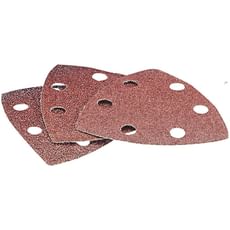
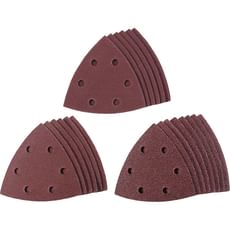
Tooled-Up.com organises sanding sheets into specialist subcategories including delta sanding sheets for detail sanders, mouse sanding sheets for compact palm sanders, multi-tool sanding sheets for oscillating tools, and orbital sanding sheets for random orbital and sheet sanders. Each category features precise dimensions and fixing methods—whether hook-and-loop (Velcro-style), clip-on, or punch-hole systems—ensuring compatibility with popular brands such as Makita, DeWalt, Bosch, Festool, and Milwaukee. Understanding which format suits your sander model prevents frustration on site and ensures you're not left with unusable sheets.
The performance of sanding sheets depends heavily on grit selection and abrasive material. Coarse grits (40-80) remove material quickly for initial stripping and shaping, medium grits (100-150) prepare surfaces for finishing, and fine grits (180-320) create smooth, paint-ready surfaces. Premium sheets feature aluminium oxide, silicon carbide, or ceramic abrasives bonded to paper, cloth, or mesh backing, with anti-clog coatings extending their working life when dealing with resinous softwoods or paint removal.
Jargon Buster
- Grit Rating: The number indicating abrasive particle size—lower numbers (coarser grits) remove material aggressively, whilst higher numbers (finer grits) produce smoother finishes. Common ranges span from 40 grit for heavy stock removal to 320 grit for final finishing.
- Hook-and-Loop (H&L): A Velcro-style fixing system allowing quick sheet changes without tools. The sander baseplate features loops whilst the sheet backing has hooks, creating a secure yet removable bond popular on modern orbital and delta sanders.
- Stearate Coating: An anti-clog treatment applied to abrasive surfaces that prevents dust, resin, and paint particles from binding to the grit. This extends sheet life significantly when sanding softwoods, MDF, or removing old finishes.
- Open Coat: Abrasive particles covering 50-70% of the backing material, leaving gaps that reduce clogging when sanding resinous woods or painted surfaces. Contrasts with closed coat (100% coverage) used for harder materials requiring aggressive cutting.
- Mesh Backing: Perforated net-style backing material replacing traditional paper or cloth, offering superior dust extraction through the entire sheet surface. Particularly effective on sanders with multi-hole dust collection patterns.
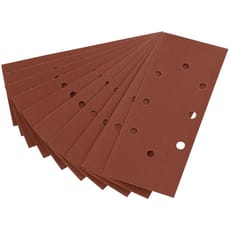
- Punched Pattern: Pre-drilled holes matching specific sander baseplate configurations, enabling efficient dust extraction through the sander's vacuum system. Common patterns include 6-hole, 8-hole, and multi-hole designs specific to manufacturer models.
Who Uses Sanding Sheets?
- Carpenters and Joiners: Preparing timber before assembly, smoothing joints, and finishing bespoke furniture and architectural woodwork
- Kitchen and Bedroom Fitters: Finishing cabinet edges, removing minor imperfections, and preparing surfaces for painting or lacquering
- Decorators and Painters: Creating smooth, paint-ready surfaces, keying existing paintwork, and removing old finishes between coats
- Shopfitters: Preparing retail fixtures, smoothing display units, and finishing visible timber elements
- Floor Layers: Light sanding of wooden flooring edges and difficult-to-reach corners where larger floor sanders cannot access
- Automotive Refinishers: Preparing bodywork panels, feathering paint edges, and achieving smooth primer surfaces before final coatings
- Furniture Restorers: Removing old finishes, preparing antique pieces for refinishing, and achieving period-appropriate surface textures
- DIY Enthusiasts: Home improvement projects including furniture upcycling, door preparation, and general surface smoothing tasks
How to Choose the Right Sanding Sheets
Match Your Sander Model: Identify whether you need delta, mouse, orbital, or multi-tool sheets by checking your sander's baseplate shape and dimensions. Manufacturers specify compatible sheet types in user manuals, and using incorrectly sized sheets leads to poor results and potential damage to the baseplate.
Select Appropriate Grit: Start with coarser grits (60-80) for paint stripping or heavy material removal, progress through medium grits (100-120) for general smoothing, and finish with fine grits (180-240) before painting or staining. Purchase multiple grit ratings for complete projects rather than attempting all stages with a single sheet.
Consider Fixing Method: Hook-and-loop sheets offer convenience and quick changes but cost slightly more than clip-on or punched varieties. For high-volume professional work, the time saved with hook-and-loop systems justifies the investment, whilst occasional users may prefer economical clip-on options.
Assess Dust Extraction Needs: If your sander connects to a vacuum system, ensure sheets feature appropriate hole patterns or mesh backing. The range at Tooled-Up includes multi-hole patterns compatible with various extraction systems, significantly reducing airborne dust on site and improving visibility during sanding.
Material-Specific Selection: Aluminium oxide suits general woodworking, silicon carbide handles metal and plastics effectively, whilst ceramic abrasives deliver extended life on hardwoods and demanding applications. Anti-clog coatings prove essential when working with softwoods, MDF, or removing painted surfaces.
Quantity Considerations: Multi-packs offer better value for tradespeople completing regular sanding tasks, whilst mixed grit assortments suit DIY users tackling varied projects. Calculate sheet life based on surface area and material hardness to avoid mid-project shortages.
Popular Accessories
- Dust Extraction Hoses: Connecting sanders to workshop vacuums for cleaner working environments and improved sheet visibility
- Interface Pads: Cushioned backing pads that soften sanding action on contoured surfaces and extend sheet life on uneven materials
- Sanding Blocks: Hand-held holders for sheet offcuts, enabling manual sanding in tight corners and edges
- Sheet Punches: Tools for creating custom hole patterns in universal sheets to match specific sander baseplate configurations
- Detail Sanders: Compact power tools designed specifically for delta and mouse sanding sheets in confined spaces
- Random Orbital Sanders: Versatile power sanders accepting circular or rectangular sheet formats for swirl-free finishing
- Dust Masks and Respirators: Essential PPE protecting against fine dust particles, particularly when sanding MDF or treated timber
- Sanding Sheet Storage Cases: Organised storage preventing sheet damage and keeping different grits separated and easily identifiable
Safety Information
Always wear appropriate dust masks or respirators when sanding, as fine particles pose serious respiratory hazards, particularly when working with MDF, treated timber, or painted surfaces containing historic lead-based finishes. The HSE recommends RPE (Respiratory Protective Equipment) rated at least FFP2 for woodworking dust, with FFP3 protection necessary when sanding materials of unknown composition.
Connect sanders to suitable dust extraction systems whenever possible, dramatically reducing airborne particles and improving visibility. Ensure extraction hoses don't create trip hazards on site, and regularly empty vacuum bags before they reach capacity to maintain suction efficiency.
Inspect sanding sheets before fitting to sanders, discarding any torn or excessively worn sheets that may fragment during use. Damaged sheets can cause uneven sanding patterns and potentially damage workpiece surfaces, whilst fragments may become entangled in the sander mechanism.
Allow sanders to reach full speed before contacting work surfaces, and avoid excessive pressure that generates heat and premature sheet wear. Let the abrasive do the work—heavy-handed sanding creates deep scratches requiring additional finishing stages and wastes both sheets and time.
Store sanding sheets in dry conditions away from moisture, which weakens paper-backed varieties and reduces abrasive effectiveness. Damp sheets may disintegrate during use or cause rust formation on sander baseplates, particularly on older cast-metal models.
Frequently Asked Questions
What's the difference between hook-and-loop and punched sanding sheets?
Hook-and-loop (Velcro-style) sheets attach via a reusable backing system allowing instant changes without tools, whilst punched sheets use mechanical clips or clamps and specific hole patterns for dust extraction. Hook-and-loop offers convenience for frequent grit changes but costs more per sheet, whereas punched varieties provide economical options for extended single-grit sessions. Most modern sanders from brands available at Tooled-Up accept hook-and-loop fitting, though some professional models retain clip systems for maximum sheet security during aggressive material removal.
How do I know which grit to start with?
Assess your surface condition first—heavy paint, varnish, or rough timber requires coarse grits (40-80), lightly finished wood or minor imperfections suit medium grits (100-120), whilst final smoothing before staining or painting demands fine grits (180-240). Never jump directly from coarse to very fine grits, as this leaves visible scratch patterns; instead, progress through consecutive grits (for example, 80 to 120 to 180) for professional results. When uncertain, start with 100 grit for general purpose smoothing.
Why do my sanding sheets clog quickly?
Clogging occurs when dust, resin, or paint particles fill the gaps between abrasive grains, preventing further cutting action. Softwoods, MDF, and paint removal generate particularly sticky debris that binds to standard sheets. Solutions include choosing sheets with stearate anti-clog coating, selecting open-coat abrasives with deliberate gaps between grains, using mesh-backed sheets with superior dust clearance, and ensuring your dust extraction system maintains adequate suction. Applying less pressure also reduces heat buildup that softens resins and accelerates clogging.
Can I use orbital sanding sheets on other sander types?
Sanding sheets are specifically sized and shaped for particular sander models—orbital sheets won't fit delta or mouse sanders, and forcing incompatible sheets risks damaging both the sheet and sander baseplate. Always verify dimensions and fixing methods before purchasing. Some suppliers offer universal sheets requiring manual cutting and hole punching, but pre-cut sheets matched to your specific sander model deliver better results with less preparation time. Check your sander's manual or baseplate markings to identify the correct sheet format.
How many sheets do I need for a typical project?
Sheet consumption depends on surface area, material hardness, and required finish quality. As a rough guide, sanding a standard internal door through three grit stages (100, 150, 220) typically requires 2-3 sheets per grit, whilst refinishing a dining table may consume 5-6 sheets across similar stages. Hardwoods and aggressive material removal increase consumption, whilst maintenance sanding of previously finished surfaces requires fewer sheets. Purchase slight excess to avoid project delays, particularly when working with mixed grit assortments that provide economical coverage across typical joinery and decorating tasks.