

Sash Clamps

Pay in 3 interest-free payments on purchases from £20-£3000 with  . Learn more.
 Loading...
End of content
Error - No more pages to load
About Sash Clamps
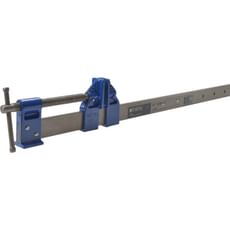
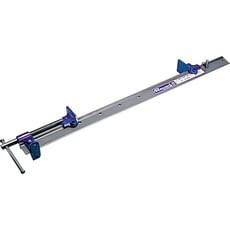
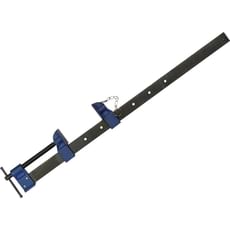
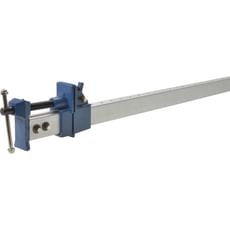
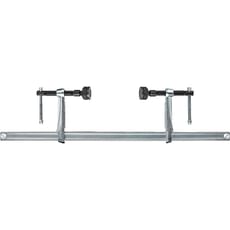
Sash clamps are essential heavy-duty clamping tools designed for securing large workpieces during assembly, gluing, and joinery work. Named after their traditional use in manufacturing window and door sashes, these robust clamps feature an extended metal bar with a fixed jaw at one end and an adjustable jaw that slides along the bar's length. The adjustable jaw typically locks into position using pre-drilled holes along the bar, allowing quick repositioning before final tightening with a threaded screw mechanism. This design makes them indispensable for woodworkers, joiners, and furniture makers working on projects that exceed the capacity of standard G-clamps or quick-grip clamps.
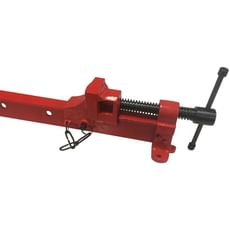
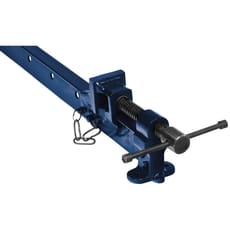
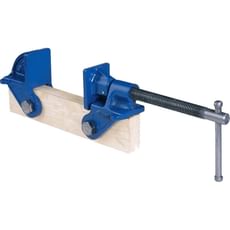
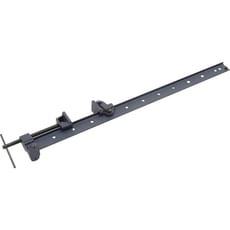
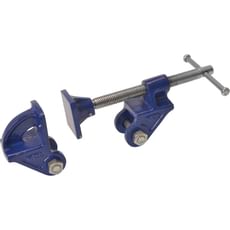
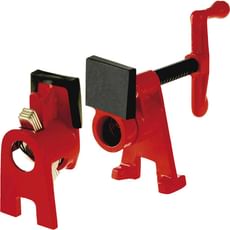
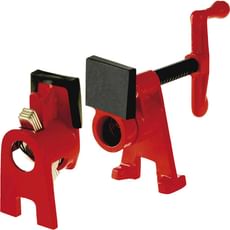
The selection available from Tooled-Up.com includes traditional steel sash clamps for maximum rigidity, lightweight aluminium versions for improved portability, and T-bar designs that offer enhanced stability when clamping wider panels. Many models feature pre-drilled mounting holes in the fixed jaw, enabling them to be bolted directly to workbenches for use as bench stops or edge-clamping stations. For professionals working across multiple sites or in smaller workshops where storage space is at a premium, clamp heads present an economical alternative – these standalone jaw assemblies attach to user-supplied bar stock, such as steel pipe or timber lengths, creating custom-length clamps as needed.
Quality sash clamps from trusted manufacturers like Bessey, Record, Faithfull, and Draper provide the clamping pressure and durability required for professional applications. Whether assembling kitchen worktops, gluing up solid wood panels, or holding large framework assemblies during construction, these clamps deliver consistent, reliable performance. The Tooled-Up range includes options suitable for occasional DIY use through to heavy-duty workshop models built for daily professional deployment.
Jargon Buster
- Throat Depth: The distance from the clamping face to the back of the bar, determining how far into a workpiece the clamp can reach. Typical throat depths range from 80mm to 120mm.
- Clamp Heads: Separate jaw assemblies that attach to user-supplied bar stock (steel pipe or timber) to create custom-length sash clamps. Offers flexibility and cost savings compared to purchasing multiple fixed-length clamps.
- Fixed Jaw: The stationary jaw at one end of the sash clamp bar, often incorporating mounting holes for bench attachment and the main screw mechanism.
- Sliding Jaw: The moveable jaw that positions along the bar's length using pre-drilled holes or a continuous track, allowing quick adjustment to accommodate different workpiece sizes.
- T-Bar Construction: A bar profile shaped like an inverted "T" rather than a flat bar, providing increased rigidity and reducing flexing under heavy clamping pressure, particularly important for spans exceeding 1200mm.
- Clamping Capacity: The maximum opening distance between jaws when fully extended, typically ranging from 600mm to 2000mm or more, depending on bar length.
Who Uses Sash Clamps?
- Joiners and Carpenters: For assembling door frames, window sashes, staircases, and large timber frameworks on-site and in workshops
- Furniture Makers and Cabinet Makers: Essential for gluing up solid wood panels, clamping table tops, and assembling carcasses and frameworks
- Shopfitters: For holding retail fixtures, display units, and bespoke joinery during installation and assembly
- Boat Builders: Clamping curved laminations, hull panels, and large marine joinery assemblies
- Set Builders and Theatre Workshop Staff: Assembling scenery flats, stage frameworks, and prop construction
- Window and Door Manufacturers: Traditional use in producing timber windows, doors, and conservatory components
- Educational Workshops: Schools, colleges, and training centres teaching woodworking and joinery skills
- Serious DIY Enthusiasts: Home workshop users tackling larger woodworking projects requiring extended clamping capacity
How to Choose the Right Sash Clamps
Clamping Capacity Requirements: Assess the maximum width of projects you typically undertake. Standard lengths range from 600mm to 2000mm, though clamp heads allow unlimited custom lengths. Remember to allow extra capacity beyond your workpiece size for positioning clamps at optimal angles.
Material Construction: Steel sash clamps offer maximum rigidity and durability for heavy workshop use but weigh considerably more than aluminium alternatives. If portability is important or you frequently transport clamps between workshop and site, aluminium models significantly reduce carrying weight whilst maintaining adequate strength for most applications. T-bar profiles provide superior rigidity compared to flat bars, particularly important for longer spans.
Fixed Length vs. Clamp Heads: Complete sash clamps provide immediate use and guaranteed rigidity, whilst clamp head sets at Tooled-Up offer economical flexibility for creating multiple custom-length clamps using steel pipe (typically DN20/R3/4" or DN15/R1/2" outer diameter) or timber bar stock. Bear in mind that timber bars may warp over longer distances and won't match the performance of purpose-made metal bars.
Throat Depth: Consider how far into your workpiece you need to reach. Standard throat depths of 80-120mm suit most applications, but deeper throats allow clamping further from edges when working with wide panels or when positioning clamps to avoid obstructions.
Quantity Required: Most glue-up and assembly operations require multiple clamps working in pairs or sets. Four to six clamps often represents a practical minimum for workshop use, allowing adequate pressure distribution across large assemblies whilst maintaining flat, square alignment.
Quick-Action Features: Some models incorporate quick-release mechanisms for rapid jaw adjustment, saving considerable time when working on production runs or projects requiring frequent repositioning.
Popular Accessories
- Clamp Pads and Protective Blocks: Softwood or plastic pads prevent jaw marks on finished surfaces and distribute pressure more evenly
- Steel Pipe Stock: For use with pipe clamp heads – DN20 and DN15 diameter pipes cut to required lengths
- Bench Dogs and Bench Stops: Work in conjunction with mounted sash clamps for comprehensive workpiece securing
- PVA Wood Adhesive: The primary glue used in applications requiring sash clamp pressure
- Bar Clamps and F-Clamps: Complementary clamping tools for lighter-duty work and edge clamping
- Quick-Grip Clamps: One-handed operation for positioning work before applying sash clamp pressure
- Winding Sticks and Straight Edges: For checking flatness and alignment during glue-up operations
- Workbenches and Trestles: Stable platforms essential for effective sash clamp use
Safety Information
Load Limits and Proper Use: Never exceed the manufacturer's specified clamping force. Over-tightening can damage workpieces, distort timber assemblies, or cause clamp failure. Apply firm, steady pressure – excessive force indicates improper joint preparation rather than requiring more clamping pressure.
Stability and Positioning: Always ensure sash clamps and workpieces are adequately supported on stable surfaces. Long clamps can become top-heavy when extended; use trestles, workbenches, or additional supports to prevent tipping. Position clamps to maintain workpiece balance throughout the clamping period.
Regular Inspection: Check threaded screws, sliding mechanisms, and bar condition before use. Remove dried adhesive residue that may interfere with smooth operation. Inspect welds and joints on the fixed jaw for cracks or damage, particularly on heavily-used workshop clamps.
Manual Handling: Steel sash clamps, especially longer models, represent significant weight. Use proper lifting techniques and seek assistance when moving multiple clamps or lengths exceeding 1500mm to avoid strain injuries.
Frequently Asked Questions
What's the difference between sash clamps and bar clamps?
The terms are often used interchangeably, though sash clamps traditionally refer to larger, heavier-duty clamps specifically designed for joinery and framework assembly. Sash clamps typically feature deeper throat depths, more robust construction, and mounting holes for bench attachment compared to lighter bar clamps intended for general workshop use.
Can I use timber instead of steel pipe with clamp heads?
Yes, timber bar stock (typically 50mm x 25mm planed softwood) works with appropriate clamp heads, providing an economical solution. However, timber is prone to warping over longer lengths and flexing under heavy pressure, so steel pipe offers superior rigidity and consistency. Timber works adequately for lighter applications and shorter spans under 1200mm.
How many sash clamps do I need for panel glue-ups?
A practical minimum is one clamp per 300-400mm of panel width, alternating clamps above and below the workpiece to counteract any cupping tendency. For a typical 800mm wide tabletop, four to six clamps ensures even pressure distribution. Having additional clamps available allows for optimal positioning and prevents gaps in coverage.
What maintenance do sash clamps require?
Remove dried glue squeeze-out promptly using a scraper or chisel – adhesive buildup interferes with sliding jaw movement and can transfer to future workpieces. Apply a light coating of machine oil or PTFE spray to threaded screws and sliding mechanisms periodically. Store clamps in a dry environment to prevent rust on steel components, and keep jaws aligned to prevent binding.
Why choose aluminium over steel sash clamps?
Aluminium construction reduces weight by approximately 40-50% compared to steel equivalents, making transportation between workshop and site considerably easier and reducing fatigue during setup. This makes aluminium models particularly valuable for mobile joiners, site carpenters, and workshops where clamps frequently move between locations. Steel remains preferable for permanent workshop installation where maximum rigidity is the priority.