
Screw Pitch Gauges

Pay in 3 interest-free payments on purchases from £20-£3000 with  . Learn more.


Loading...
End of content
Error - No more pages to load
About Screw Pitch Gauges
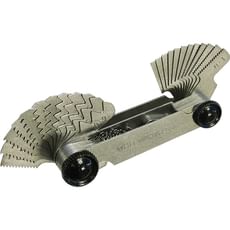
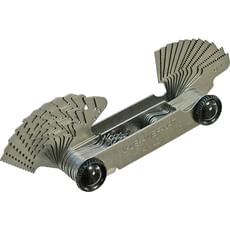
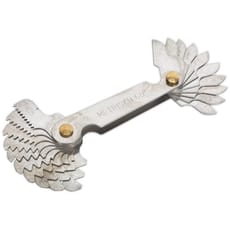
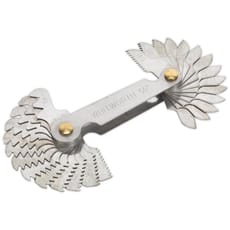
Screw pitch gauges are indispensable precision measuring tools designed to quickly and accurately identify thread pitch and thread type on screws, bolts, nuts, and threaded fasteners. Comprising multiple thin steel blades housed in a folding handle similar to a penknife, each blade is precisely stamped with a specific thread profile corresponding to a particular pitch measurement. By matching the appropriate blade to the thread being examined, tradespeople and engineers can instantly determine whether they're dealing with metric, imperial, BSW (British Standard Whitworth), UNC (Unified National Coarse), UNF (Unified National Fine), or other thread standards—eliminating guesswork and preventing costly purchasing errors when sourcing replacement fasteners.
The selection available from Tooled-Up.com includes comprehensive gauge sets from trusted manufacturers including Sealey, Draper, and Faithfull, with configurations ranging from compact 20-blade metric sets through to extensive 55-blade professional kits covering multiple thread standards. Whether you require a straightforward metric-only gauge for general workshop applications or a comprehensive multi-standard set for specialist engineering environments, there are options suited to professional tradespeople, maintenance engineers, and serious DIY enthusiasts alike. These tools prove particularly valuable when working with older British machinery, imported equipment, or legacy fasteners where original documentation has been lost or thread standards have evolved over the decades.
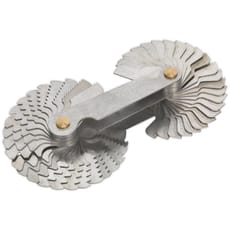
Modern screw pitch gauges are manufactured from hardened steel to ensure durability and long-term accuracy, with clearly stamped measurements typically ranging from 0.25mm to 6mm for metric threads, alongside various TPI (threads per inch) ranges for imperial standards. Professional sets like the Sealey 26-piece configuration extend functionality beyond simple pitch identification to include nut and bolt thread checking capabilities, whilst comprehensive 52-blade combination sets from Draper cover both metric and BSW threads in a single tool. Quality gauges remain accurate through years of workshop use, making them a worthwhile investment for any professional toolkit.
Jargon Buster
- Thread Pitch: The distance between adjacent threads, measured in millimetres for metric fasteners or threads per inch (TPI) for imperial systems. This critical measurement determines whether fasteners and threaded components will mate correctly.
- BSW (British Standard Whitworth): A traditional British imperial thread standard still commonly encountered on older British machinery, vintage vehicles, and heritage equipment. Uses a 55-degree thread angle and is measured in threads per inch (TPI).
- UNC/UNF (Unified National Coarse/Fine): American imperial thread standards widely found on imported machinery, equipment, and vehicles. UNC threads are coarser with fewer threads per inch for general applications, whilst UNF threads are finer for precision work requiring greater holding strength.
- Metric Thread (ISO/M Series): The ISO standard thread system used throughout Europe and increasingly worldwide, designated by the letter M followed by nominal diameter (e.g., M6, M10) and pitch in millimetres (e.g., M10 x 1.5).
- TPI (Threads Per Inch): The imperial measurement system for thread pitch, indicating how many complete threads occur within one inch of fastener length. Higher TPI numbers indicate finer threads with closer spacing.
- Thread Profile: The geometric shape of a thread's cross-section, including its angle, crest width, and root dimensions. Different thread standards have distinct profiles that must match precisely for proper engagement and load distribution.
Who Uses Screw Pitch Gauges?
Screw pitch gauges are essential precision tools across numerous trades and industries:
- Mechanical Engineers – identifying threads on machinery components, hydraulic fittings, and precision equipment during maintenance and repair
- Motor Vehicle Technicians – determining fastener specifications on vehicles, particularly when servicing classic cars, motorcycles, or imported models with mixed thread standards
- Maintenance Engineers – sourcing correct replacement fasteners for plant machinery, production equipment, and industrial installations
- Plant Fitters – matching threads on pipework, valves, pumps, and industrial equipment during installation, commissioning, and repair work
- Agricultural Mechanics – identifying fasteners on farm machinery and equipment, which often features various thread standards across different component manufacturers
- CNC Machinists – verifying thread specifications during manufacturing processes and quality control inspection procedures
- Model Engineers and Hobbyists – ensuring accurate thread identification for precision engineering projects, restorations, and miniature engine construction
- Plumbers and Heating Engineers – identifying threads on pipe fittings, radiator valves, and connectors, particularly when working with mixed metric and imperial plumbing systems
- General Maintenance Staff – determining correct replacement fasteners across facilities management, building maintenance, and estate upkeep
- DIY Enthusiasts – particularly those restoring machinery, vintage vehicles, workshop equipment, or working with older British-manufactured tools and appliances
How to Choose the Right Screw Pitch Gauges
Thread Standards Required: Consider which thread systems you encounter most frequently in your work. A basic metric-only gauge such as the Sealey 20-blade folding gauge suits general workshop applications and modern European equipment, whilst engineers working with diverse machinery may require comprehensive sets covering metric, BSW, UNC, UNF, and other standards. The Faithfull 55-blade American-National set or Draper 52-blade combination gauges provide extensive coverage for professional environments where thread identification across multiple standards is routine.
Number of Blades: More blades provide finer pitch increments and greater likelihood of finding an exact match. A 20-blade set covers common pitches adequately for general use and occasional identification tasks, whilst 52-55 blade sets like those from Faithfull and Draper deliver comprehensive coverage including less common thread pitches found on specialist equipment, imported machinery, or older installations. Professional workshops benefit from maximum blade count to minimise unsuccessful identification attempts.
Build Quality and Longevity: Professional-grade gauges from Sealey, Draper, and Faithfull feature hardened steel construction that maintains accuracy through years of workshop use and repeated blade engagement. Verify that blades are clearly marked with legible stamping—you'll reference these measurements frequently under varying lighting conditions. Robust pivot mechanisms ensure blades remain secure and properly aligned without becoming loose through repeated opening and closing, which would compromise measurement accuracy.
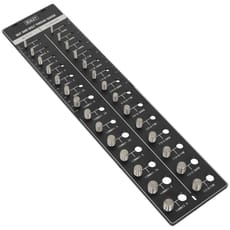
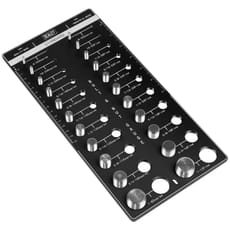
Pitch Range Coverage: Verify the pitch range covered aligns with your typical applications. Metric gauges at Tooled-Up typically span 0.25mm to 6mm pitch, whilst imperial gauges cover various TPI ranges depending on the thread standard. Specialist configurations like the Sealey 26-piece nut and bolt thread checking gauge expand functionality beyond simple screw pitch identification to include fastener diameter verification, providing comprehensive fastener specification capability in a single tool set.
Portability Requirements: Folding designs offer compact, pocket-friendly convenience for site work, mobile servicing, and field engineering where toolkit space is limited. Comprehensive multi-gauge sets supplied in organised storage cases suit workshop environments where you need quick access to multiple thread standards without carrying tools between locations. Consider whether you need gauges at multiple work locations or prefer a single comprehensive set at a central workshop bench.
Budget Considerations: Basic single-standard gauges represent excellent value for occasional users or tradespeople working exclusively with metric fasteners on modern European equipment. Comprehensive professional sets require greater initial investment but eliminate the frustration, time waste, and productivity loss associated with incomplete thread coverage. For professional tradespeople and maintenance engineers, the cost is quickly recovered through reduced fastener identification time, fewer incorrect purchases, and eliminated guesswork on critical applications.
Popular Accessories
- Digital Callipers: Complement pitch gauges by accurately measuring fastener diameters and lengths, essential for complete thread specification and ordering correct replacement parts
- Thread Files: Clean up damaged or corroded threads once you've identified the correct pitch, restoring functionality to worn fasteners without replacement
- Tap and Die Sets: Create new threads or restore damaged threads matching the specifications identified with your pitch gauge, particularly valuable for repair and restoration work
- Engineers' Squares and Straight Edges: Verify thread alignment, fastener squareness, and perpendicularity during precision assembly and quality control procedures
- Magnifying Glasses or Engineers' Loupes: Aid detailed examination of fine threads and improve reading of gauge markings in low-light workshop conditions or on site
- Thread Repair Kits: HeliCoil and similar thread insert systems restore stripped or damaged threads once you've determined the original specification through gauge measurement
- Wire Brushes and Thread Cleaners: Remove corrosion, paint, and contamination from threads before gauge measurement, ensuring accurate profile matching and identification
- Fastener Assortment Boxes: Organise replacement fasteners by thread type, pitch, and diameter for efficient workflow and reduced searching time during repairs
Frequently Asked Questions
What's the difference between metric and imperial thread pitch measurements?
Metric threads measure pitch as the distance between adjacent threads in millimetres (for example, 1.5mm pitch means each thread is 1.5mm from the next), whilst imperial threads use TPI (threads per inch)—so 20 TPI means 20 complete threads occur within one inch of fastener length. These systems are fundamentally incompatible; a metric gauge won't accurately measure imperial threads and vice versa. This explains why comprehensive multi-standard sets prove so valuable in professional environments where you encounter equipment from different eras and manufacturing origins.
Can I use a screw pitch gauge on damaged or worn threads?
Whilst screw pitch gauges work most accurately on clean, undamaged threads, experienced users can often identify the original pitch on moderately worn fasteners with careful technique. Clean the thread thoroughly with a wire brush first to remove corrosion, paint, and contamination, then try matching multiple undamaged sections along the thread length. If threads are severely damaged or corroded, measure the major diameter with digital callipers and consult thread specification charts alongside your pitch gauge readings to confirm identification before ordering replacement parts.
How do I know which thread standard I'm dealing with before testing?
Start by considering the equipment origin, manufacturer, and age. British machinery manufactured before metrication in the 1970s almost certainly uses imperial threads (typically BSW for older equipment). European equipment generally uses metric threads, whilst American machinery uses UNC/UNF standards. Try your metric gauge first on modern equipment; if no blade matches perfectly with complete profile engagement, move systematically to imperial standards. The correct gauge blade should mesh completely with the thread profile—partial matches or gaps indicate you're testing the wrong standard.
Do I need separate gauges for internal and external threads?
No—screw pitch gauges work equally effectively on both external threads (bolts, screws, studs) and internal threads (nuts, tapped holes, threaded bores). Simply place the gauge blade against the thread profile for comparison; for internal threads, you may need good lighting and careful positioning to see the match clearly, and a magnifying glass can prove helpful on smaller diameter holes. Some users find external threads slightly easier to check due to better visibility and access, but the same gauge serves both purposes without requiring different tools.
How should I maintain my screw pitch gauges for long-term accuracy?
Keep gauges clean and apply a light coating of thin oil to prevent corrosion, particularly important in damp workshop environments or if stored in unheated toolboxes. Wipe blades after use, especially if you've been checking threads contaminated with cutting fluid, grease, or corrosive substances. Always store gauges in their protective case to prevent damage—bent or damaged blades lose accuracy permanently and cannot be reliably straightened. Avoid using gauges as improvised prying tools, scrapers, or screwdrivers despite the temptation. With proper care and storage, quality gauges from Sealey, Draper, and Faithfull provide decades of reliable service and maintain their measurement accuracy throughout a professional lifetime.