

Security Cable

Pay in 3 interest-free payments on purchases from £20-£3000 with  . Learn more.
 Loading...
End of content
Error - No more pages to load
About Security Cable
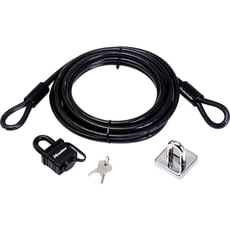
Security cables are essential anti-theft devices designed to protect valuable equipment, tools, and possessions from opportunistic thieves. Constructed from high-tensile steel wire strands encased in protective outer sleeves, these flexible yet robust cables can be looped through, around, or between items to secure them to fixed anchor points or to each other. Available in various lengths, diameters, and security ratings, security cables offer a versatile solution for safeguarding everything from bicycles and motorcycles to garden equipment, power tools, and computer hardware.
The range at Tooled-Up.com includes options from trusted security brands such as Abus, Masterlock, and Sirius, each offering different levels of protection to suit various security requirements. Whether you need a lightweight cable to secure bike components, a heavy-duty steel cable for protecting expensive site tools, or a combination lock cable system for garden furniture, there's a security cable solution to match your needs. Most security cables are designed to work in conjunction with padlocks, U-locks, or integrated locking mechanisms, providing flexible security arrangements that can be adapted to different situations.
Modern security cables incorporate advanced materials and construction techniques to resist common attack methods including cutting, sawing, and leverage attacks. The outer protective sleeve not only guards the steel core against weather and corrosion but also prevents damage to the items being secured. From compact computer cable locks with integrated combination mechanisms to professional-grade cables exceeding 10mm in diameter, these security solutions provide peace of mind for tradespeople, cyclists, homeowners, and business operators throughout the UK.
Jargon Buster
- High-Tensile Steel: Specially treated steel wire that has been processed to increase its strength and resistance to cutting and sawing attacks. The tensile strength is measured in newtons or kilograms of force required to break the cable.
- Cable Diameter: The thickness of the security cable, typically measured in millimetres. Thicker cables (8mm+) offer greater security but reduced flexibility, whilst thinner cables (4-6mm) provide easier handling but lower cut resistance.
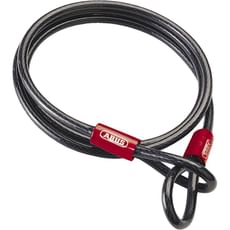
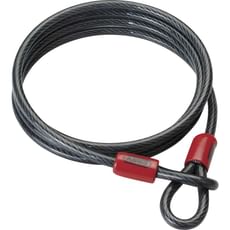
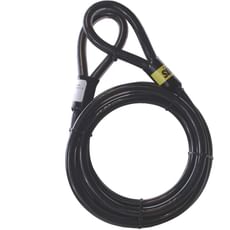
- Loop Cable: A security cable with pre-formed loops at one or both ends, designed to thread through itself or attach easily to locks. Popular for securing bicycle wheels and components to the frame.
- Anchor Point: A fixed, immovable object or purpose-designed ground anchor to which the security cable is attached. The anchor point's strength is crucial to the overall security of the system.
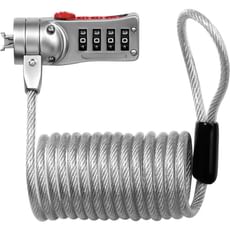
- Combination Lock Cable: A security cable with an integrated numerical combination lock mechanism, eliminating the need for keys and allowing multiple authorised users to access the code.
- Protective Sleeve: The outer covering of the cable, typically made from vinyl, rubber, or braided fabric, which prevents the steel core from scratching protected items and provides weather resistance.
Who Uses Security Cable?
- Tradespeople and contractors securing power tools and equipment on building sites and in work vans
- Cyclists and motorcyclists protecting bicycles, e-bikes, and motorbikes from theft
- Landscape gardeners and groundskeepers securing ride-on mowers, strimmers, and expensive garden equipment
- Site managers and foremen implementing theft prevention strategies for plant machinery and site equipment
- Homeowners and DIY enthusiasts protecting garden furniture, barbecues, and outdoor tools
- IT professionals and office managers securing computer equipment, monitors, and projectors in public spaces
- Retail and hospitality businesses protecting outdoor displays, signage, and equipment
- Festival and event organisers securing temporary structures, equipment, and generators
- Boat and caravan owners protecting marine equipment, outboard motors, and leisure vehicles
How to Choose the Right Security Cable
Assess the Security Risk: Consider the value of items being protected, the location's crime rate, and how long items will be left unattended. High-value tools on accessible building sites require heavier-duty cables (8-12mm diameter) than garden furniture in a private enclosed garden.
Cable Length Requirements: Measure what you need to secure and identify suitable anchor points. Cables ranging from 1 metre to 10 metres are available from Tooled-Up, with longer cables offering more flexibility but potentially more slack for thieves to exploit with leverage tools.
Diameter and Security Rating: Thicker cables provide greater cut resistance. For high-value equipment, select cables of 10mm diameter or above. For basic deterrent purposes or securing lower-value items, 4-6mm cables may suffice. Check manufacturer security ratings and look for Sold Secure certification where available.
Locking Mechanism Compatibility: Determine whether you need a cable with integrated locks or one designed to work with separate padlocks. Loop cables work well with high-security padlocks, whilst combination cable locks offer keyless convenience for multiple users.
Weather Resistance: For outdoor applications, ensure the cable has a durable protective sleeve resistant to UV degradation and corrosion. Galvanised or stainless steel cores provide the best longevity in harsh weather conditions.
Portability Considerations: If you need to carry the cable regularly, balance security with weight and flexibility. Tradespeople moving between sites may prefer lighter, more compact options, whilst permanent installations can accommodate heavier-duty solutions.
Popular Accessories
- High-security padlocks: Closed-shackle and weatherproof padlocks from Abus and Masterlock to complement loop cables
- Ground anchors: Concrete-in or bolt-down anchor points for permanent security installations
- Wall anchors and eye bolts: Fixed mounting points for securing cables to walls, floors, or vehicle load beds
- U-locks and D-locks: Rigid locks that work in conjunction with cables for multi-point security systems
- Cable extenders and connectors: Join multiple cables together for securing larger or multiple items
- Protective sleeves and covers: Additional padding to prevent scratching on painted or polished surfaces
- Alarm disc locks: Supplementary security devices that trigger audible alarms when moved
- Security signs and deterrent markings: Visible warnings that discourage potential thieves
Frequently Asked Questions
What thickness of security cable do I need for power tools?
For professional power tools and equipment, a minimum cable diameter of 8mm is recommended, with 10-12mm cables providing optimal protection against bolt croppers and cutting attacks. The higher the value of your tools, the thicker and more secure your cable should be.
Can security cables be cut with bolt croppers?
Thinner cables (under 6mm) can be vulnerable to large bolt croppers, whilst properly constructed high-tensile steel cables of 10mm or greater will resist most portable cutting tools. However, no cable is completely impenetrable given enough time and the right tools, so cables work best as deterrents and when combined with other security measures.
Should I choose a cable with an integrated lock or use a separate padlock?
Integrated combination locks offer convenience and eliminate the risk of lost keys, making them ideal for situations with multiple users. Separate padlocks, particularly closed-shackle models, generally offer higher security ratings and can be replaced or upgraded independently of the cable. For maximum security, choose a loop cable with a high-security padlock.
How do I secure tools in a van overnight?
Install a proper anchor point bolted through the van floor or secured to the chassis. Thread a heavy-duty security cable (minimum 10mm) through tool handles, carry cases, or purpose-designed security eyes, then secure with a high-quality weatherproof padlock. Consider using multiple cables to create a security web that makes theft time-consuming and obvious.
Are security cables weatherproof for permanent outdoor use?
Quality security cables feature protective vinyl or rubber sleeves that provide excellent weather resistance for outdoor use. However, the locking mechanism also requires weather protection—choose marine-grade or weatherproof padlocks with covered keyholes, or opt for combination cable locks designed specifically for outdoor applications. Regular inspection and occasional lubrication will maintain performance in British weather conditions.