

Short Push Rams

Pay in 3 interest-free payments on purchases from £20-£3000 with  . Learn more.
 Loading...
End of content
Error - No more pages to load
About Short Push Rams
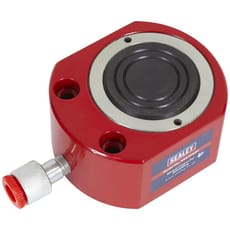
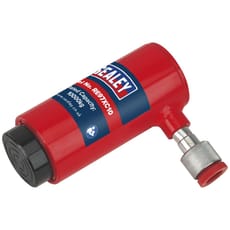
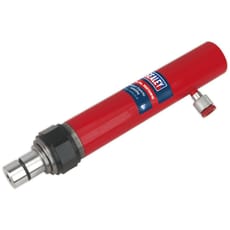
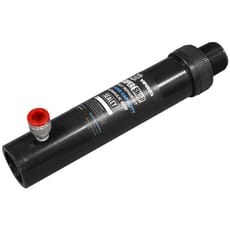
Short push rams are compact hydraulic tools engineered to deliver substantial pressing and pushing force in confined spaces where conventional hydraulic rams cannot operate effectively. These space-saving cylinders maintain impressive tonnage ratings whilst offering reduced overall length and closed height, making them invaluable for automotive repairs, machinery maintenance, and engineering applications where access is restricted. Whether straightening chassis components, pressing bearings into tight housings, or aligning body panels in cramped engine bays, short push rams provide the controlled hydraulic force needed to complete demanding tasks safely and efficiently.
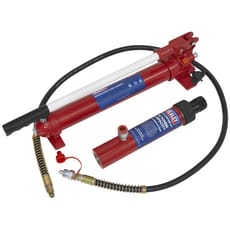
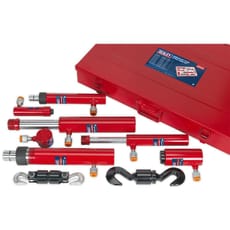
The primary advantage of short push rams lies in their ability to generate significant pushing force—typically between 4 and 10 tonnes—whilst fitting into areas where standard rams simply won't fit. Most models feature single-acting hydraulic cylinders that extend under pressure and retract automatically via internal spring mechanisms, enabling rapid operation without manual resetting. Tooled-Up.com stocks models from trusted manufacturers like Sealey, offering both individual rams and comprehensive push and pull ram sets complete with multiple attachments, extension tubes, and matched pump assemblies for maximum versatility across varied workshop applications.
Professional-grade short push rams are constructed from hardened steel with precision-machined components and quality seals to withstand extreme loads and regular use. They operate in conjunction with hydraulic hand pumps or power packs, typically requiring working pressures between 350 and 700 bar to achieve their rated capacity. This combination provides tradespeople with a portable, powerful pressing solution that can be deployed quickly on-site or in the workshop without requiring heavy machinery or complex equipment, making them essential additions to automotive workshops, engineering facilities, and mobile repair services throughout the UK.
Jargon Buster
- Tonnage Rating: The maximum pushing force a ram can safely deliver, measured in tonnes. Short push rams typically range from 4 to 10 tonnes capacity, with higher ratings suited for heavier-duty applications such as pressing truck components or straightening substantial structural members.
- Stroke Length: The total distance the ram's piston travels from fully retracted to fully extended position, measured in millimetres. Short push rams feature reduced stroke lengths compared to standard models—usually between 50mm and 150mm—to maintain their compact dimensions for confined space work.
- Single-Acting Cylinder: A hydraulic cylinder design that uses hydraulic pressure to extend the ram but relies on an internal spring for retraction rather than hydraulic force in both directions. This simpler construction makes short push rams more compact and cost-effective than double-acting alternatives.
- Spring Return: The internal spring mechanism that automatically retracts the ram's piston when hydraulic pressure is released, enabling rapid reset between pressing operations without manual intervention or additional hydraulic circuits.
- Working Pressure: The hydraulic pressure required to achieve the ram's rated tonnage capacity, typically measured in bar or PSI. Most short push rams operate at pressures between 350 and 700 bar, necessitating compatible hydraulic pumps capable of delivering these pressures.
- Closed Height: The total length of the ram when fully retracted, a critical dimension when selecting equipment for confined spaces. Short push rams are specifically designed with minimal closed height to access restricted areas where standard rams cannot fit.
Who Uses Short Push Rams?
- Motor mechanics and auto electricians for bearing installation, component pressing, and panel straightening in tight engine bays and under vehicle dashboards
- Vehicle body repair specialists for straightening chassis components, realigning body panels, and pressing structural members during collision repair work
- Plant and machinery fitters for maintaining and repairing industrial equipment where access is restricted by surrounding machinery or structural components
- Agricultural engineers for on-site repairs to farm machinery and equipment in field conditions where portability and compact dimensions are essential
- General engineering workshops for pressing bushings, bearings, shafts, and assemblies in confined areas of machinery housings
- MOT testing stations for various vehicle alignment, suspension work, and component replacement tasks requiring controlled pressing force
- Manufacturing and production facilities for assembly line operations requiring precise, controlled pressing force in compact workstations
- Mobile mechanics and breakdown services requiring portable pressing solutions for roadside repairs or customer locations without workshop access
- Maintenance teams across industrial, commercial, and municipal sectors for equipment repair and component replacement in situ
- HGV and commercial vehicle workshops for heavy-duty pressing operations on trucks, buses, and agricultural machinery
How to Choose the Right Short Push Rams
Begin by determining the maximum tonnage required for your typical pressing tasks. Heavier components and substantial straightening work demand higher tonnage ratings—generally 4-6 tonnes suffices for standard automotive work like bearing installation and light panel straightening, whilst heavy-duty applications such as pressing truck components or straightening substantial chassis members require 8-10 tonnes. Always select a ram with capacity exceeding your maximum anticipated load, as operating below maximum capacity extends tool life and provides a crucial safety margin against tool failure.
Stroke length deserves careful consideration based on the distances you typically need to push or press. Short push rams sacrifice stroke length for compactness, so verify that your chosen model provides sufficient extension for your applications whilst fitting within your available working space. Measure confined areas where you'll operate the ram and confirm that both the closed height and extended length accommodate your requirements—there's little benefit in compact dimensions if the stroke proves inadequate for completing your tasks.
Decide whether you need a standalone ram or a comprehensive push and pull ram set. Individual rams offer cost-effective solutions for specific, repetitive tasks, whilst complete sets with multiple attachments, extensions, and pump assemblies provide significantly greater versatility for varied workshop applications. The selection available from Tooled-Up includes comprehensive sets featuring different ram sizes, extension tubes, and specialist adapters that substantially expand your capabilities for diverse pressing, pulling, and positioning operations.
Verify compatibility with your existing hydraulic equipment. Ensure the ram's hydraulic connection type matches your pump's output, and confirm your pump delivers the required working pressure and flow rate—most short push rams need between 350 and 700 bar. If purchasing your first hydraulic pressing system, consider a kit including both the ram and a matched hand pump assembly to guarantee optimal compatibility and performance from the outset.
Build quality proves paramount for tools experiencing high forces and regular use. Prioritise rams constructed from hardened steel with precision-machined surfaces, quality seals preventing hydraulic fluid leaks, and robust spring return mechanisms ensuring reliable retraction. Reputable manufacturers like Sealey—whose products are well-represented at Tooled-Up—offer reliable performance backed by manufacturer warranties, providing peace of mind for professional tradespeople whose livelihoods depend on tool reliability.
Popular Accessories
- Hydraulic hand pumps and pump assemblies for powering short push rams with portable, manual operation
- Hydraulic hoses in various lengths for flexible positioning of pump and ram in awkward working environments
- Extension tubes and adapters for reaching recessed areas or increasing effective stroke length beyond the ram's standard capacity
- Ram mounting frames and brackets for securing rams during operation, ensuring stability and safety when applying substantial forces
- Push and pull ram attachment sets including spreaders, hooks, pressing heads, and specialist adapters for diverse applications
- Hydraulic fluid suitable for maintaining system performance, preventing seal degradation, and ensuring consistent operation
- Pressure gauges for monitoring applied force during critical pressing operations where precise force control is essential
- Tool storage cases for organising and protecting rams, attachments, and accessories during transport and storage
- Workshop presses and frames for integrated ram mounting solutions providing stable platforms for repetitive pressing tasks
- Quick-release couplings for rapid connection and disconnection of hydraulic hoses, improving efficiency when changing between tools
Safety Information
Short push rams generate substantial forces—often exceeding 10 tonnes—that can cause serious injury or death if misused. Always inspect your ram before each use, checking for hydraulic fluid leaks, damaged seals, bent components, or any signs of overloading that could indicate compromised structural integrity. Never exceed the manufacturer's stated tonnage rating, as this can cause catastrophic failure resulting in injury, property damage, or component ejection at high velocity. Ensure all workpieces are properly supported and secured before applying force—unstable components can shift unexpectedly under pressure, creating dangerous projectiles.
Position yourself and bystanders clear of the ram's line of force and any potential pinch points where body parts could be trapped between moving components. Wear appropriate personal protective equipment including safety glasses or face shields, gloves, and steel-toed boots when operating hydraulic rams. Keep your work area clean, well-lit, and free from trip hazards to ensure you can clearly see all components during operation and respond quickly to any unexpected situations.
Follow HSE guidelines for working with hydraulic equipment under pressure, and ensure all operators receive proper training before using push rams independently. Release hydraulic pressure slowly and in a controlled manner when retracting the ram—rapid pressure release can cause sudden component movement or spring-back of compressed materials. Regularly inspect hydraulic hoses for wear, abrasion, or damage, replacing them immediately if any defects are found. Store rams in a clean, dry environment and maintain them according to the manufacturer's recommendations, including periodic seal replacement and hydraulic fluid changes, to ensure safe, reliable operation throughout their service life.
Frequently Asked Questions
What's the difference between a short push ram and a standard hydraulic ram?
Short push rams feature reduced overall length and closed height compared to standard hydraulic rams, specifically designed for working in confined spaces where full-size rams cannot fit. Whilst they sacrifice some stroke length—typically offering 50-150mm rather than the 200-300mm common in standard rams—they maintain comparable tonnage ratings and force capacity. This makes them ideal for applications such as working under vehicle dashboards, within machinery housings, or between structural components where space constraints are the primary concern rather than extended reach requirements.
Can I use any hydraulic pump with a short push ram?
You must use a hydraulic pump that matches your ram's connection type and can deliver the required working pressure and flow rate. Most short push rams require between 350 and 700 bar of pressure to achieve their rated tonnage capacity. Check that your pump's maximum pressure rating meets or exceeds this requirement, and verify that the hydraulic coupling type is compatible. Many manufacturers, including Sealey, offer matched pump and ram sets or kits that guarantee optimal compatibility and performance, eliminating guesswork and ensuring safe operation from the outset.
How do I know what tonnage rating I need for my work?
Select a tonnage rating based on the heaviest pressing or pushing tasks you'll regularly encounter. For general automotive work such as bearing installation, bush pressing, and light panel straightening, a 4-6 tonne ram typically suffices. Heavier applications like pressing truck components, straightening substantial chassis members, or heavy machinery maintenance may require 8-10 tonnes or more. When uncertain, choose a higher capacity ram—operating well below maximum capacity extends tool life, reduces wear on seals and components, and provides a crucial safety margin against overloading and potential failure.
Why does my short push ram retract slowly or incompletely?
Slow or incomplete retraction typically indicates a weak, damaged, or broken return spring, which is responsible for pulling the piston back when hydraulic pressure is released. This commonly occurs through normal wear over extended use or from repeatedly overloading the ram beyond its rated capacity, which compresses the spring beyond its design limits. Contaminated hydraulic fluid containing dirt or metal particles can also impede smooth retraction by damaging seals or causing internal friction. Check the manufacturer's maintenance guidance for spring replacement procedures, or contact a hydraulic tool specialist for professional servicing if you're uncomfortable performing repairs yourself.
Can short push rams be used for pulling applications as well as pushing?
Standard short push rams are designed exclusively for pushing operations and lack the mounting points or structural design for pulling tasks. However, many manufacturers offer comprehensive push and pull ram sets that include specialised attachments, hook adapters, and extension rods enabling pulling applications. These versatile sets convert the pushing force into pulling capability through additional components, providing solutions for tasks like bearing extraction, dent pulling, panel removal, and component extraction alongside standard pushing operations. If you anticipate needing both pushing and pulling capabilities, consider purchasing a complete set rather than a standalone ram.