

Site Extension Leads
Pay in 3 interest-free payments on purchases from £30-2000 with  . Learn more.


 Loading...
End of content
Error - No more pages to load
About Site Extension Leads
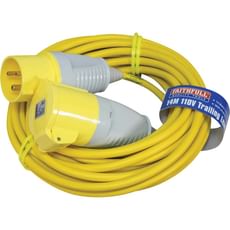
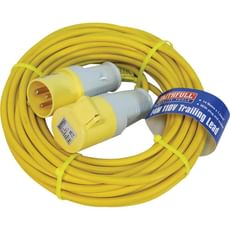
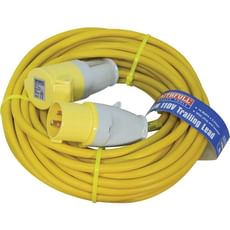
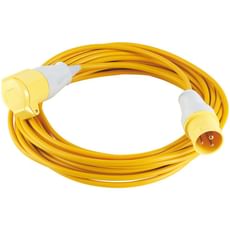
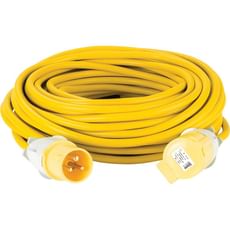
Site extension leads are essential pieces of equipment for any construction site, workshop, or outdoor working environment where reliable temporary power distribution is needed. These heavy-duty 110v cables provide a safe and practical way to extend power from a transformer or generator to power tools, lighting, and equipment across building sites and outdoor locations. Unlike standard domestic extension leads, site extension leads are specifically engineered to withstand the harsh conditions of professional environments, featuring robust yellow cable construction for high visibility, weather-resistant connectors rated to IP44 or higher, and cable specifications that meet stringent UK and European safety standards.
The yellow cable colour is an industry standard for 110v site equipment, making these leads instantly recognisable and helping to prevent accidental connection to 240v domestic supplies. Site extension leads available from Tooled-Up.com come in various amperage ratings—typically 16 amp and 32 amp—with different cable thicknesses (1.5mm, 2.5mm, and 4mm) to suit different power requirements. They represent a lightweight, flexible alternative to cable reels whilst maintaining the durability needed for daily professional use.
Quality site extension leads from trusted brands like Defender, Faithfull, Sealey, Draper, and Sirius feature VDE-approved components and cables manufactured to BSEN 50525-2-11 standards. These leads are designed to perform reliably even at low temperatures, making them suitable for year-round use in the unpredictable British climate. With proper care, a good site extension lead becomes a long-term investment that delivers safe, dependable power delivery across multiple projects.
Jargon Buster
- 110v Centre-Tapped Transformer
- The UK construction industry standard voltage system that reduces risk of fatal electric shock. A 240v supply is transformed down to 110v with a centre-tapped earth, meaning the maximum voltage to earth is just 55v, significantly safer than mains voltage.
- Amperage Rating (16A / 32A)
- The maximum current the extension lead can safely carry. 16 amp leads suit most power tools and site lighting, whilst 32 amp leads are required for high-demand equipment like large grinders, breakers, and multiple tools running simultaneously.
- Cable CSA (Cross-Sectional Area)
- Measured in mm² (1.5mm, 2.5mm, 4mm), this indicates the thickness of the copper conductor. Thicker cables carry higher currents with less voltage drop over longer distances and generate less heat during use.
- IP44 Rating
- Ingress Protection rating indicating the connector is protected against solid objects larger than 1mm and water splashes from any direction—essential for outdoor and construction site use.
- VDE Approval
- Certification from the German Association for Electrical, Electronic and Information Technologies, recognised throughout Europe as a mark of electrical safety and quality compliance.
- Arctic Grade Cable
- Cable construction that remains flexible and performs reliably at low temperatures, typically down to -25°C, preventing the cable becoming stiff or brittle in cold weather.
Who Uses Site Extension Leads?
- Construction Workers & Site Managers – for powering tools and equipment across building sites
- Electricians – requiring safe temporary power distribution during installations and maintenance
- Joiners & Carpenters – connecting saws, routers, and other woodworking equipment
- Plasterers & Decorators – powering sanders, mixers, and lighting in properties under renovation
- Groundworkers & Landscapers – for outdoor power tool use away from permanent power sources
- Plant Hire Companies – supplying leads alongside equipment hire
- Events & Festival Riggers – for temporary power distribution at outdoor venues
- Facility Maintenance Teams – maintaining industrial and commercial properties
- Agricultural Workers – powering equipment in barns, yards, and field locations
- DIY Enthusiasts – undertaking home renovation projects with hired 110v equipment
How to Choose the Right Site Extension Leads
Amperage Requirements: Match the lead's amp rating to your equipment demands. For single power tools like drills, sanders, and circular saws, a 16 amp lead is typically sufficient. Choose 32 amp leads when running high-powered equipment such as large angle grinders, breakers, concrete mixers, or when powering multiple tools through a distribution unit.
Cable Length: Select the shortest practical length for your application to minimise voltage drop and reduce trip hazards. Common lengths range from 14 metres to 25 metres. Remember that excessively long cables can result in reduced power delivery to tools and increased heat generation in the cable.
Cable Cross-Sectional Area: The 1.5mm cable is adequate for basic 16 amp applications over shorter distances. For 16 amp leads over 20 metres or any 32 amp application, specify 2.5mm cable as a minimum. The 4mm cable is recommended for 32 amp leads used over extended distances or in high-demand continuous use scenarios.
Connector Quality: Tooled-Up stocks leads with industrial-grade connectors featuring IP44 weather protection as standard. Check that plugs and sockets have secure cable grips, robust construction, and clear amp rating markings. Quality connectors prevent moisture ingress and maintain reliable connections even after repeated plugging and unplugging.
Cable Flexibility: Arctic-grade or low-temperature cables remain flexible in cold conditions, making them easier to handle and less prone to damage. This is particularly important for year-round outdoor use in the UK climate where temperatures regularly drop below freezing on construction sites.
Brand Reputation: Established manufacturers like Defender, Faithfull, Sealey, and Draper have proven track records for producing reliable site equipment that stands up to professional use. Investing in quality from reputable brands typically delivers better longevity and safety than budget alternatives.
Popular Accessories
- 110v Transformers – portable units to convert 240v mains supply to safe 110v site voltage
- 110v Cable Reels – for longer cable runs with organised storage
- 110v Distribution Units – multiple outlet boxes for powering several tools from one supply
- RCD Circuit Breakers – additional safety protection against earth faults
- Cable Protectors – ramps to protect leads from vehicle traffic on site
- 110v Site Lighting – floodlights, festoon lighting, and work lamps
- Extension Lead Storage Reels – keeping cables tangle-free during transport and storage
- PAT Testing Equipment – for regular safety testing of portable electrical equipment
- Replacement Plugs & Connectors – spare components for lead maintenance and repair
Safety Information
Regular Inspection: Before each use, inspect the entire length of the cable for cuts, abrasion, or damage to the outer sheath. Check connectors for cracks, moisture ingress, or damaged pins. Never use a damaged extension lead as compromised insulation presents serious shock and fire risks.
Avoid Overloading: Never exceed the amp rating marked on the lead. Calculate the total current draw of all connected equipment—overloading causes excessive heat build-up that can melt insulation and create fire hazards. If running multiple tools, use an appropriately rated distribution unit rather than daisy-chaining extension leads.
Prevent Cable Damage: Route cables away from sharp edges, vehicle routes, and areas where they might be crushed or severed. Never run cables through doorways that close, or allow them to be submerged in water. Use cable protectors where leads must cross walkways or vehicle paths.
Fully Uncoil: When using longer leads, fully uncoil the cable even if the full length isn't needed. Coiled cable carrying significant current generates heat that cannot dissipate effectively, potentially causing insulation damage or fire.
Weather Protection: Whilst IP44-rated connectors provide splash protection, avoid leaving connections sitting in puddles or exposed to direct water ingress. Position transformer and connection points in sheltered locations where practical.
Correct Voltage: Only connect 110v equipment to 110v extension leads. Never attempt to use site extension leads with 240v domestic equipment or vice versa—the connectors are specifically designed to be incompatible to prevent dangerous misconnection.
PAT Testing: Site electrical equipment should undergo regular Portable Appliance Testing in accordance with HSE guidelines. Maintain records of testing and immediately remove failed equipment from service.
Frequently Asked Questions
Why is 110v used on construction sites instead of 240v?
The 110v centre-tapped earth system is mandated on UK construction sites because it significantly reduces the risk of fatal electric shock. With a centre-tapped transformer, the maximum voltage to earth is just 55v, which is generally considered below the threshold for fatal electrocution. This is particularly important in harsh site environments where equipment is subject to damage, moisture, and rough handling, and where earth connections may be compromised.
Can I repair a damaged site extension lead myself?
Only if you're competent and qualified to do so. Poorly executed repairs can create serious safety hazards. If the cable sheath is damaged but conductors are intact, proper industrial repair tape might provide a temporary fix, but replacement is safer. For damaged connectors or severed cables, proper replacement using correctly rated components is essential. After any repair, the lead should be PAT tested before returning to service. Many professionals prefer to replace damaged leads rather than repair them, given the relatively low cost compared to the safety risks.
What's the difference between 1.5mm, 2.5mm, and 4mm cable?
These measurements refer to the cross-sectional area of the copper conductor. Thicker cable (higher mm² rating) can safely carry more current and experiences less voltage drop over distance. For 16 amp applications up to about 15 metres, 1.5mm is adequate. For 16 amp leads over 20 metres or any 32 amp application, 2.5mm is the minimum recommended. The 4mm cable is specified for 32 amp leads used over longer distances or for continuous high-load applications where minimising voltage drop and heat generation is important.
How long do site extension leads typically last?
With proper care and storage, a quality site extension lead should provide many years of reliable service. The main factors affecting lifespan are physical damage from site conditions, UV degradation if stored outdoors, and wear on connectors from repeated plugging. Leads used in harsh conditions with frequent coiling and uncoiling typically last 2-5 years in intensive professional use, whilst leads used occasionally in well-maintained environments can last considerably longer. Regular inspection and prompt replacement of damaged equipment is more important than expecting a specific lifespan.
Do I need to uncoil the entire lead even if I don't need the full length?
Yes, absolutely. When cable is coiled and carrying significant current, it acts like an inductor and generates heat that cannot dissipate effectively from the inner coils. This can cause the insulation to overheat, melt, and potentially cause fire. Even if you only need 10 metres from a 25-metre lead, uncoil the entire length and lay it out loosely. This is particularly important for 32 amp leads or when running high-powered equipment that draws substantial current.