

Sleeve Anchors

Pay in 3 interest-free payments on purchases from £20-£3000 with  . Learn more.
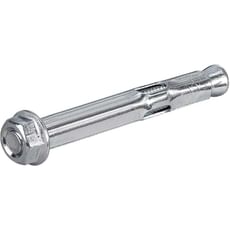
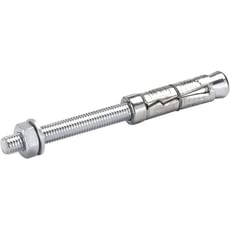
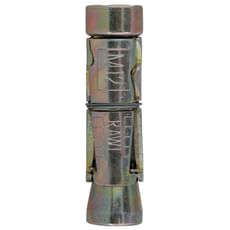
 Loading...
End of content
Error - No more pages to load
About Sleeve Anchors
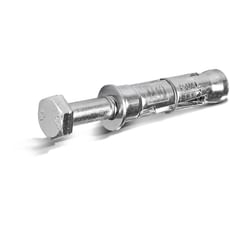
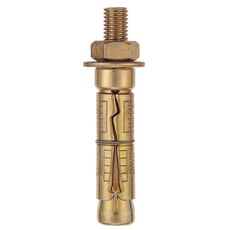
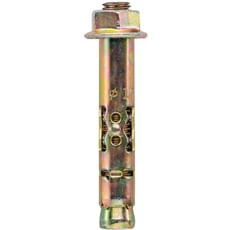
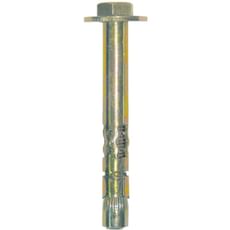
Sleeve anchors are versatile heavy-duty fixings designed to provide secure, reliable anchorage points in solid masonry materials including concrete, brick, stone and blockwork. These expansion anchors feature a distinctive design with an internal wedge mechanism that expands against the base material as the bolt is tightened, creating a powerful mechanical grip that can support substantial loads. The construction typically consists of a threaded bolt or stud housed within a metal sleeve with expansion segments at the anchor end, allowing for secure fixing through materials of varying densities and thicknesses.
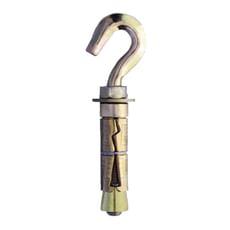
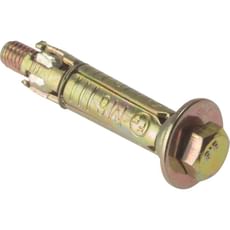
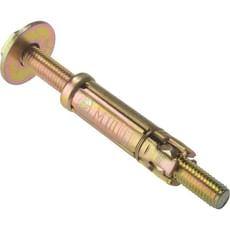
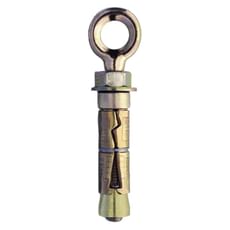
Tooled-Up.com stocks a comprehensive selection of sleeve anchors from trusted manufacturers including Rawlplug and Forgefix, covering a wide range of sizes, load capacities and configurations. Available formats include loose bolt anchors for through-fixing applications, projecting bolt anchors where the fixture sits on the surface, hook bolts for hanging applications, and eye bolts for cable management and suspension points. Many sleeve anchors in the range feature zinc plating or galvanized finishes for enhanced corrosion resistance, making them suitable for both internal and external applications where durability is essential.
The four-way expansion mechanism found in quality sleeve anchors ensures excellent distribution of load forces, whilst retaining springs keep the wedge securely positioned during installation. This design makes sleeve anchors particularly effective for permanent heavy-duty installations such as structural steelwork, machinery bases, racking systems, and safety-critical equipment where fixing failure could have serious consequences. Their versatility across different base materials and ability to accommodate varied substrate thicknesses has made sleeve anchors a staple fixing solution across construction, industrial and commercial sectors.
Jargon Buster
- Expansion Shield: The segmented metal sleeve component that expands outward when the bolt is tightened, creating mechanical interlock with the surrounding masonry. Four-way expansion shields distribute loads more evenly than two-way designs.
- Embedment Depth: The minimum depth the anchor must penetrate into solid base material to achieve its rated load capacity. This depth excludes any render, plaster or hollow sections.
- Projecting Fixture: An anchor configuration where the bolt extends above the surface, allowing the item being fixed to sit on top and be secured with a washer and nut from above.
- Through-Fixing: Installation method where the anchor passes completely through the fixture being mounted, with the bolt head or nut sitting directly against the fixture surface.
- Minimum Edge Distance: The required spacing between an anchor and the edge of the base material to prevent break-out failure under load.
- Working Load: The maximum recommended load an anchor can safely support in normal service conditions, typically calculated with a safety factor applied to the ultimate failure load.
Who Uses Sleeve Anchors?
- General Builders and Contractors: For structural fixings, steelwork connections and heavy-duty installations on construction sites
- Maintenance Engineers: Installing and securing industrial machinery, equipment bases and production line components
- Steel Erectors: Fixing structural steel columns, beams and brackets to concrete foundations and walls
- Electricians: Securing trunking, cable management systems, switchgear cabinets and distribution boards to masonry surfaces
- Plumbers and Heating Engineers: Mounting boilers, hot water cylinders, radiators and heavy pipework to solid walls
- Warehouse Fitters: Installing pallet racking systems, shelving units and safety barriers requiring high load-bearing capacity
- Shopfitters: Fixing display systems, counters, security barriers and heavy commercial fixtures
- Facilities Maintenance Teams: General heavy-duty fixing requirements across commercial and industrial premises
- Mechanical Services Installers: Securing HVAC equipment, ductwork supports and ventilation systems
How to Choose the Right Sleeve Anchors
Base Material Assessment: Verify the substrate type and condition before selecting anchors. Sleeve anchors perform best in dense concrete, solid brick and natural stone. Check for crumbling, cracked or perished masonry which may compromise holding power. Different base materials have varying load capacities, so consult manufacturer's load tables for your specific application.
Load Requirements: Calculate both static and dynamic loads the fixing must support, including safety factors for critical applications. Consider load direction – sleeve anchors typically have different ratings for tension (pull-out) versus shear (sideways) forces. For safety-critical or structural applications, specifications should be verified by a qualified engineer.
Anchor Configuration: Choose between loose bolt (through-fixing), projecting bolt, hook bolt or eye bolt configurations based on your application. Loose bolts work where you can drill through both fixture and masonry, whilst projecting fixtures suit applications where pre-drilling the item isn't possible or practical.
Sizing Considerations: Select anchor diameter and length appropriate to both the load requirements and the thickness of material being penetrated. The range at Tooled-Up includes various sizes to accommodate different substrate depths, with adequate embedment depth being critical for achieving rated load capacity. Remember to account for any render, insulation or hollow sections when calculating required anchor length.
Environmental Factors: For external applications or environments with moisture, chemicals or corrosive atmospheres, specify galvanized or stainless steel sleeve anchors. Zinc-plated anchors offer basic corrosion protection for internal use, whilst hot-dip galvanized finishes provide enhanced durability for exposed locations.
Installation Access: Consider the installation environment and available clearance. Some applications may require specialist tools or have restricted access for tightening. Ensure you have appropriate drilling equipment capable of achieving the required hole diameter and depth in the base material.
Popular Accessories
- Masonry Drill Bits: SDS-plus and SDS-max hammer drill bits in diameters matching anchor specifications for clean, accurate hole preparation
- Hammer Drills and Rotary Hammers: Professional-grade drilling equipment from Makita, DeWalt and Milwaukee for efficient anchor hole creation
- Torque Wrenches: For applications requiring specific tightening torque to achieve proper expansion without over-stressing the anchor
- Socket Sets and Spanners: Quality tools from brands like Bahco and Wera for secure tightening of anchor bolts
- Vacuum Cleaners: For removing drilling dust from anchor holes before installation, ensuring proper expansion and load capacity
- Setting Tools: Specialised tools for particular anchor types to ensure correct installation depth and expansion
- Washers and Additional Nuts: For distributing loads and allowing fixture adjustment after installation
- Thread Locking Compounds: To prevent loosening of bolts in applications subject to vibration or thermal cycling
Safety Information
Installation Safety: Always wear appropriate PPE including safety glasses, dust masks and hearing protection when drilling masonry. Overhead drilling requires additional precautions including hard hats and consideration of falling debris. Ensure adequate ventilation or use dust extraction systems when drilling, as silica dust from concrete and masonry poses serious respiratory hazards covered under COSHH regulations.
Structural Considerations: Never assume existing structures can support additional loads without assessment. Consult structural engineers for load-bearing applications, particularly in older buildings or where anchor spacing may compromise structural integrity. Maintain specified minimum edge distances and spacing between anchors to prevent material failure.
Load Rating Compliance: Always work within manufacturer's specified load capacities with appropriate safety factors. Consider dynamic loads, shock loading and fatigue in applications involving moving machinery or repeated loading cycles. Failed fixings can result in serious injury or fatality, particularly where anchors support overhead equipment, machinery or structural elements.
Electrical Hazards: Check for concealed cables and services before drilling using appropriate detection equipment. Striking 240v cables when drilling poses electrocution risk. Mark out cable and pipe routes and maintain safe distances from known services.
Frequently Asked Questions
What's the difference between sleeve anchors and other expansion anchors?
Sleeve anchors feature a distinctive design with a central bolt housed within an expandable metal sleeve, making them suitable for through-fixing and offering excellent performance across varying base material densities. Unlike wedge anchors which require the bolt to be driven in, sleeve anchors expand as the bolt is tightened, allowing easier installation. They're generally more versatile than drop-in anchors and can accommodate greater substrate thickness variations.
Can sleeve anchors be removed and reused?
Whilst the bolt component can be removed and potentially reused if undamaged, the expanded sleeve remains permanently installed in the masonry and cannot be extracted without destroying it. Once expanded, the sleeve anchor has deformed the base material, so the same hole cannot reliably support another anchor at full load capacity. For temporary fixings requiring removal, consider alternative fastening methods.
How deep should I drill the hole for a sleeve anchor?
Drill depth should equal the anchor length plus approximately 10-15mm to accommodate drilling dust and debris at the bottom of the hole. This extra depth prevents the anchor "bottoming out" before proper embedment and ensures the expansion mechanism can function correctly. Always consult manufacturer specifications for minimum embedment depths required to achieve rated load capacity in your specific base material.
Why won't my sleeve anchor tighten properly?
Common causes include insufficient hole depth (anchor bottoming out), oversized holes preventing proper expansion, drilling debris preventing full insertion, or damaged base material unable to resist expansion forces. Ensure holes are drilled to the correct diameter using sharp masonry bits, clean out debris thoroughly before installation, and verify the base material is sound and sufficiently dense to support the anchor type selected.
What size anchor do I need for my application?
Anchor sizing depends on load requirements, base material type and thickness. As a general guide, 8-10mm diameter anchors suit light to medium loads (shelving, light brackets), 12-16mm for medium to heavy loads (machinery, structural connections), and larger diameters for heavy structural applications. Always consult manufacturer load tables for your specific base material and installation conditions, applying appropriate safety factors for the application criticality.