

Socket Spanners

Pay in 3 interest-free payments on purchases from £20-£3000 with  . Learn more.
 Loading...
End of content
Error - No more pages to load
About Socket Spanners
Socket spanners combine the functionality of traditional spanners with the versatility of socket systems, offering a practical solution for working in confined spaces where standard ratchets and extension bars cannot reach. These specialised hand tools feature a socket permanently mounted on a spanner-style handle, allowing tradespeople to apply torque in tight quarters whilst maintaining excellent grip and control. The selection at Tooled-Up.com includes T-handle socket wrenches, angled socket spanners, flexible head designs, and double-ended configurations from trusted brands including Expert by Facom, Facom, Draper, and Sealey.
Socket spanners are particularly valued for their ability to access fasteners in recessed areas, around obstructions, or within cramped engine bays and machinery housings. The fixed socket design eliminates the risk of dropping separate sockets into inaccessible areas, whilst the extended handle length provides superior leverage compared to conventional spanners. Most professional-grade socket spanners feature chrome vanadium steel construction with hardened and tempered finishes, ensuring durability and resistance to wear even under demanding workshop conditions.
Available in both metric and imperial sizes, socket spanners typically feature 6-point or 12-point socket profiles to accommodate various fastener types. Sets provide comprehensive size coverage, with popular metric configurations ranging from 8mm through to 19mm or larger. Many designs incorporate PVC-dipped or cushioned grip handles for improved comfort during extended use, whilst angled and offset patterns allow working around obstacles that would prevent straight-line access.
Jargon Buster
- Chrome Vanadium Steel: A hardened steel alloy combining chromium and vanadium, offering exceptional strength, durability and resistance to wear. This material is standard for professional-quality socket spanners due to its ability to withstand high torque loads without deforming.
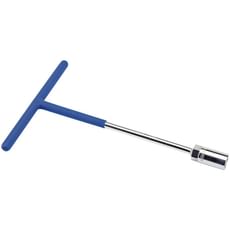
- T-Handle Socket Wrench: A socket spanner design featuring a perpendicular handle forming a "T" shape, providing excellent grip and allowing rapid spinning of fasteners once initially loosened. The cross-bar handle enables two-handed operation for extra torque when needed.
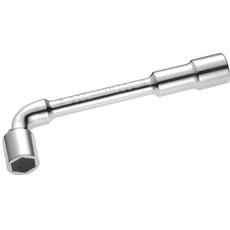
- Angled Socket Spanner: A socket spanner with an offset or cranked handle design, typically set at 15 or 30 degrees to the socket axis. This configuration allows clearance over obstructions and provides knuckle room when working in confined spaces.
- 6-Point vs 12-Point: Refers to the internal socket profile. 6-point sockets grip fasteners across flat surfaces, reducing rounding risk and allowing higher torque. 12-point sockets offer more engagement positions, useful in restricted-swing situations but with slightly reduced grip area.
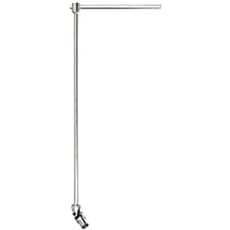
- Flexible Head: Socket spanners featuring a pivoting or articulating head that adjusts to various angles, enabling access to awkwardly positioned fasteners. The flexible joint typically allows 15-30 degrees of movement in multiple directions.
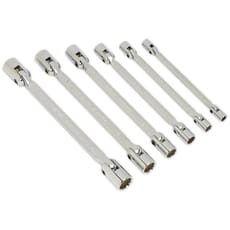
- Double-Ended Socket Spanner: A design incorporating different sized sockets at each end of a single handle, reducing the number of tools required and offering quick size changes without swapping tools.
Who Uses Socket Spanners?
- Vehicle Mechanics and Technicians: Essential for accessing fasteners in engine bays, under bonnets, and within chassis components where standard ratchets cannot fit
- Agricultural Engineers: Maintaining and repairing farm machinery, tractors, and equipment with recessed fixings
- Plant Maintenance Technicians: Servicing industrial machinery, hydraulic systems, and manufacturing equipment
- HVAC Engineers: Working on heating systems, boilers, and air conditioning units with confined access points
- Motorcycle Mechanics: Accessing fasteners around frames, fairings, and within compact engine compartments
- Marine Engineers: Maintaining boat engines and marine equipment in restricted spaces
- Production Line Engineers: Assembly and maintenance work where access is limited by machine design
- DIY Enthusiasts: Home mechanics and amateur restorers working on vehicles and machinery projects
How to Choose the Right Socket Spanners
Size Coverage: Determine which fastener sizes you encounter most frequently. Individual socket spanners suit specialists with specific requirements, whilst comprehensive sets from brands like Expert by Facom provide complete metric coverage from 8mm to 19mm or beyond, eliminating the need for multiple purchases.
Handle Design: Consider your typical working conditions. T-handle designs offer rapid spinning capability and two-handed torque application. Angled socket spanners provide clearance in confined spaces. Flexible head designs from manufacturers like Sealey deliver maximum versatility where fastener angles vary. Double-ended configurations reduce tool changes for efficiency.
Point Configuration: Select 6-point sockets for maximum grip and torque capacity on standard hex fasteners, particularly on corroded or tight fixings. Choose 12-point designs only where restricted swing angles demand additional engagement positions, accepting the slightly reduced contact area.
Material Quality: Professional applications demand chrome vanadium steel construction with proper hardening and tempering. Products available from Tooled-Up meet these standards, ensuring long service life under workshop conditions. Avoid chrome-plated mild steel alternatives which will round off under high torque.
Handle Comfort: Extended use necessitates ergonomic handles. PVC-dipped grips reduce hand fatigue and improve control, particularly important when working overhead or in awkward positions. Consider cushioned or rubberised handles for maximum comfort during lengthy maintenance sessions.
Individual vs Set Purchase: Individual socket spanners suit replacing lost sizes or adding specific requirements. Sets offer better value for equipping workshops or mobile tool kits, typically supplied in organised storage cases for easy size identification and transport.
Popular Accessories
- Socket Sets: Standard socket collections to complement socket spanners for use with ratchets and breaker bars
- Ratchet Spanners: Combination spanners with ratcheting mechanisms for alternative fastener access
- Torque Wrenches: For precise tightening to manufacturer specifications after initial work with socket spanners
- Universal Joints: Adapters for standard sockets allowing angled access similar to flexible socket spanners
- Breaker Bars: Extended leverage tools for initially loosening extremely tight fasteners
- Impact Drivers: For rapid fastener removal where access permits power tool use
- Penetrating Oils: Essential for loosening corroded fixings before applying torque
- Tool Storage Systems: Organisers, foam inserts and tool rolls for protecting and transporting socket spanner sets
- Magnetic Parts Trays: Preventing loss of removed fasteners when working in confined areas
Frequently Asked Questions
What's the difference between a socket spanner and a ring spanner?
Socket spanners feature a socket permanently mounted on a handle, providing deeper engagement with fasteners and typically offering more clearance around obstacles. Ring spanners have a closed circular end that grips fastener heads from the sides. Socket spanners generally provide better access in recessed areas and are less likely to slip off fasteners, whilst ring spanners are often more compact for extremely tight spaces.
Can socket spanners be used with power tools?
No, socket spanners are designed exclusively for manual operation. Their handles cannot accommodate power tool drives, and the tool geometry isn't suitable for impact forces. For powered fastener work, use impact-rated sockets with appropriate impact drivers or impact wrenches that feature standard square drives.
Are flexible head socket spanners as strong as fixed designs?
Quality flexible head socket spanners from reputable manufacturers maintain excellent strength despite the articulating joint. However, fixed designs generally tolerate higher torque loads due to eliminating a potential failure point. For maximum torque applications on severely corroded fasteners, fixed socket spanners offer superior durability, whilst flexible designs excel where access angle varies.
Why do socket spanners have different point configurations?
The point configuration determines how the socket engages the fastener. 6-point sockets contact fastener flats rather than corners, distributing force more effectively and reducing rounding risk on tight fixings. 12-point sockets provide more positions for engagement, useful when swing arc is severely restricted, though they offer less contact area per engagement point.
How should I maintain socket spanners?
Wipe clean after each use, particularly removing oil, grease and moisture to prevent corrosion. Occasionally apply a light machine oil to moving parts on flexible head designs. Store in dry conditions, preferably in the supplied case or organised tool storage. Inspect regularly for wear, cracks or damage, particularly around the socket opening. Replace any damaged tools immediately as worn sockets can round off fasteners and compromise safety.