

Socketry & Spanners

Pay in 3 interest-free payments on purchases from £20-£3000 with  . Learn more.
 Loading...
End of content
Error - No more pages to load
About Socketry & Spanners
Socketry and spanners represent the cornerstone of any professional toolkit, providing the essential means to fasten and loosen nuts, bolts, and fixings across countless applications. From automotive repair and engineering to general maintenance and assembly work, these fundamental hand tools deliver the mechanical advantage needed to apply precise torque safely and efficiently. The category encompasses an extensive range of socket sets, individual sockets in metric and imperial sizes, ratchets, torque wrenches, and various spanner configurations including open-ended, ring, combination, and adjustable designs.
Modern socketry has evolved considerably beyond basic chrome vanadium steel sockets, with manufacturers like Bahco, Wera, and Stanley now offering impact-rated sockets for use with power tools, deep sockets for recessed fasteners, and specialised profiles such as bi-hex and multi-point designs that reduce rounding on worn fixings. Professional-grade socket sets typically include a comprehensive range of sizes with multiple drive options—commonly 1/4", 3/8", and 1/2" square drives—alongside extension bars, universal joints, and quick-release ratchets. Spanners similarly range from budget-friendly sets suitable for occasional DIY use to precision-engineered tools from brands like Knipex and Wiha that meet the exacting demands of daily professional application.
Tooled-Up.com stocks socketry and spanners suitable for every skill level and application, from compact automotive socket sets through to comprehensive professional workshops kits containing hundreds of pieces. Whether working on site, in a garage, or maintaining plant machinery, having the correct size and type of socket or spanner prevents fastener damage, reduces working time, and crucially minimises the risk of injury from slipping tools or incorrect improvisation.
Jargon Buster
- Drive Size
- The square recess in a socket that connects to the ratchet or breaker bar, measured in inches. Common sizes are 1/4" (for small precision work), 3/8" (general purpose), 1/2" (heavy-duty applications), and 3/4" or 1" for industrial use.
- Chrome Vanadium (CrV)
- A steel alloy commonly used in socket and spanner manufacture that offers excellent strength, durability, and resistance to wear. Chrome vanadium tools typically feature a polished chrome finish for corrosion resistance.
- Impact-Rated Sockets
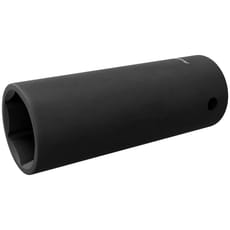
- Sockets specifically designed and hardened to withstand the sudden rotational forces generated by impact wrenches and impact drivers. These are typically finished in black oxide rather than chrome and feature thicker walls than standard sockets.
- Torque Wrench
- A precision tool that allows the user to apply a specific amount of rotational force (torque), measured in Newton metres (Nm) or foot-pounds (ft-lb). Essential for applications requiring exact tightening specifications such as wheel nuts or cylinder head bolts.
- Ratchet Mechanism
- The internal gear system that allows a socket or spanner to rotate freely in one direction whilst gripping in the other, enabling the user to tighten or loosen fasteners without removing and repositioning the tool after each turn.
- AF (Across Flats)
- The measurement across the flat parallel sides of a hexagonal nut or bolt head, which determines the socket or spanner size required. Can be measured in metric (mm) or imperial (inches) depending on the fastener standard.
Who Uses Socketry & Spanners?
Socketry and spanners are indispensable across virtually every trade and maintenance discipline:
- Motor mechanics and vehicle technicians – for engine work, suspension repairs, brake servicing, and general automotive maintenance
- Plant fitters and millwrights – maintaining and assembling industrial machinery, conveyors, and production equipment
- Plumbers and heating engineers – working with compression fittings, valve connections, and boiler components
- Electricians – securing electrical enclosures, mounting equipment, and working with cable glands
- Bicycle mechanics – assembling and maintaining cycles, from basic repairs to professional workshop servicing
- Agricultural engineers – servicing tractors, combines, and farm machinery in workshop and field environments
- Construction workers and steel erectors – assembling structural steelwork, scaffolding, and temporary works
- Maintenance technicians – across manufacturing, facilities management, and building services
- DIY enthusiasts and home mechanics – for household repairs, flat-pack assembly, and vehicle maintenance
- Marine engineers – maintaining boats, ships, and marine equipment in corrosive saltwater environments
How to Choose the Right Socketry & Spanners
Selecting appropriate socketry and spanners depends on several key considerations that balance quality, functionality, and budget:
Application and Frequency of Use: Occasional DIY users can achieve excellent results with mid-range socket sets from established brands, whilst professional tradespeople working daily should invest in premium tools from manufacturers like Bahco, Wera, or Knipex that offer superior durability and often lifetime guarantees. Consider whether you need impact-rated sockets if you regularly use power tools.
Size Range and Measurement Systems: Determine whether you primarily work with metric or imperial fasteners—or both. Automotive work typically requires metric sizes (8mm to 24mm being most common), whilst older British machinery or American equipment may need AF (Across Flats) imperial sizes. Comprehensive socket sets available at Tooled-Up cover both systems, whilst specialists may prefer individual sockets in frequently used sizes.
Drive Size Selection: Match the drive size to your typical applications. A 1/4" drive set suits electronics, small engine work, and confined spaces; 3/8" drive offers the best all-round versatility for general use; 1/2" drive provides the strength needed for automotive, agricultural, and heavy industrial applications. Many professionals maintain sets in multiple drive sizes.
Socket Depth and Special Profiles: Standard depth sockets suit most applications, but deep sockets are essential when working with recessed nuts or threaded rod. Consider sets that include both. Bi-hex (12-point) sockets allow easier engagement in restricted spaces, whilst hex (6-point) sockets provide maximum grip and reduced risk of rounding on tight fasteners.
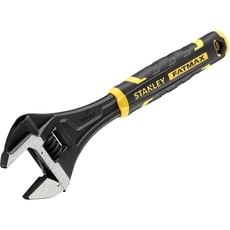
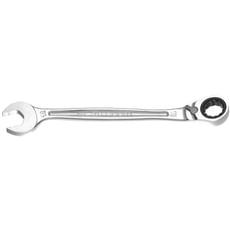
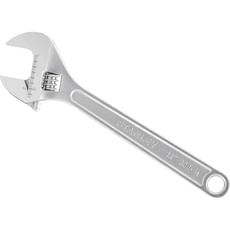
Spanner Configuration: Combination spanners (open-ended one end, ring the other) offer maximum versatility. Ratchet spanners significantly speed up work in accessible locations. Adjustable spanners provide flexibility but should be quality examples like those from Bahco to avoid jaw slippage. Consider whether you need offset rings for additional knuckle clearance.
Storage and Organisation: Socket sets with quality cases or foam inserts help maintain organisation and quickly identify missing pieces. Professional users often prefer socket rails or modular foam solutions that integrate with larger tool storage systems from Milwaukee, Makita, or DeWalt.
Popular Accessories
- Ratchet handles and breaker bars – various lengths including extendable models for increased leverage
- Extension bars – in multiple lengths (75mm, 125mm, 250mm typically) to reach recessed fasteners
- Universal joints and wobble extensions – for working at angles in confined spaces
- Torque wrenches – click-type, beam-type, and digital models for precision tightening
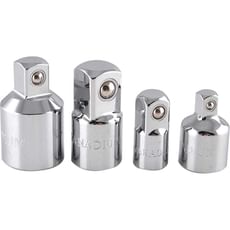
- Socket adaptors – to convert between different drive sizes (e.g., 1/2" to 3/8")
- Impact socket sets – specifically for use with cordless and air-powered impact wrenches
- Socket rails and organisers – magnetic rails, clips, and foam inserts for workshop storage
- Spark plug sockets – with rubber inserts to protect ceramic insulators
- Nut spinners and speed braces – for rapid fastener removal and installation
- Spanner sets and storage rolls – canvas rolls or plastic clips to keep spanners organised
- Thread repair kits – for addressing damaged threads encountered during fastener work
- Penetrating oils and release sprays – essential for freeing seized fasteners
Safety Information
Whilst socketry and spanners are fundamental hand tools, improper use can result in injury or equipment damage. Always select the correct size tool that fits the fastener fully—using undersized or worn tools risks slippage, rounded fasteners, and trapped fingers. Never extend spanners with pipes or hammers to gain additional leverage, as this can cause sudden tool failure or fastener shearing.
When applying significant force, ensure stable footing and pull rather than push where possible, so any slippage doesn't result in impact injuries. Wear safety glasses when working with seized fasteners, as sudden release or fastener failure can project debris. Check tools regularly for wear, damaged ratchet mechanisms, or cracked sockets, and replace compromised equipment immediately.
Impact-rated sockets must always be used with impact tools—standard chrome sockets can shatter explosively under impact forces. When using torque wrenches, consult manufacturer specifications for correct tightening values, as over-tightening can damage threads or components whilst under-tightening may result in mechanical failure. Store tools in dry conditions and maintain them with light oil to prevent corrosion, which can weaken steel and compromise safety. The HSE recommends regular inspection of hand tools as part of workplace safety procedures, particularly in professional environments.
Frequently Asked Questions
What's the difference between impact sockets and regular sockets?
Impact sockets are manufactured from softer, more ductile chrome molybdenum steel with a black phosphate or oxide finish, allowing them to flex slightly and absorb the sudden rotational forces from impact wrenches without shattering. They feature thicker walls and are specifically heat-treated for impact applications. Regular chrome vanadium sockets with polished chrome finishes are hardened differently and can crack or shatter if used with impact tools, posing a significant safety hazard. Always use impact-rated sockets with cordless impact drivers, impact wrenches, or air tools.
Should I buy metric or imperial socket sets?
This depends entirely on what you're working on. Modern European and Asian vehicles, machinery, and equipment universally use metric fasteners, making a metric set (typically 8mm to 24mm) essential for most UK applications. However, older British machinery, American vehicles, and some specialist equipment use imperial AF (Across Flats) sizes measured in fractions of an inch. Many professionals at Tooled-Up choose comprehensive sets covering both systems, or invest in a good metric set supplemented with commonly needed imperial sizes like 1/2", 9/16", 5/8", and 3/4".
What do the numbers of teeth on a ratchet mean?
The tooth count refers to the number of internal teeth in the ratchet mechanism, which determines how far you must move the handle to engage the next tooth. A 72-tooth ratchet requires only 5 degrees of movement between clicks, making it ideal for confined spaces where handle swing is limited. A 36-tooth ratchet needs 10 degrees, whilst a 24-tooth requires 15 degrees. Higher tooth counts offer finer control and work better in tight spots, but lower tooth counts are often more robust for heavy-duty applications requiring significant torque.
How do I maintain my sockets and spanners?
After use, wipe tools clean of oil, grease, and debris to prevent corrosion and maintain proper fit. Store in dry conditions, ideally in cases or on rails rather than loose in damp toolboxes. Apply a light coating of tool oil or corrosion inhibitor to prevent rust, particularly if tools are exposed to moisture or stored long-term. Inspect ratchet mechanisms periodically—if they slip or fail to engage properly, they may need servicing or replacement. Avoid using damaged, worn, or rounded sockets as these will damage fasteners and increase the risk of slippage injuries.
Can I use regular sockets with an impact wrench?
No—this is extremely dangerous and should never be attempted. Regular chrome vanadium sockets are heat-treated to be hard and wear-resistant, but this makes them brittle under the sudden shock loads generated by impact tools. They can shatter explosively, sending sharp fragments at high velocity that can cause serious injury. Impact sockets are specifically manufactured from different steel alloys and treated to absorb impact forces safely. The modest additional cost of proper impact sockets is a worthwhile investment compared to the risk of tool failure and potential injury.