

Spanners

Pay in 3 interest-free payments on purchases from £20-£3000 with  . Learn more.
 Loading...
End of content
Error - No more pages to load
About Spanners
Spanners are among the most fundamental tools in any toolkit, designed to provide leverage for tightening or loosening threaded fasteners such as nuts and bolts. Available in numerous configurations including open-ended, ring, combination, adjustable, and specialist designs, spanners remain indispensable across virtually every trade and industry. From automotive mechanics to plumbing, machinery maintenance to garden equipment servicing, the right spanner makes the difference between a job completed efficiently and one fraught with frustration and potential damage to fixings.
The spanner category encompasses both general-purpose tools and highly specialised variants designed for specific applications. Metric and imperial sizing systems cater to different equipment origins, whilst modern materials and manufacturing techniques have evolved traditional designs to offer improved strength, reduced weight, and enhanced durability. Tooled-Up.com stocks spanners from trusted manufacturers who understand the demands placed on these essential tools, ensuring tradespeople and DIY enthusiasts can source reliable equipment for every fastening challenge.
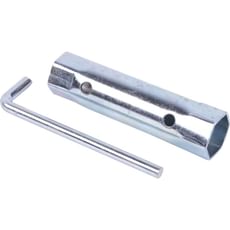
Specialist spanners address particular needs that standard designs cannot accommodate. Spark plug spanners, for instance, feature deep sockets or box configurations specifically dimensioned to access recessed spark plugs without damaging ceramic insulators—essential for lawnmower maintenance, small engine repairs, and automotive servicing. These specialist tools demonstrate how spanner design has evolved beyond basic nut-turning to encompass precision engineering for specific applications across multiple industries.
Jargon Buster
- AF (Across Flats): The measurement standard for imperial spanners, indicating the distance across the flat sides of a hexagonal nut or bolt head, typically measured in inches or fractions thereof.
- Box Spanner: A tubular spanner design with hexagonal ends, allowing access to recessed fixings where conventional spanners cannot reach. Particularly useful for spark plugs and deeply recessed nuts.
- Combination Spanner: Features an open-ended jaw at one end and a ring (closed loop) at the other, both sized identically, providing versatility for different access requirements on the same fastener.
- Ring Spanner: A closed-loop design that surrounds the entire fastener, distributing force across all six points of a hexagonal nut or bolt, reducing the risk of rounding off corners.
- Torque Rating: The maximum rotational force a spanner can safely handle without bending or breaking, particularly important for professional applications requiring specific tightening specifications.
- Offset Design: Spanners with angled or cranked handles that provide clearance for knuckles and improved access in confined spaces, essential for engine bay work and machinery maintenance.
Who Uses Spanners?
- Automotive Mechanics: For engine work, suspension repairs, and general vehicle maintenance requiring precise fastener manipulation
- Bicycle Mechanics: Servicing bikes, adjusting components, and assembling new cycles with appropriate metric sizing
- Plumbers and Gas Engineers: Connecting pipework, tightening compression fittings, and accessing confined installations
- Agricultural Engineers: Maintaining farm machinery, tractors, and equipment in field conditions
- Groundskeepers and Gardeners: Servicing lawnmowers, strimmers, and powered garden equipment including spark plug maintenance
- HVAC Engineers: Installing and maintaining heating systems, air conditioning units, and ventilation equipment
- General Engineers: Across manufacturing, maintenance, and repair disciplines requiring fastener access
- DIY Enthusiasts: Home maintenance, furniture assembly, and equipment repairs requiring basic to intermediate spanner work
- Plant Operators: Routine maintenance checks and adjustments on industrial machinery and construction equipment
How to Choose the Right Spanners
Selecting appropriate spanners begins with understanding the fastener systems you'll encounter most frequently. Determine whether you predominantly work with metric or imperial fixings, though many professionals maintain both sets given the variety of equipment in circulation. Consider starting with a comprehensive combination spanner set covering common sizes, then supplementing with specialist tools as specific needs arise.
Material quality significantly impacts longevity and performance. Chrome vanadium steel offers excellent strength and corrosion resistance for professional use, whilst cheaper carbon steel variants may suffice for occasional DIY applications. The Tooled-Up range includes spanners from manufacturers like Bahco and Wera, known for metallurgy that withstands the rigours of daily professional use without deforming under load.
Consider the working environment when selecting spanner types. Ring spanners provide maximum grip and are less likely to slip, making them ideal for seized or high-torque applications. Open-ended designs offer speed where access allows rapid engagement and disengagement. Ratchet spanners dramatically increase efficiency in repetitive tasks, whilst adjustable spanners provide versatility across multiple sizes—though with reduced precision and increased potential for fastener damage if misused.
For specialist applications, invest in purpose-designed tools rather than improvising with standard equipment. Spark plug spanners feature appropriate depths and diameters to prevent ceramic damage, whilst flare nut spanners accommodate brake and fuel lines without rounding soft brass fittings. Investing in the correct tool prevents costly damage and ensures professional results every time.
Popular Accessories
- Spanner Organisers and Rolls: Keep sets organised, protected, and easily transportable between job sites
- Socket Sets: Complement spanner collections with ratchet-driven alternatives for increased versatility
- Torque Wrenches: Essential for applications requiring specific tightening values to manufacturer specifications
- Penetrating Lubricants: Release seized fasteners before applying spanners, preventing rounding and tool damage
- Extension Bars: Increase reach for deeply recessed fixings when used with box spanners
- Magnetic Parts Trays: Prevent loss of removed fixings during disassembly and servicing work
- Tommy Bars: Provide additional leverage when operating box spanners in particularly stubborn applications
Safety Information
Always select spanners appropriately sized for the fastener being worked upon. Undersized or worn spanners can slip, causing rounded fasteners and potential hand injuries. Pull spanners towards you rather than pushing where possible, maintaining better control should the tool slip unexpectedly. When additional leverage is required, use a longer spanner rather than extending a shorter one with pipes or additional tools, which can exceed the tool's design limits and cause sudden failure.
Inspect spanners regularly for signs of wear, particularly jaw opening, cracks, or deformation. Damaged tools should be withdrawn from service immediately as they pose significant safety risks. When working with spark plugs and ignition systems, ensure the engine is cold and ignition is switched off. Follow HSE guidance regarding hand tool maintenance and replacement, particularly in professional workshop environments where tool condition directly impacts worker safety.
Wear appropriate PPE including safety glasses when applying significant force to fasteners, as sudden release can cause injury. Ensure adequate lighting and stable working positions, particularly when working beneath vehicles or machinery. Never use spanners on live electrical equipment, and maintain awareness of pinch points where handles may trap fingers against adjacent surfaces during operation.
Frequently Asked Questions
What's the difference between metric and AF spanners?
Metric spanners are sized in millimetres and correspond to the modern international standard used on most contemporary equipment. AF (Across Flats) spanners use imperial measurements in inches and fractions, commonly found on older British and American machinery. The sizing systems are not interchangeable—using the wrong system will round fasteners and damage tools. Many professionals maintain both sets to accommodate the variety of equipment encountered in the field.
Why do I need a special spark plug spanner?
Spark plug spanners feature specific internal dimensions and depth to accommodate the hexagonal section of spark plugs whilst protecting the fragile ceramic insulator. Standard spanners lack the required depth and may crack the ceramic, leading to engine misfires and costly replacements. The rubber or magnetic inserts in quality spark plug spanners also prevent dropped plugs from damage, particularly important when working with modern iridium-tipped varieties.
Can I use an adjustable spanner instead of fixed sizes?
Whilst adjustable spanners offer convenience across multiple sizes, they provide less secure grip than fixed spanners and are more prone to slipping and rounding fasteners. They're suitable for light-duty applications and emergency use, but professional work demands properly sized fixed spanners for reliability and fastener preservation. The additional jaw width of adjustables also limits access in confined spaces where fixed spanners excel.
How should I maintain my spanners?
Keep spanners clean and lightly oiled to prevent corrosion, particularly after exposure to moisture or corrosive substances. Store them organised to prevent damage from tools knocking together. Periodically check jaw faces for wear and ensure ring spanners haven't distorted. Never use spanners as hammers, pry bars, or extensions for other tools, as this causes deformation that compromises their precision and safety.
What size spanners do I need for lawnmower maintenance?
Most lawnmower maintenance requires metric spanners in common sizes between 8mm and 17mm for general fasteners, plus a dedicated spark plug spanner—typically 19mm or 21mm depending on the engine manufacturer. Check your specific mower's manual for exact requirements. Available from Tooled-Up.com, combination sets covering these sizes alongside specialist spark plug tools provide comprehensive coverage for routine servicing and repairs.