

Speed Braces
Pay in 3 interest-free payments on purchases from £30-2000 with  . Learn more.
 Loading...
End of content
Error - No more pages to load
About Speed Braces
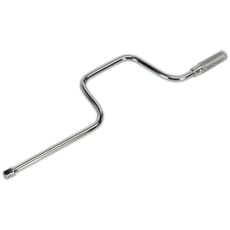
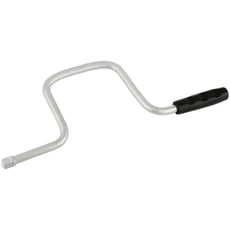
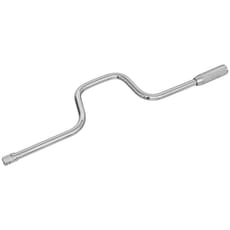
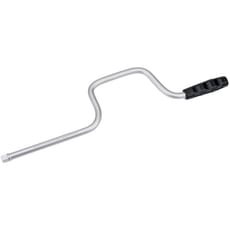
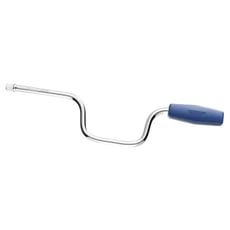
A speed brace is an essential manual tool that combines the leverage of a traditional ratchet with a rotating handle mechanism, allowing for rapid socket driving in situations where power tools are impractical or unavailable. Featuring a spring-loaded ball bearing socket retention system and typically manufactured from hardened chrome vanadium steel, speed braces enable tradespeople to quickly tighten or loosen nuts and bolts with continuous rotational motion. The distinctive U-shaped design with a central rotating grip provides excellent mechanical advantage whilst maintaining control, making these tools particularly valuable for automotive work, machinery maintenance, and assembly tasks where access is restricted.
Speed braces available from Tooled-Up.com are manufactured to exacting standards including DIN 3122 Form B and ISO 3315 specifications, ensuring compatibility with standard socket sets and reliability under demanding professional use. Chrome plating provides corrosion protection for extended tool life, whilst impact-resistant handles deliver comfortable operation even during prolonged use. The most common drive sizes are 3/8" and 1/2" square drive, with overall lengths typically ranging from 250mm to 380mm depending on the application requirements.
Unlike powered ratchet wrenches or cordless impact drivers, speed braces require no batteries or compressed air, making them invaluable for field work, emergency repairs, or locations without power access. The manual operation also provides superior tactile feedback, allowing experienced users to feel thread engagement and torque application, reducing the risk of cross-threading or over-tightening fasteners on delicate components.
Jargon Buster
- Square Drive: The socket attachment point measured in inches (commonly 1/4", 3/8", 1/2", or 3/4"). The 3/8" and 1/2" drives are most common for speed braces, with the larger 1/2" drive suitable for heavier-duty applications requiring greater torque.
- Chrome Vanadium Steel: An alloy steel containing chromium and vanadium that provides exceptional strength, durability, and resistance to wear. When hardened and tempered, this material delivers professional-grade performance with excellent resistance to deformation under load.
- Spring-Loaded Ball Bearing: A retention mechanism within the square drive that holds sockets securely in place during operation. The spring-loaded ball engages with the detent hole in the socket, preventing accidental detachment whilst allowing easy socket changes.
- DIN 3122 / ISO 3315: International manufacturing standards that define dimensional tolerances, material specifications, and performance requirements for socket drive tools, ensuring interchangeability between different manufacturers' sockets and drive tools.
- Ratcheting Mechanism: Though speed braces don't contain a ratchet, they're often compared to ratchet handles. The continuous rotating handle of a speed brace eliminates the need for repositioning, offering faster continuous rotation than traditional ratchets in suitable applications.
- Torque Application: The rotational force applied to a fastener. Speed braces provide good mechanical advantage but rely on user feel rather than calibrated settings, making them suitable for general fastening but not precision torque-critical applications.
Who Uses Speed Braces?
Speed braces are invaluable tools across numerous trades and applications:
- Motor Mechanics and Auto Electricians: For engine work, suspension components, and under-bonnet assemblies where speed and access are crucial
- Agricultural Engineers: Field repairs on farm machinery and equipment where power sources may be unavailable
- Plant Maintenance Engineers: Industrial machinery servicing and equipment overhaul in manufacturing environments
- HGV and Commercial Vehicle Technicians: Heavy-duty fastener work on lorries, buses, and commercial fleet vehicles
- Marine Engineers: Boat maintenance and yacht servicing where the manual operation is preferred in confined engine compartments
- HVAC Engineers: Installing and maintaining heating, ventilation, and air conditioning systems
- Scaffolders: Assembling and dismantling scaffolding structures with repetitive fastening tasks
- DIY Enthusiasts: Home mechanics and hobbyists working on vehicle restoration or machinery repair projects
- Breakdown Recovery Technicians: Roadside repairs where speed and portability are essential
How to Choose the Right Speed Braces
Selecting the appropriate speed brace depends on several key considerations:
Drive Size: The 3/8" square drive suits general-purpose work with socket sizes from 8mm to 19mm, ideal for automotive work and light to medium-duty applications. The 1/2" square drive handles larger sockets (10mm to 32mm) and heavier fasteners requiring greater torque, making it preferable for commercial vehicle work, plant maintenance, and heavy machinery. Match your drive size to your existing socket set for maximum versatility.
Overall Length: Longer speed braces (350-380mm) provide greater leverage and faster rotation but require more clearance space. Shorter models (250-300mm) offer better access in confined areas but sacrifice some mechanical advantage. Consider your typical working environment when selecting length.
Build Quality and Standards: Professional-grade speed braces manufactured to DIN 3122 Form B or ISO 3315 standards ensure dimensional accuracy and durability. The range at Tooled-Up includes professional-quality tools from respected brands including Elora, Sealey, and Expert by Facom, all featuring hardened chrome vanadium construction with chrome plating for corrosion resistance.
Handle Design: Impact-resistant handles provide comfort during extended use and protect against accidental drops. Look for ergonomically designed grips that allow smooth rotation whilst maintaining positive control, particularly important when working with oily or greasy hands.
Socket Retention: Spring-loaded ball bearing retention is essential for secure socket holding during operation. This prevents sockets from falling off mid-task, particularly critical when working overhead or in awkward positions.
Popular Accessories
- Socket Sets: Comprehensive metric and imperial socket collections in matching drive sizes (3/8" or 1/2")
- Extension Bars: Various lengths to extend reach into recessed areas whilst maintaining drive connection
- Universal Joints: Allow angled access to fasteners that aren't in direct line with the speed brace
- Deep Sockets: Extended length sockets for reaching nuts on protruding threaded studs
- Impact Sockets: Though primarily designed for impact tools, these heavier-duty sockets withstand the forces applied through speed braces
- Hex Bit Adaptors: Convert socket drive to accept hexagonal driver bits for versatile fastening applications
- Torque Wrenches: For final tightening to manufacturer specifications after initial fastening with a speed brace
- Tool Roll or Socket Storage: Organised storage systems to keep speed braces and sockets protected and accessible
Safety Information
Whilst speed braces are relatively simple manual tools, observing proper safety practices ensures effective and injury-free operation:
Personal Protective Equipment: Always wear appropriate safety glasses to protect against flying debris or fastener fragments. Work gloves provide grip and protect hands from sharp edges, though some users prefer bare hands for better tactile feedback. Steel toe-capped boots are advisable when working beneath vehicles or heavy machinery.
Tool Inspection: Before use, inspect the speed brace for damage including cracks in the handle, worn ball bearing retention, or damaged square drive. Worn or damaged tools should be withdrawn from service immediately to prevent socket detachment or handle failure during operation.
Correct Socket Selection: Always use the correctly sized socket for the fastener – never force an imperial socket onto a metric fastener or vice versa. Worn sockets that slip under load should be replaced to prevent rounded fastener heads and potential injury.
Body Position: Maintain stable footing and balanced body position when applying force. Pull rather than push wherever possible to maintain control if the fastener suddenly releases. Be aware of hand and knuckle position to avoid injury if the tool slips.
Torque Awareness: Speed braces provide mechanical advantage but lack torque limiting. Over-tightening can damage threads, strip fasteners, or crack components. For critical applications requiring specific torque values, use a calibrated torque wrench for final tightening.
Frequently Asked Questions
What's the difference between a speed brace and a ratchet?
A ratchet handle uses a pawl mechanism that allows the handle to reset without turning the socket, requiring repeated back-and-forth motion. A speed brace features a rotating centre handle that allows continuous circular motion, making it faster for running nuts and bolts on or off when resistance is low. However, ratchets are more versatile in confined spaces and provide better control under high torque. Many professionals keep both tools in their kit for different situations.
Can I use a speed brace with impact sockets?
Yes, impact sockets work perfectly with speed braces and are often preferred due to their thicker walls and more durable construction. Impact sockets are designed to withstand much higher forces than those applied by manual tools, so they're more than capable of handling speed brace applications. The only consideration is that impact sockets are slightly heavier and bulkier than standard chrome sockets.
Which drive size should I choose – 3/8" or 1/2"?
The 3/8" drive is ideal for general automotive work, light engineering, and applications involving socket sizes from 8mm to 19mm. The 1/2" drive suits heavier-duty work including commercial vehicles, agricultural machinery, and industrial applications where larger fasteners and greater torque are common. If you primarily work on cars and light vehicles, 3/8" drive is most practical. For mixed or heavy-duty applications, 1/2" drive offers greater versatility, though the tool will be slightly larger and heavier.
Are speed braces suitable for precision torque applications?
No, speed braces are designed for rapid fastener installation and removal rather than precision torque application. They provide excellent mechanical advantage and user feedback but lack calibrated torque limiting. For applications requiring specific torque values – such as cylinder head bolts, suspension components, or wheel nuts – always use a calibrated torque wrench for final tightening after initial fastening with a speed brace.
How do I maintain my speed brace?
After use, wipe the speed brace clean of oil, grease, and debris using a lint-free cloth. Periodically apply a light machine oil to the rotating mechanism and ball bearing retention to ensure smooth operation. Store in a dry environment to prevent corrosion, despite the chrome plating. Inspect the square drive for wear and the ball bearing for proper spring tension – if sockets don't hold securely, the retention mechanism may need professional attention or tool replacement.