
Spokeshaves

Pay in 3 interest-free payments on purchases from £20-£3000 with  . Learn more.
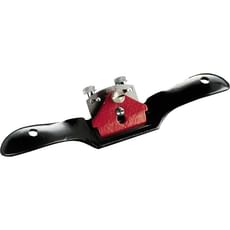
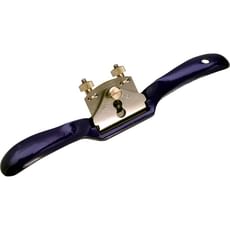
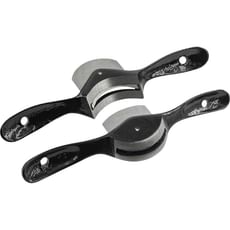
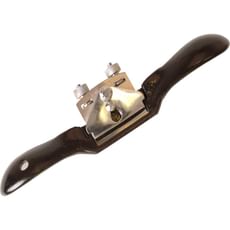
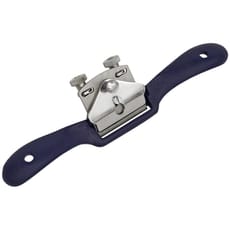
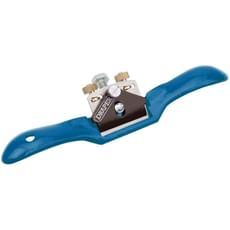
Loading...
End of content
Error - No more pages to load
About Spokeshaves
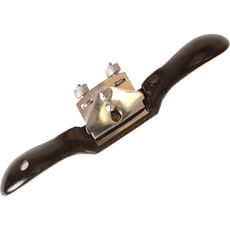
A spokeshave is a specialised hand tool designed for shaping and smoothing curved or irregular wood surfaces, traditionally used for shaping the spokes of wooden wheels—hence the name. Modern spokeshaves have evolved into versatile woodworking tools essential for creating smooth, contoured surfaces on chair legs, spindles, oars, and a wide variety of other rounded or shaped components. Available at Tooled-Up.com, these precision tools feature a blade held in place by a body with two handles, allowing for controlled, fine cuts across convex and concave surfaces.
Spokeshaves come in three primary configurations: flat-faced, concave (round), and convex models. Flat spokeshaves work best on gently curved or nearly flat surfaces, while concave spokeshaves excel at shaping external curves like spindles and chair legs. Convex spokeshaves are designed for interior curves and recessed work. The selection at Tooled-Up features established brands including Faithfull, Record, Stanley, Draper, and Sealey, offering both individual tools and convenient two-piece sets that provide versatility for different shaping tasks.
Quality spokeshaves typically feature malleable iron or cast iron bodies with high carbon steel blades, ensuring durability and edge retention. Most models include adjustable blade mechanisms, allowing woodworkers to fine-tune the depth of cut for different materials and applications. Standard cutter widths range from 50mm to 60mm, providing sufficient coverage for efficient stock removal whilst maintaining control over delicate shaping operations.
Jargon Buster
- Cutter Width: The width of the cutting blade, typically 50-60mm, which determines how much material can be removed in a single pass and affects the tool's ability to work on different curve radii.
- Flat-Faced Spokeshave: A spokeshave with a straight sole, designed for working on gentle curves, tapers, and nearly flat surfaces where a standard plane would be too unwieldy.
- Concave (Round) Spokeshave: Features a curved sole designed to shape external convex curves such as spindles, chair legs, and handles. The rounded base allows the tool to follow the contour of the work piece.
- Convex Spokeshave: Has an outward-curved sole for shaping internal concave curves and recessed surfaces, ideal for hollowing operations and interior contours.
- Malleable Iron Body: A tough, shock-resistant casting material that provides durability whilst allowing for some flexibility, commonly used in quality spokeshave construction alongside cast iron.
- Blade Adjustment: The mechanism (typically thumbscrews or adjustment nuts) that allows precise control over blade depth and angle, critical for achieving consistent, fine shavings.
Who Uses Spokeshaves?
- Cabinet Makers and Joiners: For shaping furniture components, curved rails, and decorative elements requiring smooth, contoured surfaces
- Windsor Chair Makers: Essential for shaping spindles, legs, and curved back components that define traditional chair designs
- Boat Builders: Used extensively for shaping oars, tillers, handrails, and other curved wooden components in traditional boat construction
- Wood Turners: For refining turned work and creating details that cannot be achieved on the lathe alone
- Luthiers (Instrument Makers): For shaping necks, braces, and curved components in guitar, violin, and other instrument construction
- Green Woodworkers: Essential for traditional pole lathe work, rustic furniture making, and working with unseasoned timber
- Carpenters and Woodworking Hobbyists: For general shaping tasks, restoration work, and creating custom wooden handles and components
- Heritage Restoration Specialists: For repairing and recreating period woodwork where modern power tools would be inappropriate
How to Choose the Right Spokeshaves
Surface Type and Curvature: Match the spokeshave sole to your intended work. Flat-faced models suit gentle curves and chamfers, concave spokeshaves are ideal for external curves like spindles and legs, whilst convex models excel at interior curves and hollows. Consider purchasing a two-piece set for maximum versatility across different projects.
Body Material and Construction: Quality spokeshaves feature malleable iron or cast iron bodies that provide stability and durability. The body should feel substantial in the hand, with smooth casting and comfortable handle positions. Avoid lightweight or poorly finished models that may flex during use or cause hand fatigue.
Blade Quality and Adjustability: High carbon steel blades hold a sharp edge longer and are easier to hone than cheaper alternatives. Look for models with clear, accessible blade adjustment mechanisms—typically thumbscrews or knurled nuts—that allow precise depth control without slipping during use. Replacement blades should be readily available from stockists like Tooled-Up.
Cutter Width: Standard 50mm cutters provide a good balance between coverage and control for most applications. Wider cutters remove material more quickly on larger work pieces, whilst narrower blades offer greater manoeuvrability on tight curves and detailed work.
Brand Reputation: Established manufacturers including Stanley, Record, and Faithfull have proven track records for quality and reliability. These brands typically offer better metallurgy, more precise machining, and longer service life compared to budget alternatives.
Popular Accessories
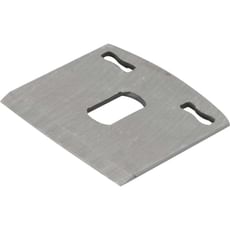
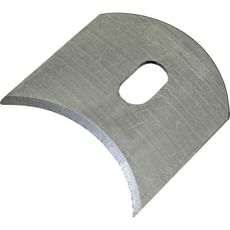
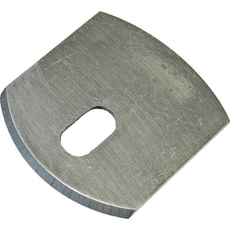
- Replacement Blades: Individual flat, concave, and convex blades to maintain sharp cutting edges without replacing the entire tool
- Sharpening Stones: Whetstones, diamond stones, and honing guides for maintaining razor-sharp blade edges
- Honing Guides: Jigs that hold the blade at the correct angle during sharpening for consistent bevels
- Bench Hooks and Shaving Horses: Work-holding devices that secure curved work pieces during shaping operations
- Draw Knives: Complementary tools for rapid stock removal before fine-tuning with spokeshaves
- Scrapers and Card Scrapers: For final smoothing after spokeshave work, particularly on difficult grain
- Calipers and Templates: Measuring tools for ensuring consistent diameters and profiles on turned or shaped components
- Tool Rolls and Storage: Protection for blade edges during transport and storage on site or in the workshop
Safety Information
Blade Handling: Spokeshave blades are extremely sharp and should be handled with care during adjustment, sharpening, and blade changes. Always work with blades facing away from your body and keep fingers clear of the cutting edge when making adjustments.
Work Piece Security: Always secure the work piece firmly in a vice, shaving horse, or appropriate clamp before use. Spokeshaves require two-handed operation with significant forward pressure, and unstable work pieces can slip, causing injury or tool damage.
Cutting Direction: Work with the grain direction whenever possible to prevent tear-out and maintain control. When working against the grain is unavoidable, take lighter cuts and proceed slowly to maintain control of the tool.
Tool Storage: Store spokeshaves with blade edges protected to prevent accidental contact and to preserve the cutting edge. Retract blades when not in use or use blade guards if available.
Frequently Asked Questions
What's the difference between a spokeshave and a plane?
Whilst both remove fine shavings from wood, spokeshaves are specifically designed for curved and irregular surfaces with their compact size and dual handles providing better control on contours. Planes excel at flat surfaces and long, straight edges where their extended sole provides stability and accuracy.
Can I use a spokeshave on hardwoods like oak or ash?
Yes, quality spokeshaves with properly sharpened high carbon steel blades handle hardwoods very well. Take lighter cuts on dense hardwoods and ensure your blade is freshly honed for best results. Working with the grain direction is particularly important on hardwoods to prevent tear-out.
How often should I sharpen my spokeshave blade?
This depends on usage and material hardness, but generally sharpen when you notice the tool requires more pressure to cut or leaves a rougher finish. Many woodworkers touch up the blade edge every few hours of use and perform a full sharpening session when performance noticeably decreases.
Do I need both flat and curved spokeshaves?
If you regularly work with curved components, having multiple profiles significantly increases versatility. A flat spokeshave handles gentle curves and chamfers, whilst concave and convex models are essential for more pronounced curves. Tooled-Up stocks convenient two-piece sets that provide excellent value for those requiring multiple profiles.
Can spokeshave blades be resharpened, or must they be replaced?
Spokeshave blades can be resharpened many times using conventional sharpening stones or honing guides, similar to plane irons. Replacement is only necessary when the blade becomes too short from repeated sharpening or if it's damaged. Regular honing maintains performance and extends blade life considerably.