

Spot Welders

Pay in 3 interest-free payments on purchases from £20-£3000 with  . Learn more.
 Loading...
About Spot Welders
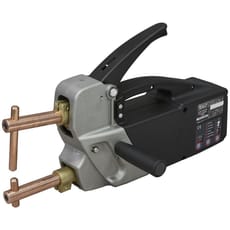
Spot welders are specialised resistance welding machines that join metal sheets together by applying concentrated electrical current and pressure at specific points. These powerful tools create strong, permanent welds by passing high amperage through overlapping metal panels, causing localised melting and fusion without the need for welding wire, shielding gas, or additional fasteners. The result is clean, factory-style spot welds that maintain panel integrity whilst minimising heat distortion across the workpiece.
Professional spot welding equipment is indispensable in automotive body repair, vehicle restoration, and sheet metal fabrication. Modern spot welders feature electronic controls that calculate optimal weld duration based on material thickness, with adjustable power settings and pulse modes for working with high-strength steels commonly found in contemporary vehicle construction. These machines deliver consistent, repeatable results that replicate original manufacturer assembly methods, making them essential for maintaining structural integrity during panel replacement and accident repair work.
Tooled-Up.com stocks professional-grade spot welders from trusted manufacturers like Sealey, providing tradespeople and serious automotive enthusiasts with reliable equipment for panel repairs, classic car restoration, and metal fabrication projects. Whether you're operating a body shop, restoring vintage vehicles, or undertaking MOT structural repairs, a quality spot welder delivers the precision and power necessary for professional-standard metalwork.
Jargon Buster
- Resistance Welding - The process of joining metals by passing electrical current through contact points, generating heat through electrical resistance that melts and fuses the materials together.
- Weld Penetration - The depth to which the molten weld zone extends into the base metal. Proper penetration ensures strong joints that maintain structural integrity under load and stress.
- Electrode Arms - The movable copper-tipped arms that conduct electrical current whilst applying mechanical pressure to the workpiece during welding. Adjustable positioning accommodates various panel configurations and angles.
- Pulse Mode - An advanced welding function that delivers multiple short current bursts rather than a single sustained pulse, reducing heat input for high-strength steels and minimising panel distortion.
- Duty Cycle - The percentage of time a spot welder can operate within a 10-minute period before requiring cooling. Higher duty cycles allow more continuous operation during production work.
- Throat Depth - The distance from the electrode tips to the rear of the machine's frame, determining maximum reach when welding into panels or large assemblies.
Who Uses Spot Welders?
- Automotive Body Repair Technicians – Panel replacement, accident damage repair, and structural metalwork on modern and classic vehicles
- Vehicle Restoration Specialists – Classic car restoration, corrosion repair, and maintaining original manufacturing methods on vintage vehicles
- MOT Testing Stations – Structural repairs to chassis components, sills, and safety-critical areas to meet compliance standards
- Sheet Metal Fabricators – Creating enclosures, cabinets, ducting systems, and custom metalwork for commercial and industrial applications
- Motorsport Engineers – Fabricating roll cages, lightweight panels, and chassis repairs for competition vehicles
- Agricultural Engineers – Repairing farm machinery, trailers, metal structures, and equipment housings
- Mobile Body Repair Services – On-site panel repairs and minor accident damage rectification
- Automotive Enthusiasts – Home restoration projects, classic car rebuilds, and DIY metalwork requiring professional-quality results
How to Choose the Right Spot Welder
Power Supply Requirements: Most professional spot welders operate on single-phase 240v UK mains supply, making them suitable for standard workshop environments. Check the amperage draw against your available circuit capacity—typical machines require 13A to 32A supplies. Verify that your electrical installation can support the machine's power requirements before purchase, and ensure proper earthing and circuit protection are in place.
Control Systems and Adjustability: Modern spot welders feature electronic controls with automatic calculation of weld duration based on material thickness. Look for models offering manual override capability, allowing experienced operators to fine-tune parameters for specific applications. Pulse mode functionality is valuable when working with high-strength steels found in modern vehicle construction, as it reduces heat input and panel distortion.
Build Quality and Construction: Professional-grade machines at Tooled-Up feature robust construction with composite or metal casings, die-cast aluminium components for reduced weight, and copper electrode arms for optimal current transfer. Quality transformers deliver consistent power output, whilst ergonomic handles with heat-resistant materials ensure operator comfort during extended use. Heavy-duty construction withstands the demands of daily professional use.
Throat Depth and Reach: Consider the maximum panel sizes you'll be working with. Adequate throat depth allows you to reach further into door skins, wings, and large panels without repositioning. For automotive body repair work, machines offering 300-400mm throat depth provide versatility for most common applications.
Duty Cycle Considerations: Higher duty cycles enable more continuous operation without cooling breaks, essential for production environments or larger restoration projects. Consider your typical workflow—frequent users benefit from machines with robust duty cycles that maintain consistent performance throughout the working day.
Popular Accessories
- Replacement Electrode Tips – Consumable copper tips that wear with use and require periodic replacement to maintain consistent weld quality and proper electrical contact
- Electrode Dressing Tools – Files and dressing tools for maintaining tip profile, removing build-up, and ensuring optimal contact surface for reliable welds
- Extended Electrode Arms – Longer arms providing increased reach for difficult-to-access areas and larger panel configurations
- Panel Alignment Clamps – Holding tools and magnetic clamps for positioning panels accurately during welding operations
- Metal Preparation Equipment – Wire brushes, grinding discs, and cleaning solutions for removing paint, rust, and galvanising before welding
- Welding Safety Gear – Heat-resistant gloves, safety glasses, face shields, and flame-resistant clothing for operator protection
- Electrical Extension Leads – Heavy-duty rated cables for workshop positioning flexibility whilst maintaining electrical safety
Safety Information
Electrical Safety: Ensure your spot welder is correctly earthed and connected to an appropriately rated circuit with adequate overload protection. Never operate equipment with damaged cables, loose connections, or compromised insulation. All electrical installations should comply with BS 7671 wiring regulations, and any modifications should be undertaken by qualified electricians in accordance with HSE guidelines.
Personal Protective Equipment: Always wear safety glasses or a full face shield to protect against bright flashes and ejected metal particles. Use heat-resistant welding gloves that protect hands from hot electrodes and workpieces. Wear flame-resistant clothing and steel-toe-capped safety footwear. Remove jewellery and ensure long hair is tied back to prevent entanglement or electrical contact.
Ventilation Requirements: Operate spot welders in well-ventilated areas, as the process generates fumes, particularly when working with galvanised, painted, or coated materials. Ensure adequate natural ventilation or install extraction equipment where required, especially in enclosed workshop environments. Be aware of COSHH regulations regarding metalworking fume exposure.
Fire Prevention: Keep combustible materials, flammable liquids, and aerosols away from the welding area. Sparks and hot metal can ignite surrounding materials, so maintain a clear working zone. Have appropriate fire extinguishing equipment (Class A and Class D) readily accessible. Never weld near fuel tanks or lines without proper safety procedures.
Workspace Organisation: Maintain a clean, organised workspace free from trip hazards and clutter. Ensure adequate lighting for accurate electrode placement and work quality assessment. Position the machine on a stable, level surface with sufficient clearance around electrode arms for safe operation. Keep cable routes clear to prevent entanglement or damage.
Frequently Asked Questions
What metal thicknesses can spot welders handle effectively?
Professional spot welders typically weld mild steel panels from 0.6mm up to approximately 3mm per sheet, making them ideal for automotive bodywork and sheet metal fabrication. When joining overlapping panels, the combined thickness should not exceed the manufacturer's specified maximum—usually around 3mm + 3mm for most workshop-grade machines. Thinner materials require reduced power settings to prevent burn-through, whilst thicker materials demand higher amperage and longer weld duration.
Can I use a spot welder on galvanised or coated steel?
Yes, but coatings affect weld quality and electrode life. Galvanised and zinc-coated panels can be spot welded, though the coating reduces electrical resistance and may cause inconsistent results. For best outcomes, remove coating from the weld area using a wire brush or grinder. Be aware that welding galvanised material produces toxic fumes, so ensure adequate ventilation. Electrode tips wear more rapidly on coated materials and require more frequent dressing or replacement.
How do spot welders compare to MIG welding for panel replacement?
Spot welding replicates factory assembly methods, creating discrete weld points that maintain panel strength whilst minimising heat distortion—ideal for visible body panels and structural components. The process is faster for panel replacement work and produces cleaner results without continuous seams requiring grinding. MIG welding offers greater versatility for fabrication and structural repairs but generates more heat, requires consumables (wire and gas), and produces continuous beaded seams that need finishing work.
How often do electrode tips need maintenance or replacement?
Electrode tip maintenance depends on usage frequency and materials being welded. Tips should be dressed (reshaped) every 200-300 welds to maintain proper contact surface and consistent weld quality. Complete replacement is typically necessary after 1,000-2,000 welds, though this varies with materials and operating conditions. Signs requiring attention include inconsistent weld strength, increased spatter, visible flattening of tip profile, or difficulty achieving penetration.
What electrical supply do I need for a spot welder?
Most workshop-grade spot welders operate on single-phase 240v UK mains supply, though amperage requirements vary by model. Typical machines draw between 13A and 32A, requiring appropriately rated circuits and cable sizes. A standard 13A plug socket may suffice for lighter-duty models, whilst more powerful machines need dedicated 16A or 32A supplies installed by qualified electricians. Three-phase power is only necessary for industrial-capacity machines used in high-volume production environments. Always verify electrical requirements against your available supply before purchasing.