

Spray Adhesives

Pay in 3 interest-free payments on purchases from £20-£3000 with  . Learn more.
 Loading...
End of content
Error - No more pages to load
About Spray Adhesives
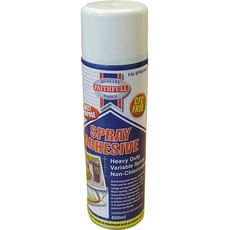
Spray adhesives are versatile bonding solutions that deliver quick, uniform coverage across a wide range of materials and surfaces. Unlike traditional liquid adhesives that require brushing or spreading, these aerosol-based products release a fine, controlled mist that creates reliable bonds with minimal mess and waste. Whether you're fixing carpet tiles, applying veneer, mounting insulation boards, or bonding fabrics, spray adhesives offer the speed and convenience that professional tradespeople and DIY enthusiasts demand for efficient project completion.
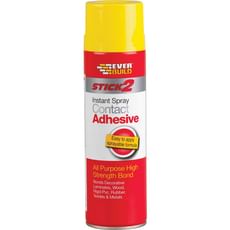
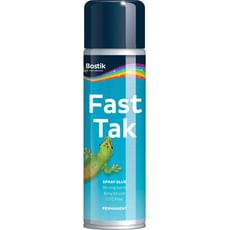
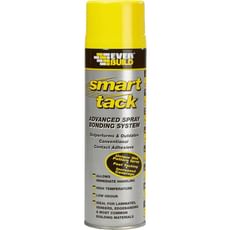
The spray adhesives available from Tooled-Up.com include permanent contact adhesives, repositionable tack sprays, and specialist bonding systems from trusted manufacturers including Everbuild, Bostik, Evostik, and Faithfull. Contact adhesives such as Bostik Fast Tak and Everbuild Stick 2 create permanent bonds by applying adhesive to both surfaces, whilst repositionable options like Everbuild Smart Tack allow for temporary fixing or adjustment before final placement. Many professional formulations offer heat resistance, water resistance, and compatibility with challenging materials like polystyrene foam, making them invaluable tools across multiple trades.
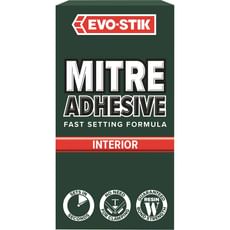
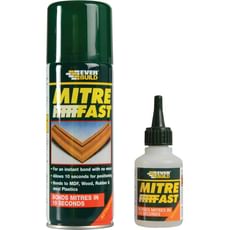
Modern spray adhesive technology has evolved to provide cleaner application with reduced overspray, improved coverage per canister, and faster grab times. Advanced systems like Everbuild Mitre Fast and Evo-stik Rapid Mitre Fix combine spray adhesive with activator sprays to create near-instantaneous bonds for trim work and joinery applications, eliminating the need for pinning or clamping whilst joints set—a genuine time-saver on site work.
Jargon Buster
- Contact Adhesive: A type of adhesive applied to both surfaces being joined, which bonds instantly upon contact with no repositioning possible. Ideal for permanent fixing of laminates, veneers, and flooring materials.
- Tack Time: The open time after spraying during which the adhesive remains sufficiently tacky to form a bond. This can range from seconds to several minutes depending on the formulation and application requirements.
- Repositionable Adhesive: A low-tack spray that allows materials to be lifted and repositioned multiple times before achieving final bond strength. Commonly used for stencils, patterns, and temporary mounting applications.
- Overspray: The fine mist of adhesive that disperses beyond the intended application area. Quality spray adhesives minimise overspray through controlled nozzle design and appropriate propellant formulations.
- Activator Spray: A secondary aerosol product used with certain adhesive systems to trigger instant curing and bonding. Particularly useful for mitre joints in skirting, architrave, and coving installations.
- Coverage Rate: The area that can be effectively coated with a single canister of spray adhesive, typically measured in square metres. Coverage varies based on substrate porosity and desired bond strength.
Who Uses Spray Adhesives?
Spray adhesives are essential tools across numerous trades and applications:
- Carpet Fitters and Flooring Specialists: For bonding carpet tiles, underlay, vinyl flooring, and edge trims
- Joiners and Carpenters: For veneer work, laminate application, and rapid mitre fixing without pinning
- Shop Fitters: For mounting displays, signage, and decorative panels
- Upholsterers: For fabric bonding, foam attachment, and trim work
- Insulation Installers: For fixing polystyrene, foam boards, and reflective insulation materials
- Sign Makers and Graphics Professionals: For mounting vinyl, securing stencils, and temporary positioning
- Cabinet Makers: For edge banding, veneer application, and laminate bonding
- Stage and Set Designers: For temporary installations and repositionable scenery elements
- DIY Enthusiasts: For craft projects, home repairs, and general bonding applications
How to Choose the Right Spray Adhesives
Bond Type and Permanence: Determine whether you need a permanent contact adhesive for structural applications or a repositionable tack spray for temporary fixing. Contact adhesives like Everbuild Stick 2 create immediate, permanent bonds, whilst Smart Tack products allow for adjustment and repositioning before final adhesion.
Material Compatibility: Consider the substrates you're bonding. Some spray adhesives contain solvents that can damage polystyrene or sensitive plastics, whilst others are specifically formulated for compatibility with foam materials, fabrics, wood, metal, and laminates. Always verify the manufacturer's compatibility guidance before application.
Working Time Requirements: For precise alignment work, choose products with longer open times. For rapid installation where speed is essential, activator-based systems like Mitre Fast or Rapid Mitre Fix offer near-instant bonding without clamps or pins—ideal for productive site work.
Environmental Conditions: If the finished application will be exposed to heat, moisture, or outdoor conditions, select spray adhesives with appropriate resistance properties. Many professional formulations offer heat resistance up to 70-80°C and water-resistant bonds suitable for damp environments.
Coverage and Economy: Compare coverage rates between products, especially for large-scale applications like flooring or insulation installation. Professional-grade canisters typically offer better coverage per pound spent and more consistent spray patterns than economy alternatives.
Popular Accessories
- Adhesive Activator Sprays: Companion products for instant-bond systems used in mitre and trim work
- Masking Film and Tape: Essential for protecting surrounding areas from overspray during application
- Respirator Masks and Ventilation Equipment: Important for health and safety when using aerosol adhesives in enclosed spaces
- Adhesive Remover Solutions: For cleaning overspray and removing unwanted adhesive residue from tools and surfaces
- Application Nozzles: Replacement and specialist nozzles for different spray patterns and coverage requirements
- Protective Gloves: Disposable or reusable gloves to prevent skin contact with adhesive materials
- Drop Cloths and Protective Sheeting: For site protection during spray application
Safety Information
Spray adhesives contain volatile organic compounds (VOCs) and require proper safety precautions during use. Always work in well-ventilated areas or outdoors when possible, as aerosol adhesives release fumes that can cause respiratory irritation and dizziness in confined spaces. When working on site or in enclosed environments, use appropriate respiratory protection in accordance with COSHH regulations and HSE guidance.
These products are highly flammable and must be kept away from heat sources, naked flames, and sparks. Never spray near welding operations or electrical equipment. Store canisters in cool, dry conditions away from direct sunlight, and never dispose of pressurised containers in fires or incinerators.
Wear protective gloves to prevent skin contact, and ensure good skin hygiene practices. If adhesive contacts skin, clean immediately with suitable cleaning agents or soap and water. Protect eyes from spray mist using safety glasses or goggles, particularly when working overhead. In case of eye contact, rinse immediately with plenty of water and seek medical attention. Always read the manufacturer's safety data sheet before use, and follow all instructions on the canister label.
Frequently Asked Questions
How long does spray adhesive take to dry?
Drying time varies by product and application. Contact adhesives typically require 1-5 minutes of open time before surfaces are brought together, creating an instant bond on contact. Repositionable tack sprays may remain workable for 10-30 minutes. Activator-based systems like Mitre Fast create near-instantaneous bonds within seconds. Always check the specific product instructions for accurate timings based on temperature and humidity conditions.
Can spray adhesive be used on polystyrene insulation?
Some spray adhesives contain solvents that will melt or damage polystyrene foam materials. Always choose products specifically labelled as safe for polystyrene and foam applications, such as certain Everbuild formulations designed for insulation work. Testing on a small, inconspicuous area before full application is always recommended when working with potentially sensitive materials.
What's the difference between spray adhesive and mitre bonding systems?
Standard spray adhesives create bonds that develop strength over several minutes to hours. Mitre bonding systems combine an adhesive spray with a separate activator spray that triggers instant curing, creating bonds strong enough to eliminate the need for pinning or clamping. This makes them ideal for fitting skirting boards, architrave, and coving where immediate fixing is required.
How much area will one canister of spray adhesive cover?
Coverage depends on the product size, substrate porosity, and application thickness. A typical 500ml canister provides approximately 3-6 square metres of coverage when applied properly. Porous materials like fabrics and raw timber require heavier application and reduce coverage, whilst sealed surfaces like laminates and metals require less adhesive for effective bonding.
Is spray adhesive suitable for outdoor applications?
Many spray adhesives are designed for interior use only and may not withstand prolonged exposure to moisture and UV light. However, some professional formulations offer water-resistant and heat-resistant properties suitable for certain outdoor applications. For external use, verify that the product specifications include weather resistance and follow any additional surface preparation recommendations.