

Spring Callipers

Pay in 3 interest-free payments on purchases from £20-£3000 with  . Learn more.

 Loading...
End of content
Error - No more pages to load
About Spring Callipers
Spring callipers are traditional precision measuring instruments that have remained essential tools in engineering workshops, machine shops, and metalworking environments for generations. Unlike digital measuring devices, these elegant mechanical tools consist of two curved legs connected by a pivot point, with tension maintained by a spring mechanism and fine adjustment controlled by a threaded screw. This simple yet effective design allows tradespeople to transfer measurements from workpieces to rulers, scales, or micrometers with remarkable reliability, making them indispensable for comparative measurement work and quality control checks.
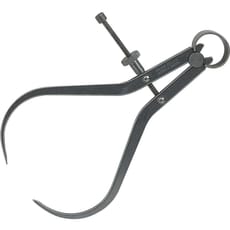
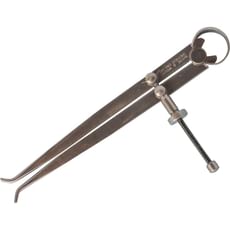
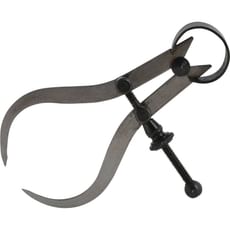
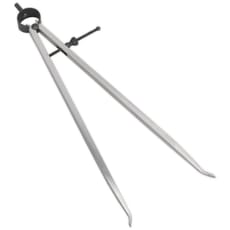
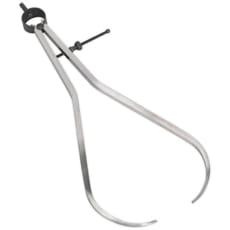
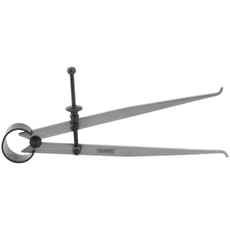
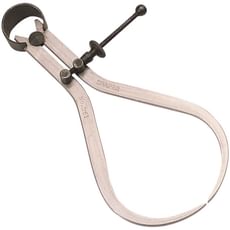
Available in two distinct configurations, spring callipers serve complementary measurement purposes. Inside spring callipers feature legs that curve outwards, specifically designed for measuring internal dimensions such as bore diameters, hole sizes, and internal groove widths. Outside spring callipers have legs that curve inwards to embrace external features, making them ideal for measuring shaft diameters, material thickness, and external component dimensions. The spring-loaded design maintains constant tension on the legs, ensuring they remain in position during the crucial transfer from workpiece to measuring scale.
Tooled-Up.com stocks spring callipers from trusted manufacturers including Draper, Faithfull, Moore and Wright, and Sealey, offering various sizes typically ranging from 75mm to 300mm leg span. These robust instruments excel in harsh workshop conditions where digital callipers might be compromised by metal swarf, cutting fluids, or impact. They require no batteries, provide tactile feedback that experienced engineers value, and deliver the reliability that professional tradespeople depend upon for accurate dimensional work across engineering, fabrication, and precision manufacturing applications.
Jargon Buster
- Inside Callipers: Spring callipers designed with outward-curving legs specifically for measuring internal dimensions including hole diameters, bore sizes, and internal groove widths. The leg geometry allows them to fit inside the measurement area whilst maintaining accurate contact with the workpiece surface.
- Outside Callipers: Spring callipers configured with inward-curving legs for measuring external dimensions such as shaft diameters, material thickness, and external component features. The legs embrace the workpiece to capture the dimension for transfer.
- Spring Joint: The pivoting connection between the calliper legs that incorporates a tension spring, providing constant pressure to maintain the set position during measurement transfer and preventing inadvertent movement.
- Adjustment Screw: The fine-threaded screw mechanism, typically with a knurled wheel or nut, that allows precise opening and closing of the calliper legs for accurate dimensional setting and micro-adjustments during comparative measurement work.
- Comparative Measurement: A traditional measuring technique where the calliper is set to match a workpiece dimension, then transferred to a ruler, micrometer, or precision scale for numerical readout—the fundamental method for using spring callipers effectively.
- Leg Span: The maximum opening distance between the calliper legs when fully extended, which determines the size range the instrument can measure. Common sizes include 75mm, 150mm, 200mm, and 300mm maximum span.
Who Uses Spring Callipers?
Spring callipers are utilised across diverse trades and industrial applications:
- Machinists and Turner Operators: Measuring turned components, checking shaft diameters, and verifying bore sizes on lathes and milling machines during precision machining operations
- Mechanical Fitters and Engineers: Assembly work, maintenance inspections, and quality control checks in general engineering workshops and manufacturing facilities
- Tool and Die Makers: Precision measurement work when creating tooling, jigs, fixtures, and specialist manufacturing equipment requiring accurate dimensional control
- Fabricators and Metalworkers: Measuring pipe diameters, tube wall thickness, and structural steel dimensions during fabrication projects and site work
- Pattern Makers and Foundry Workers: Checking dimensions of patterns, moulds, and castings during production to ensure manufacturing tolerances are maintained
- Maintenance Engineers: Inspecting wear on shafts, bearings, bushings, and mechanical components during planned preventative maintenance programmes
- Apprentices and Engineering Students: Learning traditional measuring techniques and developing measurement skills fundamental to engineering craftsmanship
- Vintage Machinery Restorers: Measuring components on classic engines, heritage machinery, and equipment where original specifications and imperial dimensions may be required
- Model Engineers and DIY Enthusiasts: Home workshop projects involving metal turning, model engineering, and precision fabrication requiring accurate dimensional work
How to Choose the Right Spring Callipers
Measurement Type: Determine whether you require inside callipers for internal measurements, outside callipers for external dimensions, or both types. Professional engineers typically keep both configurations in their toolkit as they complement each other for comprehensive workpiece inspection. Consider purchasing matched pairs from the same manufacturer to ensure consistent quality, feel, and adjustment characteristics.
Size Range: Select the leg span based on the dimensions you typically measure in your workshop or on site. Common sizes include 75mm (3"), 100mm (4"), 150mm (6"), 200mm (8"), and 300mm (12") maximum opening capacity. Smaller sizes offer greater precision and control for delicate instrument work, whilst larger callipers are necessary for substantial engineering components. For general engineering applications, a 150mm size provides excellent versatility across most typical measurement tasks.
Build Quality and Materials: Professional-grade spring callipers from manufacturers like Moore and Wright feature hardened and tempered steel construction with polished or satin chrome finishes for corrosion resistance and longevity. Budget options from brands such as Draper and Faithfull suit occasional use and DIY applications whilst still delivering reliable performance. Consider your working environment—workshops with cutting fluids, metal swarf, and harsh conditions benefit from higher-quality, more durable tools. The selection at Tooled-Up includes options suitable for both professional engineering environments and home workshop use.
Adjustment Mechanism: Examine the adjustment screw quality carefully—fine, smooth threads with minimal backlash allow precise setting and repeatable measurements, whilst coarse or stiff threads make accurate work frustrating. Better quality callipers feature knurled adjustment nuts or wheels for easy grip, even with oily fingers or when wearing workshop gloves. Test the adjustment action before purchase if possible to ensure smooth, controlled movement.
Manufacturer Reputation: Established brands like Sealey, Faithfull, and Moore and Wright have proven track records for measurement tool accuracy and workshop durability. Professional users often prefer Moore and Wright for critical measurement tasks requiring maximum reliability, whilst Draper and Sealey offer excellent value for general workshop use without compromising essential quality and accuracy.
Popular Accessories
- Engineers' Steel Rules and Scales: Essential companions to spring callipers, providing the reference measurements after transferring dimensions. Rigid steel rules with clear metric graduations are standard equipment in UK engineering workshops
- Outside Micrometers: Used in conjunction with outside spring callipers for precise numerical readout of transferred measurements, particularly for tolerance-critical engineering and quality control work
- Inside Micrometers: Complement inside spring callipers by providing accurate numerical readings of internal dimensions set on the calliper, essential for bore measurement verification
- Vernier Callipers: Work alongside spring callipers in the professional toolkit, offering direct-reading measurements whilst spring callipers excel at comparative work and harsh environment applications
- Digital Callipers: Provide instant digital readout for quick measurements, used in combination with spring callipers for comprehensive measurement capability across different workshop situations
- Precision Ground Flat Stock: Reference standards for checking calliper accuracy and setting precise dimensions during comparative measurement work
- Tool Rolls and Cases: Protect calliper points, springs, and adjustment mechanisms during storage and transport, preventing damage and maintaining measurement accuracy
- Light Engineering Oil: For occasional lubrication of pivot points and adjustment screw threads, ensuring smooth operation and preventing corrosion in workshop environments
Frequently Asked Questions
What's the difference between spring callipers and vernier callipers?
Spring callipers are comparative measuring tools that transfer a dimension from the workpiece to be read on a separate rule, scale, or micrometer—they don't provide direct measurements themselves. Vernier callipers incorporate an integrated scale system that provides immediate numerical readout. Spring callipers are simpler, more robust, and better suited to harsh workshop environments with metal swarf and cutting fluids, whilst vernier callipers offer convenience and speed for direct measurement. Many professional engineers use both types depending on the specific task and working conditions.
How accurate are spring callipers for precision engineering work?
Spring callipers themselves don't provide measurements—their accuracy depends entirely on the skill of the user and the precision of the reference scale used to read the transferred dimension. In experienced hands with quality micrometers or precision rules, they can reliably transfer measurements to within 0.1mm or better. They're particularly valuable for comparative work and checking consistency across multiple identical components rather than absolute measurement, making them ideal for quality control batches and production inspection work.
Can spring callipers measure both metric and imperial dimensions?
Yes, spring callipers are dimensionally neutral instruments—they simply transfer whatever size they're set to without any inherent measurement unit. The dimension unit (metric or imperial) depends entirely on the rule, scale, or micrometer you use to read the calliper setting. This versatility makes them especially useful when working with vintage machinery that may use imperial dimensions, or international projects requiring both measurement systems on the same workshop floor.
Do I need both inside and outside spring callipers?
For comprehensive measurement capability, yes. Inside callipers are specifically designed with appropriate leg geometry for internal features like holes, bores, and internal grooves, whilst outside callipers measure external dimensions such as shafts, thickness, and external diameters. Using the wrong type compromises measurement accuracy and risks damaging either the workpiece or the tool. Most machinists, fitters, and engineers keep at least one pair of each configuration in their toolkit for complete dimensional inspection capability.
How should I maintain spring callipers to ensure long service life?
Keep the pivot point and adjustment screw lightly oiled with engineering oil to ensure smooth, precise movement without binding. Wipe the legs clean after each use, particularly if exposed to cutting fluids, coolant, or metal swarf that could cause corrosion or wear. Store in a protective case or tool roll to prevent the points from damage and maintain accuracy. Avoid dropping them as impact can affect spring tension, bend the legs, or damage the adjustment threads. Periodically check that the legs close completely with no visible gap when fully shut—any gap indicates wear or damage requiring tool replacement.