

Springs

Pay in 3 interest-free payments on purchases from £20-£3000 with  . Learn more.
 Loading...
End of content
Error - No more pages to load
About Springs
Springs are fundamental mechanical components that store and release energy in countless applications across automotive repair, industrial maintenance, machinery servicing, and general engineering work. Whether you're a professional mechanic rebuilding engines, a maintenance engineer servicing production equipment, or a DIY enthusiast tackling home repairs, having immediate access to quality springs can eliminate costly downtime and delays. These versatile components provide essential force, tension, and compression in everything from vehicle suspension systems and valve mechanisms to domestic appliances, agricultural machinery, and industrial equipment.
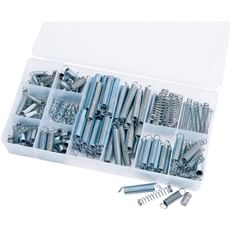
The two primary types of springs serve distinct mechanical functions: compression springs are designed to resist being compressed, pushing back when force is applied, making them ideal for shock absorbers, clutch assemblies, and valve mechanisms; extension springs are designed to extend under load and pull back when released, commonly used in garage doors, tensioning applications, and various mechanical linkages. Professional-grade spring assortments from established brands like Draper provide tradespeople with comprehensive selections of both types, typically featuring around 200 pieces covering the most commonly required specifications for repair and maintenance work.
Having a well-stocked spring selection in your workshop toolkit offers significant advantages for professional tradespeople and maintenance departments. Rather than waiting for specific components to be ordered and delivered, comprehensive spring assortments allow immediate repairs to be completed, keeping equipment operational and reducing downtime costs. The springs available from Tooled-Up.com are manufactured to consistent specifications using quality spring steel, ensuring reliable performance across demanding applications in automotive, agricultural, industrial, and domestic repair scenarios.
Jargon Buster
- Compression Spring: A helical spring designed to resist compression forces, becoming shorter when loaded and pushing back when the force is removed. Commonly used in mechanical assemblies, valve mechanisms, suspension systems, and clutch components.
- Extension Spring: A coiled spring with hooks or loops at each end, designed to resist stretching forces and return to its original length when the load is released. Typical applications include garage door mechanisms, trampolines, and various tensioning systems.
- Spring Rate: The measurement of force required to compress or extend a spring by a specific distance, typically expressed in Newtons per millimetre (N/mm). This determines the spring's stiffness and suitability for particular mechanical applications.
- Free Length: The overall length of a spring when no load is applied. This measurement is crucial when selecting replacement springs to ensure proper fit and function within the assembly or mechanism being repaired.
- Wire Diameter: The thickness of the spring wire material, which directly affects the spring's strength, durability, and load-bearing capacity. Heavier gauge wire provides greater resistance to deformation and longer service life under repeated loading cycles.
- Working Load: The maximum force a spring can safely handle during normal operation without permanent deformation or failure. Operating beyond this specification can lead to spring failure and potential safety hazards in mechanical assemblies.
Who Uses Springs?
Springs are essential components for a diverse range of trades and professionals:
- Motor Mechanics and Auto Engineers: For vehicle repairs, engine rebuilds, brake assemblies, suspension work, and clutch replacements
- Agricultural Engineers: Maintaining and repairing farm machinery, tractors, harvesting equipment, and implement mechanisms
- Plant Maintenance Engineers: Servicing industrial machinery, production line equipment, automated systems, and manufacturing plant
- Appliance Repair Technicians: Fixing washing machines, tumble dryers, ovens, dishwashers, and other domestic appliances
- Bicycle Mechanics: Repairing suspension forks, brake systems, derailleur mechanisms, and saddle assemblies
- Machine Tool Operators: Maintaining lathes, milling machines, precision engineering equipment, and CNC machinery
- Prototyping Engineers: Developing mechanical designs and functional prototypes requiring various spring specifications and load characteristics
- General Maintenance Staff: Carrying out repairs across facilities, buildings, estate management, and diverse equipment portfolios
- DIY Enthusiasts: Tackling home repairs, garden equipment maintenance, hobby projects, and restoration work
How to Choose the Right Springs
Selecting the appropriate spring requires careful consideration of several key factors to ensure proper function and longevity:
Application Type: Determine whether you need compression or extension springs based on the mechanical function required. Consider the movement direction and forces involved in the specific application. Compression springs push back when compressed, whilst extension springs pull back when stretched.
Size and Dimensions: Measure the free length, wire diameter, and outside diameter of the spring you're replacing using vernier callipers or a micrometer. These measurements must match the available space and mounting points in your application to ensure proper fit and function.
Load Requirements: Calculate or estimate the working load the spring will experience during operation. Select springs with appropriate spring rates that provide sufficient force without being over-specified, which could cause premature component wear or assembly failure.
Assortment Value: For professional workshops and maintenance environments, comprehensive spring assortments offer excellent value and convenience. A 200-piece assortment stocked by Tooled-Up provides immediate access to common sizes in both compression and extension types, eliminating waiting times for specific components and reducing equipment downtime during urgent repairs.
Material Quality: Professional-grade springs from established brands like Draper are manufactured to consistent specifications using quality spring steel, ensuring reliable performance and durability across demanding applications. Plated finishes provide corrosion resistance for general workshop environments.
Operating Environment: Consider whether the spring will be exposed to moisture, chemicals, or extreme temperatures. Standard carbon steel springs with plated finishes suffice for most general mechanical applications and workshop environments.
Popular Accessories
- Spring Compressors: Essential tools for safely compressing springs during installation, particularly for suspension and valve spring work
- Spring Hooks and Pullers: Specialist tools for fitting and removing extension springs safely without damage to the spring or mounting points
- Vernier Callipers and Micrometers: Precision measuring tools for accurately determining spring dimensions, wire diameter, and free length
- Parts Trays and Storage Organisers: Keeping spring assortments organised and easily accessible in workshop environments, preventing loss of components
- Engineering Lubricants: Reducing friction and wear on spring mechanisms during operation and extending service life
- Workshop Magnets: Preventing small springs from rolling away during assembly work on benches and workstations
- Safety Glasses: Essential PPE when working with springs under tension, protecting against sudden release injuries
- Work Gloves: Protecting hands from sharp spring ends and wire edges during handling and installation
Safety Information
Working with springs, particularly those under tension or compression, requires careful attention to safety procedures:
Personal Protective Equipment: Always wear safety glasses or goggles when handling springs, especially when compressing or extending them. Springs under tension can release suddenly, causing serious eye injuries or lacerations. Work gloves provide additional protection against sharp spring ends and wire edges that can cause cuts during handling and installation.
Controlled Release: Never release compressed or extended springs suddenly. Use appropriate spring compressors or controlled release mechanisms to gradually reduce tension. Sudden release can cause springs to fly across the workspace with considerable force, creating serious injury risks to yourself and nearby colleagues on site or in workshop environments.
Tool Condition: Inspect spring compressors and installation tools before use, ensuring they're in good condition with no worn or damaged components. Follow manufacturer instructions and HSE guidelines when using specialist spring tools, particularly when working with high-tension springs in automotive or industrial applications.
Replacement Specifications: Always replace springs with components of the correct specification for the application. Using incorrectly rated springs can result in mechanical failure, potentially causing equipment damage or creating safety hazards during operation. Verify free length, wire diameter, and working load match the original component specifications.
Workshop Practices: Keep springs organised in their storage case to prevent confusion between different sizes and specifications. Clear your work area of unnecessary items before working with springs under tension, and ensure adequate lighting to see small components clearly during assembly work.
Frequently Asked Questions
What's the difference between compression and extension springs?
Compression springs are designed to resist being compressed and push back when force is applied, whilst extension springs resist being stretched and pull back when extended. Compression springs are typically used in applications like shock absorbers, valve mechanisms, and clutch assemblies, whereas extension springs are found in garage doors, tensioning systems, and applications where pulling force is required.
How do I determine what size spring I need for a repair?
Measure the free length (overall length when unloaded), outside diameter, and wire diameter of your existing spring using vernier callipers or a micrometer. You'll also need to consider the required spring rate and working load for the application. If purchasing a comprehensive spring assortment, you'll have access to multiple sizes covering the most common specifications for general repair and maintenance work across various equipment types.
Can I reuse old springs in mechanical assemblies and rebuilds?
Springs can lose their tension and elasticity over time through repeated compression cycles, heat exposure, or corrosion damage. Whilst some springs remain serviceable, it's generally recommended to replace springs during mechanical rebuilds to ensure reliable performance and prevent premature failure. The modest cost of replacement springs is worthwhile compared to repeated repair work and potential equipment downtime.
Are spring assortments suitable for professional workshop use?
Absolutely. Professional-grade spring assortments from brands like Draper are ideal for workshops, maintenance departments, and mobile repair services. They provide immediate access to commonly needed sizes in both compression and extension types without waiting for specific components to be delivered, significantly reducing equipment downtime and improving service efficiency for tradespeople.
What materials are workshop springs typically made from?
Most general-purpose springs are manufactured from carbon spring steel with plated finishes, which offers excellent strength, elasticity, and corrosion resistance for typical workshop applications. Spring assortments contain carbon steel springs suitable for the majority of mechanical repair and maintenance tasks across automotive, industrial, agricultural, and domestic equipment servicing.