

Square Files

Pay in 3 interest-free payments on purchases from £20-£3000 with  . Learn more.

 Loading...
End of content
Error - No more pages to load
About Square Files
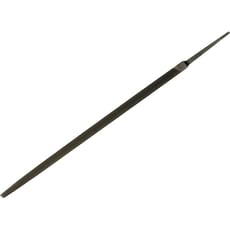
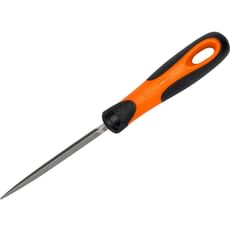
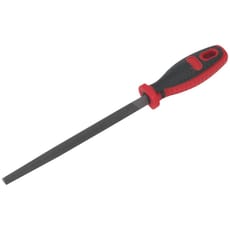
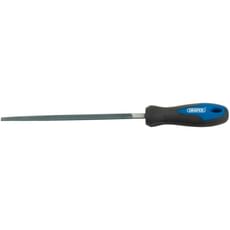
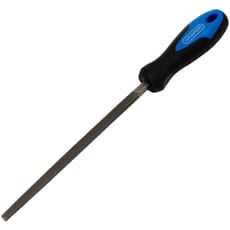
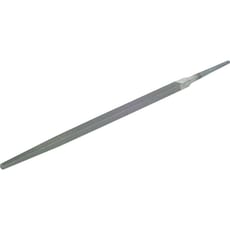
Square files are precision hand tools essential for metalworking, engineering, and fine finishing work. Characterised by their rectangular cross-section with four cutting faces, these files excel at creating and refining slots, keyways, grooves, rectangular holes, and internal corners. Unlike round or flat files, square files provide access to corners and right-angled recesses where other file shapes cannot reach effectively. The range at Tooled-Up.com includes both standard square files and three-square (triangular) files, each designed for specific filing applications in engineering and metalworking.
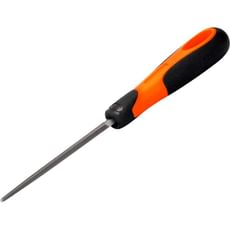
Most square files feature double-cut teeth that remove material efficiently whilst maintaining control and precision. Professional-grade models incorporate ergonomic bi-material handles that provide comfort during extended use and prevent hand fatigue. Many designs taper slightly towards the tip, allowing access to confined spaces and enabling fine adjustments on cutting tools. Available in various lengths from compact needle files through to full-size 250mm workshop files, square files serve tradespeople from precision instrument makers to heavy engineering fabricators.
Tooled-Up stocks square files from trusted manufacturers including Bahco, Draper, Sealey, and Nicholson. These brands represent decades of expertise in metallurgy and file production, ensuring consistent tooth geometry, appropriate hardness, and durability under workshop conditions. Whether you require a handled file ready for immediate use or replacement files for existing handles, the selection caters to both professional tradespeople and serious DIY enthusiasts working with metal components.
Jargon Buster
- Double Cut – Files with two series of teeth cut diagonally across each other, creating a diamond pattern that removes material faster than single-cut files whilst producing a smoother finish.
- Second Cut – A medium grade of file coarseness, positioned between bastard cut (coarse) and smooth cut (fine). Second cut files are versatile for general workshop use, balancing material removal with finish quality.
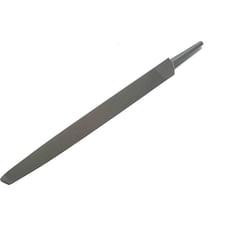
- Three-Square File – A file with a triangular cross-section, featuring three cutting faces at 60-degree angles. Particularly effective for filing acute angles, clearing corners, and sharpening saw teeth.
- Tang – The tapered, uncut portion of a file that fits into the handle. The tang transfers force from your hand to the cutting surfaces and should always be fitted with a proper handle for safety.
- Safe Edge – One or more smooth, uncut edges on a file that allow filing up to a shoulder or corner without damaging adjacent surfaces. Essential when working on precision components.
- Needle File – A small, precision file typically 100-160mm in length, used for intricate work, fine adjustment, and delicate finishing operations on small components.
Who Uses Square Files?
- Engineering Machinists – For deburring machined components, fitting keys to keyways, and fine-tuning tolerances on metalwork
- Tool and Die Makers – Creating precision slots, refining jigs and fixtures, and maintaining cutting tools to exact specifications
- General Fitters – Adjusting metal components, removing burrs from fabricated parts, and fitting mechanical assemblies
- Lock and Safe Engineers – Filing precision slots, adjusting lock mechanisms, and creating custom security components
- Agricultural Engineers – Sharpening and maintaining farm equipment, filing slots in machinery parts, and fabrication work
- Maintenance Engineers – Site repairs, adjusting machinery components, and emergency modifications to equipment
- Model Engineers – Precision work on miniature components, creating fine details, and finishing small metal parts
- Blacksmiths and Fabricators – Finishing decorative metalwork, removing scale, and refining forged components
- Automotive Technicians – Filing precision adjustments on engine components, brake work, and custom modifications
How to Choose the Right Square Files
File Length and Size: Select file length based on the scale of your work. Needle files (100-160mm) suit precision instrument work and fine adjustments. Medium files (200-250mm) handle general workshop tasks efficiently. Larger files (300mm+) are appropriate for heavy metalwork and substantial material removal. The cross-sectional dimensions should fit comfortably within the slots or keyways you're working on.
Cut Grade: Bastard cut files remove material aggressively but leave a rougher finish, ideal for initial shaping. Second cut files balance speed with finish quality for general workshop use. Smooth cut files produce fine finishes and are essential for precision work. Consider maintaining multiple grades for different stages of your work.
Handle Provision: Handled files from Tooled-Up are ready for immediate use with ergonomic grips that reduce hand fatigue. Unhandled files require separate handles but offer flexibility if you already have a handle collection. Never use a file without a properly fitted handle – the tang can cause serious hand injuries.
Brand Quality: Professional brands like Bahco and Nicholson use superior steel alloys with precise heat treatment, ensuring teeth remain sharp longer and resist premature wear. Budget files may seem economical initially but often require frequent replacement, making premium files more cost-effective long-term.
Square vs Three-Square: Standard square files excel at rectangular slots, keyways, and right-angled corners. Three-square (triangular) files access acute angles, clear out corners tighter than 90 degrees, and are preferred for sharpening saw teeth. Many professionals maintain both types for comprehensive workshop capability.
Popular Accessories
- File Handles – Replacement or additional handles in various sizes to fit different tang dimensions safely and comfortably
- File Cards and Brushes – Wire brushes specifically designed to clear metal particles from file teeth, maintaining cutting efficiency
- File Chalk – Applied to file surfaces to prevent clogging when working with soft metals like aluminium, brass, or copper
- Engineers' Vices – Secure work-holding essential for safe, accurate filing operations on metal components
- Work Benches – Stable platforms at appropriate height for comfortable, controlled filing technique
- Precision Measuring Tools – Vernier callipers, micrometers, and engineers' squares to verify dimensions during filing operations
- Protective Storage Cases – Keep files organised and prevent teeth damage when stored alongside other workshop tools
- Deburring Tools – Complementary tools for removing sharp edges before fine finishing with files
Safety Information
Handle Security: Always fit files with proper handles before use. The tang is sharp and can cause serious puncture wounds if the file slips during use. Check handles regularly for splits or looseness and replace immediately if compromised. Never use a file as a lever or pry bar, as this can cause the tang to separate from the handle.
Personal Protective Equipment: Wear safety glasses to protect against metal particles that become airborne during filing. Steel filings can cause painful eye injuries. Consider wearing thin work gloves to protect against sharp edges on workpieces, though some precision work requires bare hands for sensitivity.
Work-Holding: Always secure workpieces firmly in a vice or appropriate clamping device. Never hold small parts by hand whilst filing – the file can slip and cause lacerations. Position the vice at elbow height for optimal control and reduced fatigue during extended filing sessions.
File Maintenance: Clean files regularly with a file card to prevent particle build-up, which can cause scratching and reduced efficiency. Store files separately or with protective covers to prevent tooth damage. Discard files with broken teeth or worn surfaces, as they become difficult to control and may damage workpieces.
Frequently Asked Questions
What's the difference between a square file and a three-square file?
A square file has a rectangular cross-section with four flat cutting faces at 90-degree angles, ideal for rectangular slots and right-angled corners. A three-square file has a triangular cross-section with three faces at 60-degree angles, designed for acute angles, tight corners, and saw sharpening. Both types are available at Tooled-Up.com for different workshop applications.
Why won't my file cut anymore – it just slides over the metal?
Files can become "pinned" when metal particles lodge between the teeth, or they may be worn out from extensive use. First, clean thoroughly with a file card, brushing diagonally across the teeth. If cleaning doesn't restore cutting action, the teeth are likely worn and the file needs replacing. Files only cut in the forward stroke – applying pressure on the return stroke accelerates wear.
Can I use square files on materials other than metal?
Square files are specifically designed for metalworking and are most effective on ferrous metals, aluminium, brass, and copper. They're too aggressive for wood (use wood rasps or files instead) and inappropriate for plastics, which can melt and clog the teeth. For soft metals like aluminium, apply file chalk to prevent clogging and maintain cutting efficiency.
What size square file do I need for filing keyways?
Select a file with cross-sectional dimensions slightly smaller than the keyway to ensure clearance on all sides. For standard metric keyways, a 4-5mm square file typically suits keys up to 8mm, whilst 6-8mm files work for larger keyways. The file should access the full depth of the keyway without binding on the sides. Measure your specific keyway dimensions before purchasing.
How should I store files to maintain their cutting performance?
Store files individually or with protective covers to prevent teeth from contacting other metal tools, which causes rapid dulling. Hang them on a rack or store in compartmentalised drawers rather than loose in a toolbox. Keep them dry to prevent rust, which damages the precisely formed teeth. Clean files thoroughly before storage, removing all metal particles that could corrode and damage the cutting surfaces.