

Steel Lengths
Pay in 3 interest-free payments on purchases from £30-2000 with  . Learn more.
 Loading...
End of content
Error - No more pages to load
About Steel Lengths
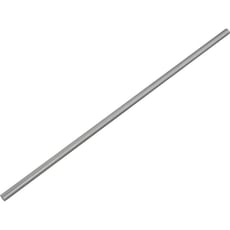
Steel lengths are precision-engineered raw material components essential for toolmakers, machinists, and engineers who require high-quality steel stock for fabrication, repair, and manufacturing applications. These pre-cut steel bars are manufactured to exacting tolerances, providing consistent material properties and dimensional accuracy that general-purpose mild steel cannot match. Available in both metric and imperial sizing, steel lengths eliminate the need for purchasing full-size bars when only small quantities are required for specialised projects.
The steel lengths available from Tooled-Up.com are predominantly high carbon bright steel, precision ground to exceptionally tight tolerances. This manufacturing process ensures uniform machining properties and predictable responses to heat treatment, making them ideal for creating custom tooling, replacement parts, and precision components. Each length features chamfered and deburred ends for safe handling, whilst the bright finish provides corrosion resistance and allows for immediate assessment of surface quality. Whether working with metric 333mm lengths or imperial 13-inch formats, these materials maintain consistent analysis throughout, ensuring reliable performance across demanding applications.
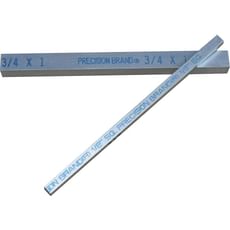
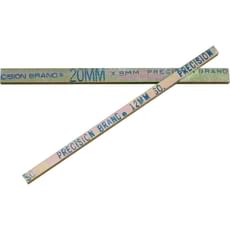
Keysteel variants represent a particularly important subset within this category, offering standardised cross-sections specifically designed for keyway applications in shafts and pulleys. These precision-ground lengths are manufactured to British and European standards, ensuring compatibility with standard keyway dimensions across machinery and mechanical assemblies. The availability of assorted packs allows workshop professionals to maintain a versatile stock of commonly-used sizes without the expense of purchasing individual lengths.
Jargon Buster
- High Carbon Steel: Steel with increased carbon content (typically 0.6-1.0%), providing greater hardness and wear resistance compared to mild steel, whilst remaining machinable before heat treatment.
- Precision Ground: A manufacturing process where steel is ground to exceptionally tight dimensional tolerances, typically within 0.0127mm for smaller sections, ensuring consistent diameter or thickness throughout the length.
- Bright Steel: Cold-finished steel with a smooth, clean surface that has been drawn through dies to achieve improved dimensional accuracy, surface finish, and straightness compared to hot-rolled alternatives.
- Keysteel: Rectangular or square-section steel bars manufactured to standard keyway dimensions, used to create keys that prevent rotational movement between shafts and mounted components such as gears or pulleys.
- Close Tolerances: Manufacturing specifications where dimensional accuracy is maintained within very small margins (often ±0.00025 to ±0.0005 inches), critical for precision engineering and interchangeable components.
- Controlled Analysis: Steel manufactured with carefully regulated chemical composition, ensuring predictable mechanical properties, consistent machinability, and reliable response to heat treatment processes.
Who Uses Steel Lengths?
- Tool and Die Makers: Creating precision tooling, jigs, fixtures, and custom cutting tools requiring exact dimensions and predictable heat treatment response
- Maintenance Engineers: Fabricating replacement components, repair parts, and custom fittings for industrial machinery and equipment
- Model Engineers: Building miniature engines, steam models, and precision mechanical assemblies where material consistency and accuracy are paramount
- Machine Shop Operators: Producing small batches of turned, milled, or ground components without purchasing full-length bar stock
- Agricultural Engineers: Manufacturing repair parts and custom components for farming equipment and machinery
- Locksmith Services: Creating custom keys, lock components, and security hardware requiring precise dimensions
- Educational Workshops: Teaching institutions providing materials for engineering students learning machining and fabrication techniques
- Precision Mechanics: Restoring vintage machinery, clocks, and mechanical instruments requiring period-accurate components
How to Choose the Right Steel Lengths
Begin by determining whether metric or imperial sizing best suits your application and existing tooling. The selection at Tooled-Up features both measurement systems, but mixing standards within a project can complicate machining and assembly. Consider the machinery, measuring instruments, and drawing specifications you'll be working with before committing to a format.
Material specification is crucial for successful outcomes. High carbon bright steel offers excellent machinability in its supplied condition and can be hardened through heat treatment for wear-resistant applications. Verify that the carbon content and material properties align with your intended use – components requiring subsequent hardening need sufficient carbon content, whilst parts remaining in an unhardened state may benefit from slightly lower carbon grades for improved ductility.
Dimensional tolerance requirements should guide your selection. Precision ground steel lengths maintain exceptionally tight tolerances, but examine the specific accuracy figures provided. Applications requiring press fits, running fits, or interchangeable components demand closer tolerances than general fabrication work. Consider whether the as-supplied dimensions will suffice or whether additional grinding operations will be necessary.
For keysteel applications, cross-reference the keyway dimensions in your machinery or technical drawings against available standard sizes. Assorted keysteel packs provide economical coverage of commonly-used dimensions, whilst individual sizes suit projects with known specifications. Always verify compatibility with British or European keyway standards rather than assuming dimensional interchangeability.
Quantity planning reduces waste and cost. Calculate material requirements carefully, accounting for machining allowances, potential mistakes, and future repair needs. Pre-cut lengths eliminate the waste associated with full bars but require accurate project planning to avoid shortages mid-fabrication.
Popular Accessories
- Cutting Tools: High-speed steel hacksaw blades, abrasive cut-off wheels, and bandsaw blades suitable for high carbon steel
- Machining Tools: Turning tools, end mills, drills, and reamers specifically designed for high carbon steel applications
- Measuring Equipment: Digital callipers, micrometres, and precision gauge blocks for verifying dimensions to close tolerances
- Cutting Fluids: Soluble oils and cutting compounds that improve tool life and surface finish when machining high carbon steel
- Heat Treatment Equipment: Butane torches, temperature-indicating sticks, and quenching oils for hardening operations
- Storage Solutions: Compartmented storage boxes and material racks for organising steel lengths by size and type
- Surface Protection: Rust preventative sprays and wax coatings for long-term storage of bright steel stock
Safety Information
Steel lengths present sharp edges and corners despite chamfering and deburring processes. Always handle with appropriate hand protection, particularly when sorting through multiple pieces or reaching into storage compartments. Cut ends of steel bar can inflict serious lacerations, and the material's weight can cause crush injuries if dropped.
When machining high carbon steel, ensure adequate eye protection against flying chips and particles. High carbon content increases material hardness, creating sharper, faster-moving swarf compared to mild steel. Use machine guards correctly and maintain clear working areas around lathes, milling machines, and grinding equipment.
Heat treatment operations require careful attention to HSE guidance regarding furnace operation and quenching procedures. Heated steel retains temperature without visible indication once red heat fades, creating burn risks. Quenching baths can produce violent steam eruptions and oil fires if improperly managed. Ensure adequate ventilation when heating materials, as scale and surface contaminants may produce hazardous fumes.
Store steel lengths securely to prevent rolling or falling. Longer sections have significant mass and can cause injury if inadequately supported. Organise storage by size and type to reduce handling time and minimise the need to move multiple pieces when selecting material.
Frequently Asked Questions
Can precision ground steel lengths be welded like standard mild steel?
High carbon steel requires pre-heating and controlled cooling when welding to prevent cracking and brittleness in the heat-affected zone. The elevated carbon content makes these materials considerably more challenging to weld than mild steel. For structural applications requiring welding, low carbon steel represents a better choice, whilst high carbon lengths are best joined through mechanical fastening or used for non-welded components.
What's the difference between bright steel and black mild steel bar?
Bright steel undergoes cold-drawing through precision dies, creating accurate dimensions, improved straightness, and a clean surface finish. Black mild steel is hot-rolled with a mill scale surface, offering looser tolerances and requiring more material removal during machining. Bright steel's dimensional accuracy often eliminates preliminary turning or grinding operations, saving considerable machining time on precision work.
How should I store steel lengths to prevent rust?
Store in a dry environment with consistent temperature to minimise condensation. Apply a light coating of rust preventative spray or wax-based protection for long-term storage. Avoid contact with concrete floors where moisture can accumulate. Compartmented storage systems that prevent piece-to-piece contact reduce surface damage that can initiate corrosion. Regularly inspect stored material and re-apply protection as needed.
Are imperial and metric keysteel dimensions directly interchangeable?
No, imperial and metric keyway standards are not directly compatible. A nominally similar dimension may differ sufficiently to create loose or interference fits. Always match keysteel to the keyway standard specified in machinery documentation. When working with mixed equipment, maintain separate stocks of imperial and metric keysteel to avoid costly fitting errors and potential mechanical failures.
Do steel lengths require heat treatment before use?
Not necessarily. High carbon bright steel machines effectively in its supplied condition for many applications including jigs, fixtures, and non-critical components. Heat treatment becomes necessary only when increased hardness, wear resistance, or specific mechanical properties are required. Components subject to abrasive wear, cutting edges, or high contact stresses benefit from hardening and tempering, whilst structural elements often perform adequately without heat treatment.