

Straight Edges
Pay in 3 interest-free payments on purchases from £30-2000 with  . Learn more.
 Loading...
End of content
Error - No more pages to load
About Straight Edges
Straight edges are essential precision tools used across multiple trades for marking, cutting, and measuring perfectly straight lines. These deceptively simple tools consist of a rigid blade or bar with at least one straight edge, providing an accurate reference line for a wide variety of professional and DIY applications. From decorating and wallpapering to metalworking and leathercraft, a quality straight edge is indispensable for achieving professional results.
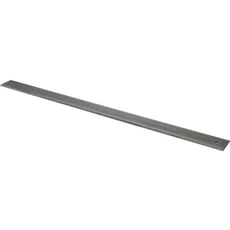
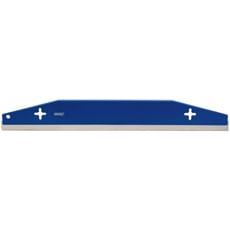
The straight edges available from Tooled-Up.com include decorators' straight edges made from high-impact plastic with integrated stainless steel blades, as well as traditional carbon steel straight edges favoured by craftspeople for their durability and precision. These tools typically feature graduated markings for measurement alongside their true straight edge, making them versatile instruments for both marking and cutting operations. Many models incorporate hang holes for convenient storage and easy access on the job site.
Unlike flexible rulers or retractable tape measures, straight edges are specifically engineered to maintain rigidity across their entire length, preventing any flex or bow that could compromise accuracy. This makes them particularly valuable when cutting materials with a craft knife, smoothing wall coverings, acting as a paint guard, or marking lines on materials such as wallpaper, floor coverings, leather, and sheet materials. The combination of measurement capability and a perfectly straight cutting guide makes these tools far more versatile than their simple appearance suggests.
Jargon Buster
- True Edge: A perfectly straight, machined edge that provides an accurate reference line without any bow, warp, or deviation across its entire length.
- Carbon Steel: A durable metal alloy containing iron and carbon, commonly used in traditional straight edges for its rigidity, hardness, and resistance to bending under pressure.
- Decorators' Straight Edge: A specific type designed for painting and decorating work, typically featuring a protective plastic body with an embedded metal blade to prevent paint damage whilst maintaining accuracy.
- Paint Guard: The function of using a straight edge as a barrier when cutting in paint lines or protecting adjacent surfaces during detailed painting work.
- Graduated Markings: Measurement increments marked along the length of the straight edge, typically in metric (millimetres and centimetres) or imperial units (inches).
- High-Impact Plastic: A tough, durable polymer material resistant to knocks, drops, and site wear, often used as the body material for decorators' straight edges.
Who Uses Straight Edges?
Straight edges are used by a diverse range of professionals and enthusiasts, including:
- Painters and Decorators: For cutting in paint lines, smoothing wallpaper, and achieving crisp edges on feature walls
- Wallpaper Hangers: Essential for trimming wallpaper accurately at ceilings, skirting boards, and around obstacles
- Sign Writers and Graphics Professionals: For creating perfectly straight lettering and design elements
- Leatherworkers and Upholsterers: Marking and cutting leather, vinyl, and fabric materials with precision
- Carpenters and Joiners: Marking straight lines across timber and sheet materials before cutting
- Flooring Installers: Marking cut lines on vinyl, carpet, and laminate flooring
- Model Makers and Craft Enthusiasts: Achieving precision cuts on card, paper, and thin sheet materials
- Plasterers and Renderers: Checking surface flatness and creating straight reveals
- DIY Enthusiasts: General household projects requiring accurate straight lines
How to Choose the Right Straight Edges
Length Requirements: Consider the typical size of your projects. Decorators working on walls often prefer 600mm or 1000mm lengths, whilst craft workers may opt for shorter 300mm or 500mm versions. Longer straight edges provide guidance over greater distances but are less portable.
Material Construction: Carbon steel straight edges offered at Tooled-Up offer superior rigidity and durability for heavy-use applications, whilst composite decorators' straight edges with stainless steel blades provide corrosion resistance and lighter weight for painting and decorating work.
Edge Type: Determine whether you need a bevelled edge for use with cutting tools, or a flat edge suitable for drawing and marking. Some professional models feature dual edges with different profiles for versatile use.
Measurement Markings: Check whether graduated markings are present and whether they're in metric, imperial, or dual scales. Clear, etched markings won't wear off with repeated use and exposure to solvents.
Application Specific Features: For decorating work, look for integrated hang holes for storage, non-slip surfaces, and protective edges that won't damage wet paint. For precision engineering or metalwork, prioritise accuracy certification and hardened edges.
Thickness and Rigidity: Thicker straight edges resist flexing when pressure is applied during cutting operations. However, very thick edges may obscure your view of marked lines or prevent blades from sitting flush against the material.
Popular Accessories
- Craft Knives and Trimming Knives: Used alongside straight edges for precision cutting of wallpaper, vinyl, and sheet materials
- Pencils and Marking Tools: For marking cut lines along the straight edge before cutting
- Wallpaper Smoothing Brushes: Complement straight edges when hanging wallpaper professionally
- Cutting Mats: Protect work surfaces when using straight edges as cutting guides
- Spirit Levels: Often used in conjunction with straight edges to ensure both straightness and level positioning
- Measuring Tapes: For initial measurements before transferring dimensions using a straight edge
- Decorators' Caulk and Sealant: Applied neatly using a straight edge as a guide for professional finishes
- Safety Rulers with Finger Guards: Additional protection when making repeated cuts
Frequently Asked Questions
What's the difference between a straight edge and a ruler?
Whilst both feature straight edges, a ruler's primary function is measurement, and many flexible rulers can bend slightly. A straight edge is specifically manufactured to maintain perfect rigidity and straightness, making it superior as a cutting guide and for marking long, accurate lines. Many straight edges do include measurement markings, combining both functions.
Can I use a straight edge with a power saw?
Straight edges are designed for use with hand tools such as craft knives, marking pencils, and paint brushes. For guiding power saws, you should use dedicated saw guides or clamping straight edges specifically rated for power tool use, which are substantially thicker and include clamping mechanisms to prevent movement.
How do I check if my straight edge is still accurate?
Place the straight edge on a flat surface and draw a line along its length. Then flip the straight edge over and align it with the same line. If the edge perfectly matches the drawn line in both orientations, it remains true. Any deviation indicates the straight edge has become warped and should be replaced for precision work.
What length straight edge do decorators typically use?
Professional decorators commonly use 600mm straight edges for general wallpapering and cutting work, as this length provides sufficient guidance for most cuts whilst remaining manageable in confined spaces. For larger commercial projects or cutting long drops of wallpaper, 1000mm or longer straight edges may be preferred.
Can carbon steel straight edges rust?
Yes, carbon steel is susceptible to rust if exposed to moisture. To prevent corrosion, wipe your straight edge clean after use, store it in a dry environment, and consider applying a light coating of oil if it will be stored for extended periods. Stainless steel alternatives offer better corrosion resistance for decorating applications involving water-based materials.