

Support Rods
Pay in 3 interest-free payments on purchases from £30-2000 with  . Learn more.
 Loading...
End of content
Error - No more pages to load
About Support Rods
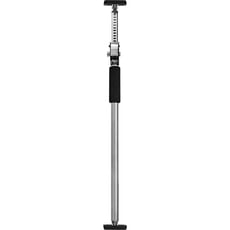
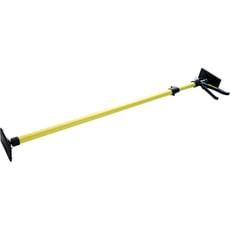
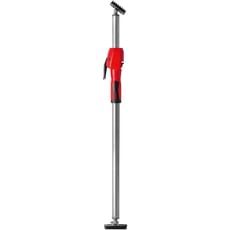
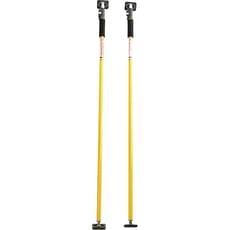
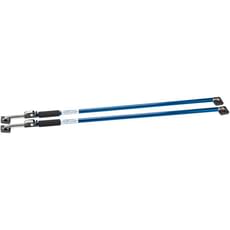
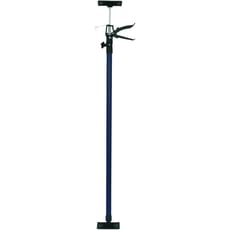
Support rods, also known as dry lining support props or telescopic support rods, are essential tools for positioning and holding materials during installation work. These adjustable devices create a temporary third hand on site, allowing tradespeople to work solo when fitting plasterboard, ceiling panels, battens, or other sheet materials. The telescopic design enables quick adjustment to suit different ceiling heights, typically ranging from around 1.15 metres to 2.9 metres when fully extended.
Most support rods feature rubber-padded ends that grip materials securely without causing damage, whilst providing a non-slip contact point against ceilings and floors. Premium models include pump-action mechanisms for rapid height adjustment, foam grips for comfortable operation, and angle adjustment capabilities of -45° to +45° to accommodate sloped surfaces. The selection at Tooled-Up.com includes models from trusted brands such as Bessey, Stanley, Draper, and Faithfull, offering solutions for both professional contractors and serious DIY enthusiasts.
These props are particularly valuable for ceiling work, where holding plasterboard sheets overhead would otherwise require two people. The telescopic mechanism allows for rough pre-setting followed by fine adjustment through turning the support at the foam grip, ensuring precise positioning before fixing. Many professional dry liners consider quality support rods as indispensable as their measuring tools, dramatically reducing installation time and physical strain.
Jargon Buster
- Telescopic Support Prop: An adjustable-length support rod with an inner pipe that extends and locks at various lengths, allowing quick adaptation to different room heights.
- Pump-Action Mechanism: A lever-operated system that enables rapid extension and retraction of the support rod without manual twisting, significantly speeding up height adjustment.
- Dry Lining: The process of fixing plasterboard to walls or ceilings without using wet plaster, creating a smooth surface ready for decoration.
- Angle Adjustment: The ability of the support rod's end pads to tilt, typically between -45° and +45°, allowing the prop to work effectively on angled or vaulted ceilings.
- Support Plate: An accessory attachment that increases the contact surface area of the support rod, distributing pressure more evenly across delicate materials.
- Foam Grip: The ergonomic padded section of the support rod that provides a comfortable hand-hold during rotation for final tensioning.
Who Uses Support Rods?
Support rods are essential tools for various construction and installation professionals:
- Dry Liners and Plasterers: The primary users who rely on these props daily for ceiling and wall board installation
- Shopfitters: Professionals installing partition walls and suspended ceiling systems in commercial environments
- Carpenters and Joiners: Tradespeople fitting decorative ceiling panels, tongue-and-groove cladding, or timber battens
- Electricians: Sparkies positioning ceiling roses, large light fittings, or securing cable runs before fixing
- Builders and General Contractors: Multi-trade professionals tackling various aspects of construction and renovation
- DIY Enthusiasts: Homeowners undertaking loft conversions, garage conversions, or home extension projects
- Shopkeepers and Retail Fitters: Those installing signage, suspended displays, or temporary structures
- Film and Theatre Set Builders: Professionals constructing temporary walls and ceiling structures
How to Choose the Right Support Rods
Selecting appropriate support rods depends on several practical considerations:
Maximum Height: Measure your typical working ceiling heights and choose rods with adequate extension. Most models extend between 2.6 and 2.9 metres, but verify this matches your requirements, particularly for high-ceiling period properties or commercial spaces.
Load Capacity: Consider the weight of materials you'll be supporting. Standard plasterboard sheets weigh approximately 25-30kg, but larger or specialist boards may be heavier. Quality brands like Bessey engineer their props to handle substantial loads safely.
Adjustment Mechanism: Basic twist-action models offer reliable performance at lower cost, whilst pump-action versions provide faster setup when working on multiple rooms. Professional dry liners often prefer pump-action for efficiency on large projects.
Angle Adjustment: If you regularly work with vaulted ceilings, roof spaces, or staircases, angle-adjustable end pads are essential. Standard props work perfectly for flat ceilings but struggle with angled surfaces.
Quantity Required: For standard 2400mm x 1200mm plasterboard sheets, two support rods positioned correctly will hold the board securely. Larger sheets or awkward positions may require three or four props.
Build Quality: Tooled-Up stocks professional-grade support rods with robust telescopic mechanisms that resist jamming and maintain adjustment under load. Cheaper alternatives may slip or collapse unexpectedly, creating safety hazards.
Popular Accessories
Enhance the versatility and functionality of your support rods with these complementary products:
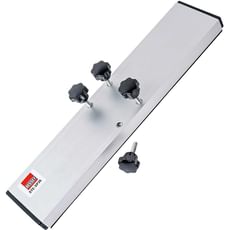
- Support Plates: Wider contact surfaces that prevent damage to delicate materials and distribute pressure more evenly
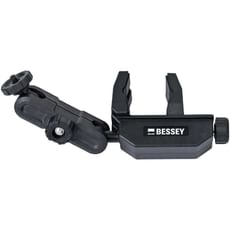
- Laser Holders: Mounting brackets that attach to support rods, positioning laser levels for accurate ceiling marking and alignment
- Plasterboard Lifters: Foot-operated devices that raise boards from floor level to ceiling height before props take over
- Drywall Saws and Cutting Tools: Essential for trimming boards to size before installation
- Screw Guns and Drywall Screwdrivers: Power tools for rapid fixing once boards are positioned
- Spirit Levels and Laser Levels: Ensuring perfectly horizontal or vertical alignment during installation
- Dust Sheets and Floor Protection: Protecting finished floors during overhead work
- Tool Bags and Storage Solutions: Keeping support rods and accessories organised during transport
Safety Information
Safe operation of support rods requires attention to proper setup and usage:
Weight Limits: Never exceed the manufacturer's stated load capacity. Overloading can cause catastrophic failure, potentially causing injury or material damage.
Surface Inspection: Check that floor and ceiling surfaces are sound before positioning props. Weak or damaged surfaces may give way under pressure, particularly on older plasterboard ceilings.
Proper Positioning: Ensure support rods are vertical or correctly angled for the surface. Props positioned at incorrect angles may slip sideways unexpectedly.
Secure Locking: Verify that telescopic sections are fully locked before loading. Test by applying gentle downward pressure before placing materials.
Regular Inspection: Check props for damaged rubber pads, bent tubes, or faulty locking mechanisms before each use. Replace worn components promptly.
Clear Working Area: Maintain clear floor space around props to prevent tripping hazards, particularly important when working overhead where attention is focused upward.
HSE Guidelines: When using support rods professionally, ensure compliance with HSE regulations for work at height and manual handling.
Frequently Asked Questions
How many support rods do I need for a standard plasterboard sheet?
Two support rods are typically sufficient for standard 2400mm x 1200mm plasterboard sheets when positioned approximately 600mm from each edge. For ceiling work in large rooms or with particularly heavy boards, three rods provide extra security and make positioning easier.
Can support rods damage plasterboard or ceilings?
Quality support rods feature rubber-padded ends specifically designed to grip without marking or damaging materials. However, excessive force or prolonged pressure on soft materials may leave impressions. Support plate accessories available from Tooled-Up distribute pressure across a wider area for delicate materials.
What's the difference between basic and pump-action support rods?
Basic support rods require manual rotation to extend and retract the telescopic mechanism, whilst pump-action models use a lever system for rapid height adjustment. Pump-action versions significantly speed up workflow when installing multiple sheets but cost more. For occasional DIY use, standard twist-action models are perfectly adequate.
Can I use support rods on sloped or vaulted ceilings?
Models with angle-adjustable end pads can accommodate slopes between -45° and +45°, making them suitable for vaulted ceilings, staircases, and loft conversions. Standard props with fixed end pads work only on flat horizontal or vertical surfaces.
How do I maintain my support rods?
Keep telescopic sections clean and free from plaster dust or debris that can jam the mechanism. Wipe down after use and store in a dry location. Periodically check rubber pads for wear and replace when grip deteriorates. Apply a light coating of dry lubricant to telescopic sections if they become stiff.