

Table Saws

Pay in 3 interest-free payments on purchases from £20-£3000 with  . Learn more.
 Loading...
End of content
Error - No more pages to load
About Table Saws
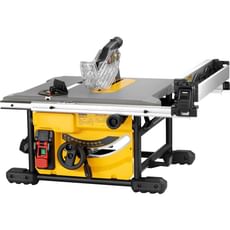
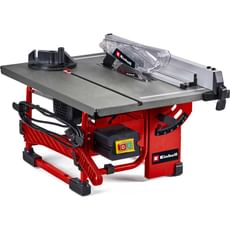
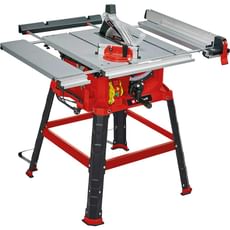
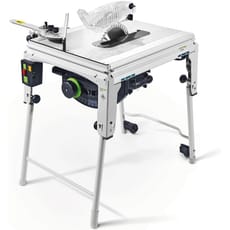
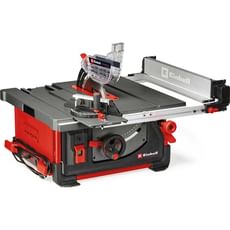
Table saws are essential workshop machines that deliver unmatched precision and repeatability for cutting timber and sheet materials. Featuring a circular saw blade mounted on an arbor beneath a flat table surface, these powerful tools excel at rip cuts, cross cuts, bevel cuts, and mitre work. The workpiece is guided across the stationary blade using adjustable fences and mitre gauges, enabling consistent, accurate results that would be difficult to achieve with handheld circular saws.
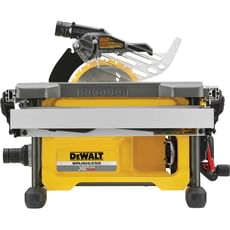
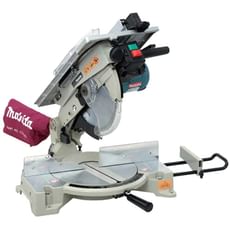
Tooled-Up.com stocks a comprehensive range of table saws from leading manufacturers including Makita, DeWalt, Bosch Professional, Festool, and Einhell. The selection spans compact 210mm portable models ideal for site work, through to robust 315mm contractor saws designed for workshop installations. Whilst traditional table saws require 240v mains power, cordless technology has revolutionised the market with battery-powered options now available, particularly DeWalt's FLEXVOLT system and models from Bosch and Milwaukee. Additionally, hybrid flipover saws combine table saw and mitre saw functionality in a single versatile machine.
Modern table saws incorporate safety features such as blade guards, riving knives, and anti-kickback devices, alongside convenience features like dust extraction ports, quick-release blade changes, and portable stands. Whether you're breaking down sheet goods, creating precision joinery, or performing repetitive production cuts, a quality table saw becomes the centrepiece of any efficient woodworking setup.
Jargon Buster
- Rip Fence: An adjustable guide rail that runs parallel to the blade, used for making accurate rip cuts along the length of timber. Quality rip fences lock securely and feature micro-adjustment mechanisms for precise positioning.
- Kickback: A dangerous condition where the workpiece is violently thrown back towards the operator, typically caused when the blade binds or pinches in the cut. Proper technique, sharp blades, and using riving knives significantly reduce kickback risk.
- Arbor: The shaft on which the saw blade is mounted. Arbor size (typically 30mm in the UK) must match the blade's bore diameter, though reducer rings can adapt different sizes.
- Mitre Gauge: A protractor-style guide that slides in a groove (mitre slot) on the table surface, allowing angled cross cuts to be made accurately. Many models feature adjustable stops at common angles.
- Riving Knife: A safety device positioned behind the blade that prevents the cut kerf from closing and pinching the blade. Modern saws feature tool-free riving knife adjustment that moves with the blade during bevel cuts.
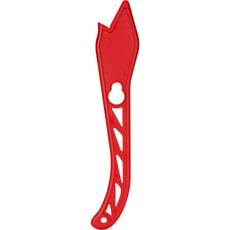
- Push Stick: An essential safety accessory used to guide workpieces past the blade whilst keeping hands at a safe distance. Always use push sticks for narrow rip cuts or when working close to the blade.
Who Uses Table Saws?
- Carpenters and joiners for accurate dimensioning of timber components and creating joinery
- Shopfitters breaking down sheet materials and creating bespoke fixtures
- Furniture makers requiring precision cuts for cabinet work and fine woodworking projects
- Kitchen fitters cutting worktops, plinths, and panel materials to exact specifications
- Construction professionals needing portable cutting solutions on building sites
- Flooring specialists for cutting decking, skirting boards, and laminate materials
- Maintenance teams in facilities requiring versatile cutting capabilities
- Theatrical and exhibition contractors building sets and display installations
- Serious DIY enthusiasts undertaking home renovation and woodworking projects
- Educational workshops teaching woodworking and construction skills
How to Choose the Right Table Saws
Blade Size and Cutting Capacity: Table saws are categorised by blade diameter, typically ranging from 210mm to 315mm. Larger blades provide greater cutting depth - crucial for thicker materials. Consider your typical workpiece dimensions and whether you need to cut through 3x2 CLS timber or thick hardwood stock.
Power Source: Choose between 240v mains-powered models offering consistent performance for workshop use, or cordless battery-powered saws providing unmatched portability for site work. Cordless options from DeWalt, Bosch, and Milwaukee suit tradespeople working across multiple locations without reliable power access.
Motor Power and Speed: Motor ratings typically range from 1,200W to 2,000W for 240v models. Higher wattage delivers better performance when cutting dense hardwoods or thick materials. Blade speed (measured in RPM) affects cut quality - faster speeds generally produce cleaner finishes in sheet materials.
Portability Requirements: Compact table saws with folding stands suit mobile tradespeople, whilst heavier cast iron models provide superior vibration damping for workshop installations. Many manufacturers offer compatible wheeled stands, making even larger saws reasonably portable. Consider whether the saw will remain static or require regular transportation.
Fence Quality and Accuracy: The rip fence is critical for precise cuts. Look for fences with secure locking mechanisms, minimal deflection under pressure, and easy micro-adjustment. Professional-grade models from Festool and Bosch Professional typically feature superior fence systems compared to entry-level options.
Dust Extraction: Effective dust collection maintains visibility, protects respiratory health, and keeps the workshop cleaner. Models available from Tooled-Up feature extraction ports compatible with workshop vacuum systems - particularly important for COSHH compliance on professional sites.
Safety Features: Modern table saws should include blade guards, riving knives, anti-kickback pawls, and emergency stop switches. Consider models with tool-free guard removal for efficient blade changes whilst encouraging proper guard use during cutting operations.
Popular Accessories
- Replacement Saw Blades: TCT blades optimised for ripping, cross cutting, or fine finish work in different materials including laminated boards and hardwoods
- Mobile Saw Stands: Wheeled bases and folding leg stands providing stable support and improved portability for site work
- Push Sticks and Push Blocks: Essential safety accessories keeping hands safely away from the spinning blade during operations
- Mitre Gauges and Sleds: Upgraded guides providing enhanced accuracy for cross cuts and angled work
- Dado Blade Sets: Specialist stacked blade sets for cutting grooves and rebates (check compatibility with your specific model)
- Outfeed Tables and Roller Stands: Supporting long workpieces and sheet materials for safer, more accurate cutting
- Dust Extraction Hoses and Adaptors: Connecting the saw to workshop vacuum systems for effective dust collection
- Blade Guards and Safety Equipment: Replacement guards and overhead guards enhancing operator protection
- Featherboards: Hold-down devices maintaining consistent pressure against the fence during rip cutting operations
Safety Information
Table saws demand respect and proper safety practices. These machines can cause devastating injuries including severe lacerations, amputations, and eye damage if operated carelessly. Always read the manufacturer's instruction manual thoroughly before first use and ensure you understand kickback causes and prevention.
Essential Safety Practices: Never remove blade guards unless absolutely necessary, and refit them immediately after completion. Always use push sticks when your hands would otherwise pass within 300mm of the blade - this is particularly critical for narrow rip cuts. Maintain a stable stance to the side of the cutting line, never directly behind the workpiece where kickback could strike you.
Personal Protective Equipment: Wear safety glasses or a face shield to protect against flying debris. Use hearing protection during extended operations as table saws generate significant noise levels. Consider respiratory protection when cutting treated timber or manufactured boards containing formaldehyde. Remove jewellery, secure loose clothing, and tie back long hair.
Blade Maintenance: Keep blades sharp - dull blades require excessive feed pressure, increasing kickback risk. Ensure the riving knife is correctly positioned relative to the blade and that anti-kickback pawls move freely. Check that blade arbor nuts are properly tightened before each use.
Work Environment: Ensure adequate lighting and maintain a clean workspace free from offcuts and tripping hazards. Never operate table saws when fatigued or distracted. On professional sites, ensure compliance with HSE guidance and that operators have received appropriate training and instruction in safe working practices.
Frequently Asked Questions
What's the difference between a site saw and a cabinet saw?
Site saws (also called contractor saws) are designed for portability with lightweight construction, open stands, and typically 240v single-phase motors up to around 2,000W. Cabinet saws feature enclosed bases, heavier cast iron construction for vibration damping, more powerful motors, and superior dust collection - they're designed for permanent workshop installation where precision and smooth operation are paramount. Site saws suit mobile tradespeople, whilst cabinet saws serve dedicated woodworking shops.
Can I use a table saw for cutting materials other than wood?
With appropriate blades, table saws can cut various materials including laminate flooring, MDF, plywood, and some plastics. Aluminium and non-ferrous metals require specialist TCT blades designed for metal cutting and slower feed rates. Never attempt to cut ferrous metals, masonry, or tiles on a wood-cutting table saw. Always verify that your specific model is suitable for alternative materials and use manufacturer-recommended blades to prevent damage and maintain safety.
How do cordless table saws compare to 240v models for professional use?
Modern cordless table saws from DeWalt's FLEXVOLT range and Bosch Professional's 18v system deliver impressive performance approaching mains-powered equivalents. They're ideal for site work without reliable power access and eliminate trailing cables. However, battery capacity limits continuous operation - professionals cutting high volumes may need multiple batteries. For permanent workshop installations with consistent power availability, 240v models remain the practical choice offering unlimited runtime and typically lower initial cost.
What blade size should I choose?
Blade size determines maximum cutting depth. A 210mm blade cuts approximately 67mm at 90° - adequate for most construction timber and sheet materials. 250mm blades (around 85mm depth) handle thicker stock and hardwoods comfortably. 315mm models (cutting roughly 100mm deep) suit heavy-duty applications and thick hardwood dimensioning. Consider your typical workpiece dimensions - if you regularly cut 4x4 posts or thick hardwood slabs, invest in a larger capacity saw. For general carpentry and sheet goods, 210-250mm models provide excellent versatility.
Do I need a riving knife, or is a splitter sufficient?
Riving knives are significantly safer than fixed splitters because they move with the blade during height and bevel adjustments, maintaining the correct position relative to the cutting edge. This consistent positioning provides superior kickback protection across all cutting configurations. Fixed splitters may sit too low when the blade is raised, or interfere with non-through cuts. Modern table saws feature tool-free riving knives that shouldn't be removed during normal operations. For professional use and HSE compliance, choose models with proper riving knife systems rather than outdated splitter designs.