

Telescopic Gauge

Pay in 3 interest-free payments on purchases from £20-£3000 with  . Learn more.
 Loading...
End of content
Error - No more pages to load
About Telescopic Gauge
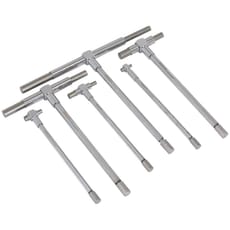
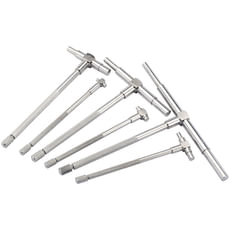
Telescopic gauges, also known as telescopic bore gauges or internal gauges, are precision measuring instruments essential for accurately determining the internal diameter of holes, bores, grooves, and recesses. These versatile tools feature a spring-loaded telescoping plunger mechanism that expands to contact the internal surfaces being measured. Once the correct measurement is captured, the gauge is locked in position and removed from the bore, where it can then be measured using a micrometer or Vernier calliper to determine the exact internal dimension.
Used extensively in engineering, automotive, manufacturing, and precision machining environments, telescopic gauges provide an accurate and reliable method for measuring internal dimensions where standard measuring tools cannot reach. Most professional gauge sets available from Tooled-Up.com include multiple sizes to cover a comprehensive range of bore diameters, typically from as small as 8mm up to 150mm or more. Quality sets from trusted brands like Draper and Sealey offer complete coverage for workshop and site applications, ensuring tradespeople have the right tool for every measuring task.
Unlike digital measuring instruments, telescopic gauges offer a tactile, mechanical approach that many experienced engineers and machinists prefer for their reliability and lack of dependence on batteries or electronic components. They're particularly valued in harsh workshop environments where electronic devices might be vulnerable to contamination, impact, or temperature extremes.
Jargon Buster
- Bore Diameter: The internal measurement across a cylindrical hole or tube. Telescopic gauges are specifically designed to measure this dimension accurately where conventional measuring tools cannot fit or provide adequate contact.
- Contact Points: The hardened steel tips at the end of the telescoping plungers that make contact with the internal surface being measured. These must be kept clean and undamaged to ensure measurement accuracy.
- Spring-Loaded Mechanism: The internal spring that provides outward pressure on the telescoping plungers, ensuring firm contact with the bore walls and maintaining position once the correct measurement is achieved.
- Lock Knob: The adjustable knob or screw mechanism at the top of the gauge that fixes the plungers in position once the measurement has been taken, preventing movement during removal from the bore.
- Measurement Range: The minimum and maximum bore diameters that each individual gauge can measure. Professional sets include multiple gauges with overlapping ranges to cover comprehensive measurement requirements.
- Transfer Measurement: The technique of using a telescopic gauge to capture an internal dimension, then measuring the gauge itself with a micrometer or calliper to determine the actual bore size.
Who Uses Telescopic Gauge?
Telescopic gauges are essential precision tools for a wide range of trades and industries:
- Precision Engineers: For measuring bore sizes in machined components, checking tolerances, and quality control inspections
- Motor Mechanics and Vehicle Technicians: Measuring engine cylinder bores, bearing housings, and transmission components during rebuilds and diagnostics
- Machinists and Turner-Fitters: Verifying internal dimensions of turned and machined parts against engineering drawings and specifications
- Agricultural and Plant Mechanics: Inspecting wear in hydraulic cylinders, pivot pins, and bearing housings on heavy machinery
- Tool and Die Makers: Precision measurement of die cavities, jig bushings, and tooling components
- Quality Control Inspectors: Checking manufactured components meet dimensional specifications in production and fabrication environments
- Maintenance Engineers: Assessing wear and clearances in industrial machinery, pumps, and equipment
- Advanced DIY Enthusiasts: Home mechanics and keen hobbyists undertaking precision work on engines, machinery restoration, and metal fabrication projects
How to Choose the Right Telescopic Gauge
Selecting the appropriate telescopic gauge set depends on several practical factors:
Measurement Range: Consider the typical bore sizes you'll be measuring. A comprehensive 6-piece set typically covers bore diameters from approximately 8mm to 150mm, which suits most general engineering and automotive applications. If you regularly work with larger or smaller bores, check the specific range of each gauge in the set before purchasing.
Build Quality and Accuracy: Professional-grade telescopic gauges from established brands like Draper and Sealey feature hardened steel contact points, smooth spring mechanisms, and reliable locking systems. The quality of construction directly affects measurement accuracy and tool longevity. Look for gauges with precisely machined components and chrome-plated or satin finishes that resist corrosion.
Contact Point Design: The shape and condition of the contact points are critical. Spherical or radiused contact points provide better surface contact and more consistent measurements than flat ends. Ensure all contact points are smooth and unmarked for accurate readings.
Handle and Lock Design: A knurled or ergonomic handle improves grip and control, particularly when working with oily or contaminated components. The lock mechanism should operate smoothly and hold the measurement securely without slipping. Test the lock for positive engagement before committing to a purchase.
Storage Case: A proper storage case protects your gauges from damage, contamination, and corrosion whilst keeping the set organised. Quality sets include fitted cases that clearly identify each gauge size and protect the precision contact points.
Price vs. Application: For professional daily use, invest in a quality branded set that will withstand regular workshop conditions and maintain accuracy over time. For occasional DIY use, a mid-range set from a reputable manufacturer offers excellent value whilst maintaining acceptable measurement standards.
Popular Accessories
- External Micrometers: Essential companion tools for measuring the telescopic gauge once removed from the bore, providing the actual dimension reading to high precision, typically 0.01mm accuracy
- Vernier Callipers: Alternative measuring tool for reading telescopic gauge dimensions, offering slightly less precision than micrometers but faster operation for less critical measurements
- Digital Callipers: Electronic measuring instruments that provide instant digital readouts when measuring the expanded gauge, eliminating reading errors common with analogue scales
- Cleaning Brushes and Cloths: Lint-free cloths and precision brushes for maintaining clean contact points and removing swarf, oil, and contamination that could affect measurement accuracy
- Precision Measuring Fluid: Light penetrating oil or specialised measuring fluid used to clean gauges and provide slight lubrication for smooth plunger operation without affecting accuracy
- Gauge Blocks or Standards: Calibrated reference standards for periodically checking the accuracy of your measuring process and technique
Safety Information
Whilst telescopic gauges are relatively safe hand tools, proper handling ensures accurate measurements and prevents damage:
- Always ensure the bore being measured is clean and free from sharp edges, burrs, or swarf that could damage the precision contact points or cause hand injuries
- When measuring bores in machinery, ensure equipment is isolated, locked off, and cannot start unexpectedly during the measuring process
- Wear appropriate PPE including safety glasses when working in machine shops or automotive environments where swarf and debris may be present
- Handle gauges carefully to avoid dropping or striking the precision contact points against hard surfaces, which will affect measurement accuracy
- Store gauges in their protective case when not in use to prevent damage and maintain calibration
- Keep gauges away from magnetic fields and extreme temperatures that could affect the spring mechanism or dimensional stability
- Regularly inspect contact points for damage, wear, or contamination before use, as compromised measuring surfaces will provide inaccurate readings
Frequently Asked Questions
How accurate are telescopic gauges compared to digital bore gauges?
When used correctly with a quality micrometer, telescopic gauges can achieve accuracy within 0.01mm to 0.02mm, comparable to digital instruments but at a fraction of the cost. Accuracy depends heavily on user technique and the quality of both the gauge and the micrometer used for final measurement. They're ideal for most engineering and automotive applications where extreme precision isn't critical.
What size telescopic gauge set do I need for automotive engine work?
A standard 6-piece set covering approximately 8mm to 150mm handles virtually all automotive applications, including cylinder bores, bearing housings, valve guides, and transmission components. The selection at Tooled-Up.com includes sets from Draper and Sealey that suit most car, van, and light commercial vehicle engines. For larger plant machinery or marine engines, you may need additional larger gauges.
How do I use a telescopic gauge properly?
First, compress the plungers and insert the gauge into the bore. Release the lock to allow the spring-loaded plungers to expand fully against the bore walls. Rock the gauge gently to ensure you've found the true diameter (the smallest reading). Tighten the lock knob firmly, then carefully remove the gauge and measure it with a micrometer or calliper to determine the bore size.
Can telescopic gauges measure tapered or worn bores?
Yes, this is one of their key advantages. By taking measurements at different depths and positions within a bore, you can identify wear patterns, taper, and out-of-round conditions that indicate component wear. This makes them invaluable for engine rebuilds and machinery maintenance where bore condition assessment is critical.
Do I need to calibrate telescopic gauges?
Telescopic gauges themselves don't require calibration as they're transfer tools that simply hold a dimension. However, the micrometer or calliper used to measure them should be checked regularly against gauge blocks or standards. Periodically inspect the gauge contact points for wear or damage, as this affects accuracy more than any dimensional drift in the tool itself.