

Thread Repair Kits

Pay in 3 interest-free payments on purchases from £20-£3000 with  . Learn more.

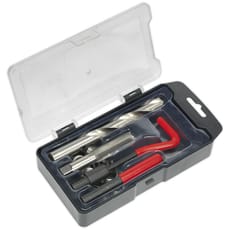

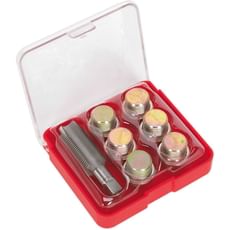
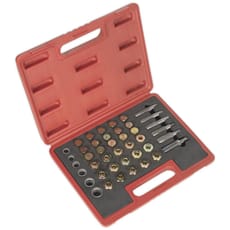
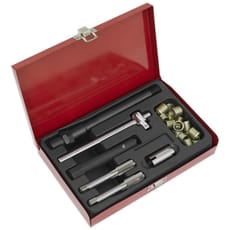

 Loading...
End of content
Error - No more pages to load
About Thread Repair Kits
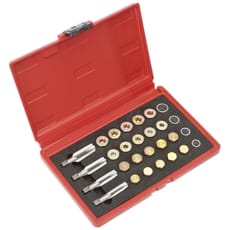
Thread repair kits are essential tools for restoring damaged or stripped threads in metal, aluminium, and other materials. Whether dealing with cross-threaded bolt holes, corroded threads, or worn screw fixtures, these kits provide a permanent solution that often exceeds the strength of the original thread. A typical thread repair kit contains precision drill bits, taps, stainless steel thread inserts (also known as helicoils), and the installation tools needed to complete the repair. The process involves drilling out the damaged thread to a specific oversize, tapping a new thread pattern, and installing a coiled insert that restores the thread to its original size and specification.
Tooled-Up.com stocks a comprehensive range of thread repair solutions from trusted manufacturers including Sealey, Recoil, and Draper. The selection includes general-purpose metric and imperial thread repair kits alongside specialist automotive kits designed for specific applications such as glow plug threads, spark plug repairs, oil drain plugs, brake calliper threads, and oxygen sensor installations. These specialist kits are invaluable for motor mechanics and vehicle technicians who regularly encounter thread damage in engine bays and undercarriage components where access is restricted and precision is critical.
Thread inserts provide numerous advantages over simply retapping a damaged thread to a larger size. The stainless steel construction resists corrosion, galling, and seizing, while the coiled design distributes load more evenly across the thread engagement. This makes repaired threads particularly suitable for high-stress applications and aluminium components where the original thread may have been relatively weak. Professional-grade thread repair kits available from Tooled-Up include everything needed for immediate use, eliminating the need to source compatible drill bits, taps, and installation mandrels separately.
Jargon Buster
- Helicoil: A brand name that has become synonymous with coiled thread inserts. These precision-wound stainless steel coils form a new internal thread when installed into a prepared hole.
- Tang: A small protruding section on a thread insert that allows the installation tool to grip and wind the insert into position. This must be broken off and removed after installation to allow the fastener to pass through completely.
- Tapping: The process of cutting an internal thread into a hole using a specialised cutting tool called a tap. Thread repair requires tapping an oversize thread to accommodate the insert.
- Thread Pitch: The distance between adjacent thread crests, typically measured in millimetres for metric threads or threads per inch (TPI) for imperial threads. Matching the correct pitch is essential for successful thread repair.
- Insert Installation Tool: A mandrel or threaded spindle that winds the thread insert into the newly tapped hole. Different insert sizes require corresponding installation tools.
- Thread Forms: Different thread standards such as Metric (M), Unified National Fine (UNF), British Standard Pipe (BSP), and British Standard Fine (BSF), each with specific angle and pitch characteristics.
Who Uses Thread Repair Kits?
- Motor Mechanics and Vehicle Technicians: Regularly repair damaged threads in engine blocks, cylinder heads, gearboxes, and chassis components
- Plant and Machinery Engineers: Maintain and repair industrial equipment, agricultural machinery, and construction plant where thread damage is common
- Manufacturing and Production Engineers: Restore threads in jigs, fixtures, machine tools, and production equipment without replacing expensive components
- Maintenance Fitters: Conduct repairs across diverse industrial settings, extending the service life of machinery and reducing downtime
- Aerospace and Precision Engineers: Use thread inserts for both repair and original installation in aluminium and composite structures
- Motorcycle and Marine Mechanics: Address thread damage in lightweight alloy engines and components exposed to corrosive environments
- Workshop Owners and Tool Hire Businesses: Stock thread repair kits as essential equipment for comprehensive repair capabilities
- Serious DIY Enthusiasts: Restore threads in automotive projects, machinery restoration, and home workshop repairs
How to Choose the Right Thread Repair Kits
Thread Type and Size: Identify whether you need metric, UNF, BSF, or BSP thread repairs. General-purpose kits typically cover common sizes such as M5 to M12 for metric applications, while master kits offer broader coverage across multiple thread standards. Specialist automotive kits are sized for specific applications like M14 x 1.25 spark plug threads or M10 x 1.0 glow plug threads.
Application Specificity: Consider whether a general-purpose kit or specialist application-specific kit best suits your needs. Automotive professionals working on engine repairs benefit from dedicated spark plug, glow plug, or oil drain plug kits that include extended-length taps and installation tools designed for restricted access. General engineering applications are well served by comprehensive metric or UNF kits that cover frequently encountered thread sizes.
Kit Completeness: Quality thread repair kits include the correct oversize drill bit, tap, multiple thread inserts, installation tool, and tang break-off tool. Master kits and professional sets provide extensive size coverage in organised storage cases, whilst single-size kits offer economical solutions for specific repairs. Verify that drill bits are included, as these must be precisely sized to ensure correct insert fit.
Insert Quality and Material: Stainless steel inserts offer superior corrosion resistance and longevity compared to phosphor bronze alternatives. The range at Tooled-Up features high-quality stainless steel inserts that provide stronger thread engagement than the original material, particularly important in aluminium and softer alloy components.
Brand Reputation: Established manufacturers like Sealey, Recoil, and Draper produce thread repair kits with precision-manufactured components that ensure reliable results. Sealey's extensive range includes numerous specialist automotive kits, whilst Recoil's PRO XL systems offer professional-grade solutions for demanding workshop environments.
Popular Accessories
- Additional Thread Inserts: Replenishment packs of inserts in commonly used sizes for workshops conducting frequent thread repairs
- Cutting Fluid and Tapping Compound: Improves tap life and thread quality when cutting new threads in harder materials
- Drill Bit Sets: High-speed steel and cobalt drill bits for preparing holes in various materials
- Screw Extractors: Remove broken studs and bolts before thread repair can commence
- Thread Gauges: Accurately identify existing thread pitch and diameter before selecting repair kit
- Tang Break-Off Tools: Purpose-designed tools for cleanly removing insert tangs after installation
- Workshop Magnets: Retrieve broken tangs and swarf from blind holes to prevent foreign object damage
- Compressed Air Equipment: Clean debris from tapped holes before insert installation
Safety Information
Eye Protection: Always wear safety glasses or goggles when drilling and tapping to protect against swarf and metal particles. Thread cutting generates sharp metallic debris that can cause serious eye injury.
Tang Removal: Exercise caution when breaking off insert tangs in sensitive machinery or complex assemblies. Ensure broken tangs are completely removed from blind holes to prevent foreign object damage to bearings, pistons, or other moving parts. Use magnets, compressed air, or vacuum extraction to confirm complete removal.
Correct Tool Selection: Use only the drill bits and taps supplied with or specified for your thread repair kit. Incorrect sizing will result in loose inserts or damaged threads. Ensure taps are used squarely and with appropriate cutting fluid to prevent breakage.
Component Inspection: Before conducting thread repairs on critical components such as engine blocks or structural assemblies, assess whether the surrounding material has sufficient integrity. Thin-walled sections or severely damaged material may require professional assessment or component replacement rather than thread repair.
Frequently Asked Questions
What size drill bit do I need for a thread repair insert?
The drill bit size is always larger than the original thread diameter to accommodate the insert. Quality thread repair kits include the correctly sized drill bit matched to the insert size—typically several millimetres oversize for metric threads. For example, repairing an M8 thread typically requires a 9mm or 10mm drill depending on the insert manufacturer. Never estimate; always use the supplied or specified drill bit to ensure proper insert fit.
Can thread repair inserts be used in aluminium engine blocks?
Yes, thread inserts are particularly beneficial in aluminium and other soft alloys where they often provide stronger thread engagement than the original material. Many automotive applications specifically use thread inserts in aluminium cylinder heads for spark plugs and in engine blocks for drain plugs. The stainless steel insert resists cross-threading, corrosion, and wear far better than aluminium threads, making them ideal for frequently removed fasteners.
Do I need different kits for metric and imperial threads?
Yes, metric and imperial threads require different taps, drill bits, and inserts due to their distinct thread forms and pitch specifications. Some master thread repair kits cover multiple standards, but specialist kits are typically designed for either metric or imperial applications. Identify your thread type before purchasing—metric threads are marked with 'M' (such as M10 x 1.5), whilst imperial threads use UNF, UNC, or BSF designations.
How strong is a thread repaired with an insert compared to the original?
When properly installed, thread inserts typically provide equal or greater strength than the original thread, often by a significant margin in softer materials like aluminium. The stainless steel construction and increased thread engagement area distribute loads more effectively. This makes repaired threads suitable for high-torque applications and repeated fastener removal, often outlasting the surrounding component.
What's the difference between a basic kit and a master thread repair kit?
Basic or single-size kits contain tools and inserts for one specific thread size, making them economical for occasional repairs or addressing a known problem. Master kits include multiple drill bits, taps, installation tools, and inserts covering a range of thread sizes—typically M5 through M12 for metric master kits. Master kits suit professional workshops and maintenance departments where diverse thread repair requirements arise regularly, providing comprehensive coverage in organised storage cases.