

Threaded Rod

Pay in 3 interest-free payments on purchases from £20-£3000 with  . Learn more.
 Loading...
End of content
Error - No more pages to load
About Threaded Rod
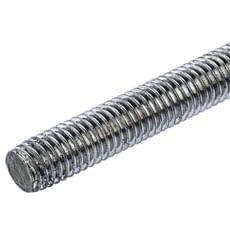
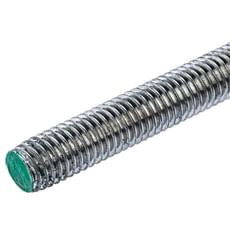
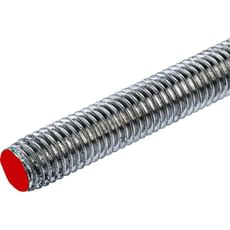
Threaded rod, also known as studding or all-thread, is an essential fastening component used across construction, engineering, and fabrication projects. Unlike traditional bolts with heads, threaded rod features continuous threading along its entire length, allowing for versatile anchoring, suspension, and assembly applications. Whether you're securing structural elements, creating custom-length fasteners, or installing HVAC systems, threaded rod provides the adjustable, high-strength solution that professionals demand.
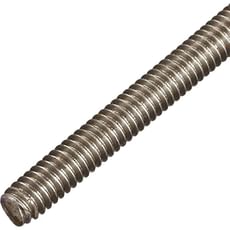
The selection at Tooled-Up.com includes threaded rod in various materials to suit different environments and load requirements. Bright zinc plated steel offers economical strength for general indoor applications, whilst A2 304 stainless steel provides superior corrosion resistance for outdoor use. For the most demanding marine and chemical environments, A4 316 stainless steel delivers exceptional durability. High tensile grade 8.8 threaded rod is available for applications requiring maximum load-bearing capacity, ensuring you have the right specification for every project.
Threaded rod is manufactured to precise standards including metric and BSW (British Standard Whitworth) threading, with diameters typically ranging from M6 to M24. Tooled-Up stocks trusted brands including Sirius, Rawlplug, Sealey, and Timco, all conforming to DIN 975 and other relevant British and European standards. Available in various lengths up to 1 metre or more, threaded rod can be cut to exact requirements on site, making it one of the most flexible fastening solutions for tradespeople.
Jargon Buster
- Grade 8.8: A high tensile steel classification indicating minimum tensile strength of 800 MPa and yield strength of 640 MPa. The first number represents tensile strength (×100 MPa) and the second represents the ratio of yield to tensile strength (×10).
- A2 and A4 Stainless Steel: Standardised grades of stainless steel. A2 (304) offers good corrosion resistance for general outdoor use, whilst A4 (316) provides enhanced resistance to marine environments and chemical exposure thanks to additional molybdenum content.
- DIN 975: A German industrial standard specifying dimensions, tolerances, and threading for continuously threaded rods. This standard is widely recognised across Europe and ensures compatibility with standard nuts and fixtures.
- BSW (British Standard Whitworth): A traditional imperial thread form with 55-degree thread angle, still commonly used in older machinery and heritage construction projects throughout the UK.
- Studding: Another term for threaded rod, particularly common in UK construction trades. Often refers to shorter lengths used for securing frameworks and fixtures.
- Bright Zinc Plated (BZP): A protective coating applied to steel threaded rod that provides basic corrosion resistance for dry indoor environments. The bright finish also offers a clean, professional appearance.
Who Uses Threaded Rod?
- Structural Engineers: For anchoring steel beams, columns, and framework connections in commercial and industrial buildings
- Electricians and Sparks: Suspending cable tray systems, conduit runs, and securing distribution boards to walls and ceilings
- Plumbers and Heating Engineers: Installing pipework supports, boiler mountings, and cylinder fixings where adjustable height is required
- HVAC Installers: Hanging ductwork, air handling units, and ventilation equipment from ceilings and structural members
- Shopfitters and Joiners: Creating custom fixings, suspended shelving systems, and adjustable mounting solutions for retail and commercial fit-outs
- Mechanical Engineers: Assembling machinery frames, securing equipment housings, and creating adjustable jigs and fixtures
- General Builders and Contractors: Wide-ranging applications from temporary bracing to permanent structural connections on construction sites
- Maintenance Teams: Repairs and modifications in factories, warehouses, and facilities where standard bolt lengths aren't suitable
- DIY Enthusiasts: Home workshop projects, garage shelving, and custom fabrication work requiring precise, adjustable fastening
How to Choose the Right Threaded Rod
Material Selection: Consider the environment where the threaded rod will be installed. Bright zinc plated steel is cost-effective for dry indoor applications. For outdoor exposure to weather, specify A2 stainless steel as a minimum. Marine environments, coastal locations, and areas with chemical exposure require A4 316 stainless steel for long-term reliability.
Strength Requirements: Standard grade threaded rod (typically grade 4.6 or 5.8) suits light to medium loads. For structural applications or high load-bearing requirements, high tensile grade 8.8 provides significantly greater strength. Always calculate loads according to relevant building regulations and safety factors.
Thread Type and Diameter: Metric threading (M6, M8, M10, M12, M16, M20, M24) is standard for modern applications and ensures compatibility with readily available nuts and washers. BSW Whitworth threading remains necessary for heritage projects and older machinery. Choose diameter based on load calculations and the size of fixing holes in your application.
Length Considerations: Threaded rod from Tooled-Up is available in standard lengths, typically 1 metre, though specific products may vary. Account for the thickness of materials being fixed, plus allowance for washers, nuts, and thread engagement. Rod can be cut to length using an angle grinder or hacksaw, with thread damage prevented by fitting a nut before cutting.
Compliance and Standards: Ensure threaded rod meets relevant British Standards (BS) and European Standards (EN). DIN 975 is widely specified and guarantees dimensional accuracy. For structural applications, request manufacturer certification and consider whether CE marking or other compliance documentation is required.
Popular Accessories
- Hexagonal Nuts: Standard, nyloc, and full nuts in matching material grades and thread sizes
- Washers: Flat washers, spring washers, and penny washers to distribute load and prevent surface damage
- Threaded Rod Couplers: Hex couplers and barrel nuts for joining lengths of threaded rod or creating extended assemblies
- Chemical Anchors and Resin: High-performance bonding systems for securing threaded rod into concrete, masonry, and stone
- Mechanical Anchors: Sleeve anchors, drop-in anchors, and expanding anchors compatible with threaded rod applications
- Rod Hangers and Brackets: Specialist mounting hardware for suspending services from structural elements
- Cutting Tools: Angle grinders, hacksaws, and specialist studding cutters for sizing rod to length
- Thread Cutting Tools: Dies and taps for repairing damaged threads or creating custom thread lengths
- Spanners and Sockets: Correct sizes for tightening nuts, including ratchet spanners and torque wrenches for precise installation
Safety Information
Manual Handling: Longer lengths of threaded rod can be heavy and awkward to manoeuvre. Use proper lifting techniques and seek assistance when handling metre-long steel studding to avoid strain injuries. Store threaded rod horizontally on proper racking to prevent warping and accidents.
Cutting Hazards: When cutting threaded rod to length, wear appropriate PPE including safety glasses, gloves, and hearing protection if using powered tools. Secure the rod firmly before cutting, and be aware of sharp burrs created during cutting. Deburr cut ends before installation.
Load Calculations: Never exceed the working load limit of threaded rod. Structural applications must be calculated by a qualified engineer in accordance with building regulations. Account for safety factors, dynamic loads, and environmental factors that may affect strength over time.
Chemical Exposure: When using chemical anchors or resin systems with threaded rod, follow COSHH guidelines and manufacturer safety data sheets. Ensure adequate ventilation and wear appropriate respiratory protection when working with chemical fixing systems in confined spaces.
Torque Specifications: Over-tightening threaded rod can cause thread stripping or rod failure. Under-tightening may result in loose connections and potential structural failure. Use a torque wrench where specific installation torques are required, particularly in safety-critical applications.
Frequently Asked Questions
What's the difference between threaded rod and studding?
These terms are essentially interchangeable in the UK. Both refer to metal rod with continuous threading along its length. "Studding" is particularly common amongst builders and contractors, whilst "threaded rod" or "all-thread" is more frequently used in engineering contexts. The products themselves are identical.
Can I use zinc plated threaded rod outdoors?
Bright zinc plated threaded rod offers only limited corrosion protection and is generally unsuitable for permanent outdoor installations. For external use, specify A2 stainless steel as a minimum. In coastal areas or aggressive environments, A4 316 stainless steel is essential to prevent premature corrosion and failure.
How do I calculate the load capacity of threaded rod?
Load capacity depends on material grade, diameter, thread engagement, and installation method. Grade 8.8 threaded rod has significantly higher tensile strength than standard grades. For structural applications, loads must be calculated by a qualified engineer considering factors including shear forces, tensile loads, and safety factors in accordance with British Standards and building regulations.
What's the best way to cut threaded rod to length?
For occasional cuts, a hacksaw works well—fit a nut on the threaded rod before cutting to help guide the blade and reform damaged threads when removed. For multiple cuts or thicker diameters, an angle grinder with a metal cutting disc is faster. Purpose-made studding cutters provide the cleanest cut without damaging threads. Always deburr cut ends before installation.
Can threaded rod be bent or will it snap?
Threaded rod is designed for straight installation under tension or compression, not for bending. Attempting to bend threaded rod will likely cause it to snap, particularly with high tensile grades which are less ductile. If your application requires curved fastening, consider alternative solutions such as flexible hangers or purpose-designed brackets instead.