

Threading Tools
Pay in 3 interest-free payments on purchases from £30-2000 with  . Learn more.



 Loading...
End of content
Error - No more pages to load
About Threading Tools
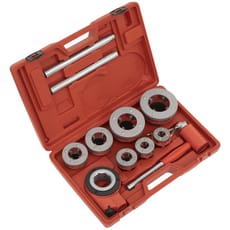
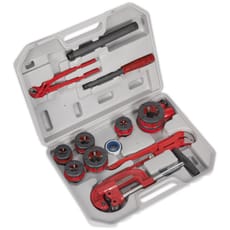
Threading tools are essential equipment for creating precise external threads on metal pipes and tubes, primarily used in plumbing, gas fitting, and hydraulic installations. These specialised tools cut clean, accurate threads that enable secure pipe connections using standard fittings, ensuring leak-proof joints in pressurised systems. Threading tools range from manual ratchet sets for occasional repairs to powerful electric and cordless machines designed for high-volume professional use on construction sites and in fabrication workshops.
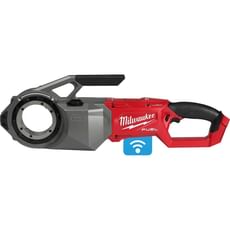
The threading tools available from Tooled-Up.com include manual pipe threading kits with multiple dieheads for different pipe diameters, handheld electric threading machines for portability, and heavy-duty bench-mounted models for workshop environments. Modern cordless threading tools have revolutionised pipe work, with manufacturers like Milwaukee offering 18v battery-powered solutions that deliver the cutting force needed for threading operations without requiring access to 240v mains power on site. These tools accommodate various thread standards including BSP (British Standard Pipe), BSPT (British Standard Pipe Taper), and metric threads, ensuring compatibility with UK and European pipe systems.
Professional threading equipment typically features adjustable dieheads with replaceable chasers that maintain cutting performance over thousands of threads. Quality threading tools incorporate ratchet mechanisms for controlled cutting, swarf clearance holes to prevent chip build-up, and ergonomic handles that reduce operator fatigue during repetitive threading tasks. Whether threading black steel gas pipes, galvanised water supply lines, or stainless steel hydraulic tubing, selecting appropriate threading tools ensures code-compliant installations that pass inspection and provide years of reliable service.
Jargon Buster
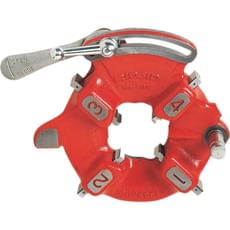
- Dieheads: The circular cutting components that hold the threading dies or chasers. Dieheads are sized for specific pipe diameters and thread standards, with most professional kits including multiple interchangeable dieheads covering common sizes from 1/2" to 2".
- Chasers: The individual cutting teeth within a diehead, typically arranged in sets of four. Chasers are replaceable when worn and work together to cut clean, accurate threads as the dieheads rotate around the pipe.
- BSP (British Standard Pipe): A family of thread standards widely used throughout the UK and Commonwealth for parallel and tapered pipe threads. BSP threads are measured by nominal bore size rather than outside diameter.
- BSPT (British Standard Pipe Taper): A tapered thread standard that creates a mechanical seal when tightened, commonly used for gas installations. The 1 in 16 taper allows the threads to wedge together for a gas-tight joint.
- Ratchet Threading: A mechanism that allows the tool to cut threads whilst moving in only one direction, then reset without reversing the cut. This prevents thread damage and enables threading in confined spaces close to walls or obstacles.
- Swarf: The metal chips and shavings produced during the threading process. Effective swarf clearance through dedicated holes prevents chip build-up that can damage threads or jam the tool.
Who Uses Threading Tools?
- Plumbers and heating engineers installing copper, steel, and galvanised pipe systems for water supply and central heating
- Gas fitters threading black steel pipes for natural gas and LPG distribution systems in domestic and commercial properties
- Pipefitters and mechanical engineers working on industrial installations, process pipework, and manufacturing facilities
- HVAC technicians installing refrigerant lines and condensate drainage systems
- Sprinkler fitters threading pipes for fire suppression systems in commercial buildings
- Maintenance engineers repairing and modifying existing pipe systems in factories, hospitals, and facilities management
- Plant and hydraulic engineers working with high-pressure hydraulic lines and pneumatic systems
- Agricultural engineers installing irrigation systems and farm infrastructure
- DIY enthusiasts undertaking home plumbing projects and workshop installations
How to Choose the Right Threading Tools
Manual vs. Powered: Manual ratchet threading kits suit occasional use, repair work, and situations where portability matters most. Electric and cordless threading machines significantly reduce effort and time on larger projects, making them essential for professional tradespeople threading pipes daily. Battery-powered models from brands like Milwaukee and Ridgid offer site mobility without sacrificing power.
Thread Standards: Ensure compatibility with the thread standard required for your work. BSP and BSPT threads dominate UK installations, whilst metric threads are common in European equipment and newer installations. Some versatile kits available at Tooled-Up.com include multiple dieheads covering both imperial and metric standards.
Pipe Size Range: Consider the diameter range you'll typically thread. Basic kits handle common sizes from 1/2" to 1", whilst comprehensive sets extend to 2" or larger. Professional machines often accept optional dieheads for expanded capacity as your requirements grow.
Power Source: Corded 240v machines deliver consistent power for workshop use, whilst 12v and 18v cordless tools provide freedom of movement on construction sites. Battery compatibility with your existing tool platform can influence purchasing decisions and reduce investment in additional battery systems.
Build Quality: Commercial-grade threading tools feature cast iron dieheads with hardened steel chasers that maintain accuracy through thousands of threads. Alloy steel construction and robust ratchet mechanisms ensure longevity under professional workloads. Budget options may suffice for light DIY use but quickly prove false economy in trade environments.
Portability Requirements: Compact ratchet heads enable threading close to walls and in confined spaces. Benchtop machines offer stability and precision but lack mobility. Handheld electric threaders balance power with portability for site work.
Popular Accessories
- Replacement dieheads and chasers in various sizes for expanding capability and replacing worn cutting components
- Threading oil and cutting fluid to lubricate the cutting process, extend tool life, and produce cleaner threads
- Pipe cutters and reamers for preparing pipe ends before threading operations
- Pipe vices and stands to securely hold workpieces during threading
- Thread gauges and callipers for verifying thread accuracy and pitch
- Deburring tools to remove sharp edges from freshly cut threads
- PTFE tape and pipe sealant for sealing threaded connections
- Carry cases and storage solutions to organise dieheads and protect threading equipment during transport
- Additional battery packs for cordless models to maintain productivity throughout the working day
Safety Information
Threading operations present several hazards requiring appropriate precautions. Always wear safety glasses or face shields to protect against metal swarf that can be ejected during cutting. Sharp metal chips can cause serious eye injuries, making eye protection mandatory rather than optional.
Wear protective gloves when handling pipes and threading equipment, as freshly cut threads have razor-sharp edges capable of inflicting deep lacerations. However, never wear loose gloves near rotating machinery as they present an entanglement hazard. Consider using cut-resistant gloves specifically designed for metalworking applications.
Threading oil and cutting fluid can irritate skin, so follow COSHH guidelines and use appropriate barrier creams. Ensure adequate ventilation when working with cutting fluids, particularly in confined spaces. Clean up spilled oil immediately as it creates serious slip hazards on workshop floors.
Secure workpieces properly before threading. Pipes can rotate unexpectedly during cutting, potentially causing hand injuries. Use appropriate pipe vices or stands rather than attempting to hold pipes manually during machine threading operations.
Inspect dieheads and chasers regularly for wear or damage. Worn cutting teeth require excessive force and can slip, causing injury or damaging the workpiece. Replace worn components promptly to maintain both safety and thread quality.
When using powered threading machines, follow the manufacturer's instructions regarding maximum pipe diameter and material hardness. Overloading tools can cause mechanical failure or motor burnout. Ensure cordless tools have sufficient battery charge before starting work, as a dying battery mid-thread can jam the dieheads on the pipe.
Frequently Asked Questions
What's the difference between BSP and BSPT threads?
BSP (British Standard Pipe) refers to parallel threads that require a sealing washer or compound for leak-proof joints, commonly used in water applications. BSPT (British Standard Pipe Taper) features a 1 in 16 taper where the threads themselves create a mechanical seal when tightened, making it the preferred choice for gas installations. The thread form is identical, but the taper in BSPT creates an increasingly tight fit as the joint is assembled.
Can I thread stainless steel pipe with standard threading equipment?
Threading stainless steel requires significantly more cutting force than mild steel or galvanised pipe due to its hardness and work-hardening properties. Whilst possible with heavy-duty threading machines and appropriate cutting fluid, stainless steel quickly wears standard chasers. Specialised cutting oil formulated for stainless steel is essential, and you should expect increased chaser replacement frequency. Many professionals prefer welded or compression fittings for stainless installations to avoid these complications.
How often should I replace threading chasers?
Chaser life depends on material being threaded, proper cutting fluid use, and thread quality expectations. In professional use threading mild steel with adequate lubrication, chasers typically produce several hundred threads before requiring replacement. Visible wear on cutting edges, increased threading effort, or rough thread finish indicate replacement is needed. Some professionals rotate chasers 90 degrees when one edge dulls, effectively quadrupling their service life.
Do cordless threading tools have enough power for professional use?
Modern 18v cordless threading machines from manufacturers like Milwaukee deliver sufficient torque for threading pipes up to 2" diameter in typical materials. Battery technology advances have eliminated the power compromise that once made cordless tools unsuitable for demanding threading applications. However, ensure you have multiple high-capacity batteries as threading drains batteries relatively quickly. For production environments threading continuously, 240v corded machines still offer unlimited runtime.
What size threading kit do I need for domestic plumbing work?
Most domestic plumbing and heating installations use pipe sizes from 1/2" to 1" (15mm to 25mm in copper equivalent sizing). A basic threading kit covering 1/2", 3/4", and 1" BSP threads handles the majority of household applications including radiator connections, water supply branches, and small bore heating systems. For comprehensive capability including larger diameter work, consider sets extending to 1-1/4" and 1-1/2" which accommodate header pipes and commercial installations.