

Tile Gauges
Pay in 3 interest-free payments on purchases from £30-2000 with  . Learn more.
 Loading...
End of content
Error - No more pages to load
About Tile Gauges
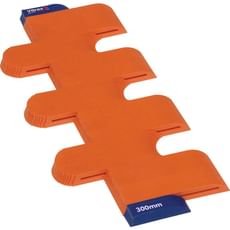
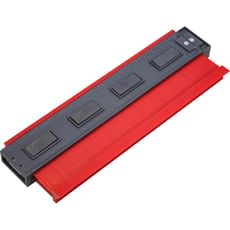
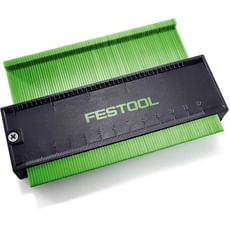
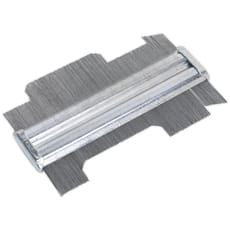
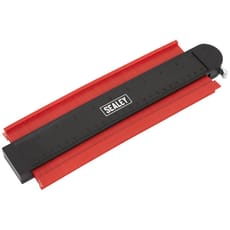
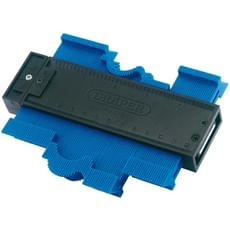
Tile gauges, more commonly known as profile gauges or contour gauges, are essential precision tools designed to accurately duplicate irregular shapes and contours for transfer to materials during cutting and fitting work. These ingenious devices feature multiple sliding pins or blades that conform to the exact profile of an object when pressed against it, creating a perfect template that can be traced or transferred. While the name suggests exclusive use for tiling, these versatile instruments have applications across numerous trades including flooring installation, plumbing, carpentry, and decorative moulding work.
The basic construction consists of a series of thin plastic or steel pins held within a frame, which move independently to capture even the most complex shapes. When pressed against a surface such as a door frame, pipe, skirting board, or architrave, the pins adjust to replicate the exact contour. This shape is then locked in place, allowing tradespeople to transfer the profile onto tiles, laminate, vinyl flooring, or other materials for precision cutting. Professional-grade gauges available from Tooled-Up.com typically feature between 80 and 200 pins, with denser pin arrangements providing more accurate reproduction of intricate profiles.
Modern profile gauges have evolved to include various features such as locking mechanisms to maintain the captured shape during transfer, magnetic backs for hands-free working when placed on steel surfaces, and metric and imperial graduations for measurement. The gauge width typically ranges from 150mm for compact models up to 300mm for larger applications, with some specialist versions designed specifically for tight spaces or extended reaches around obstacles.
Jargon Buster
- Profile Gauge / Contour Gauge: A measuring tool with multiple sliding pins or blades that replicate the exact shape of an object when pressed against it, allowing accurate transfer of irregular contours.
- Pin Density: The number of individual sliding elements per unit width in the gauge. Higher pin density (more pins per centimetre) provides greater accuracy when capturing intricate or detailed profiles.
- Locking Mechanism: A feature that secures the pins in position once a shape has been captured, preventing accidental movement during transfer to the workpiece.
- Template Transfer: The process of using the captured profile to mark cutting lines on materials such as tiles, laminate, or timber by tracing around the gauge's shape.
- Pin Travel / Pin Depth: The maximum distance individual pins can extend from the gauge body, typically ranging from 25mm to 60mm, determining how deep into recesses the tool can measure.
- Scribing: The technique of marking materials for cutting by using a captured profile as a guide, ensuring precise fitting around obstacles and irregular shapes.
Who Uses Tile Gauges?
- Tilers and Ceramic Fitters: For cutting tiles to fit precisely around pipes, door frames, and irregular wall edges
- Flooring Installers: Essential for fitting laminate, vinyl, and engineered wood flooring around architraves and obstacles
- Plumbers and Heating Engineers: For cutting panels, tiles, or flooring around pipework and radiator feeds
- Carpenters and Joiners: Used when scribing skirting boards, creating decorative mouldings, or fitting bespoke joinery
- Kitchen and Bathroom Fitters: For precise worktop scribing and fitting panels around services
- Carpet Fitters: When creating templates for complex carpet cutting around fixed features
- Shop Fitters and Shopfitters: For bespoke fitting work requiring precise profile matching
- DIY Enthusiasts: Homeowners tackling tiling, flooring, or home improvement projects requiring professional-quality results
- Restoration Specialists: Working with period properties where irregular walls and features require careful template work
How to Choose the Right Tile Gauges
Gauge Width: Consider the maximum width of profiles you'll typically encounter. Standard 150mm gauges suit most tiling and flooring work, whilst 250-300mm versions are better for wider door frames and extended profiles. Tooled-Up stocks various sizes to match different trade requirements.
Pin Material and Density: Plastic pins are lightweight and suitable for most applications, whilst steel pins offer greater durability for heavy commercial use. Higher pin density provides more accurate detail capture, particularly important for ornate mouldings or complex curves.
Locking Mechanism: Essential for professional use, a reliable lock prevents the captured shape from distorting during transfer. Look for positive-action locks that engage securely without requiring constant pressure.
Build Quality: The frame should be rigid enough to maintain accuracy under repeated use. Professional gauges from brands like Festool, Faithfull, and Sealey feature robust construction that withstands site conditions.
Additional Features: Magnetic backing allows hands-free positioning on steel surfaces, whilst integrated measurement scales eliminate the need for separate rulers. Some models include angled edges for direct transfer of profiles to materials.
Application-Specific Design: Specialist gauges exist for particular trades – tiling models may include features for measuring tile spacing, whilst carpentry versions might offer deeper pin travel for complex moulding work.
Popular Accessories
- Scribing Tools and Pencils: Fine-point markers for accurately tracing captured profiles onto work materials
- Tile Cutting Tools: Manual tile cutters, angle grinders, and wet saws for cutting tiles to marked profiles
- Jigsaw Blades: Specialist blades for cutting laminate and vinyl flooring to scribed templates
- Measuring Tapes and Rules: For verifying dimensions and positioning gauges accurately
- Tiling Spacers: Used alongside profile gauges to maintain consistent grout lines
- Spirit Levels: Ensuring profiles are captured at correct orientations
- Multi-Tools: For detailed cutting work following profile transfers
- Notched Trowels: Completing the tiling process after precise cutting
- Flooring Installation Kits: Complementary tools for professional floor fitting alongside profile gauges
Frequently Asked Questions
Can profile gauges be used on both internal and external curves?
Yes, most profile gauges work equally well on both internal (concave) and external (convex) shapes. The sliding pins adjust to capture the exact contour regardless of whether the profile curves inward or outward. For best results, ensure the gauge is pressed firmly and squarely against the surface to capture the complete profile accurately.
What's the difference between a 150mm and 250mm profile gauge?
The measurement refers to the width of the gauge and indicates the maximum profile width it can capture in a single measurement. A 150mm gauge suits most standard tiling and flooring applications around pipes and typical door frames, whilst 250-300mm gauges are necessary for wider features such as large architraves or when working with wider flooring planks that need to span multiple obstacles.
Will a profile gauge work with very thin materials like ceramic tiles?
Absolutely. Profile gauges are ideal for marking thin materials including ceramic and porcelain tiles. The captured profile can be transferred by placing the gauge on the tile surface and tracing around it with a fine pencil or scriber. The pins maintain their position during transfer, ensuring the marked line precisely matches the original contour for accurate cutting.
How do I prevent the captured shape from distorting?
Choose a gauge with a reliable locking mechanism that secures the pins once the shape is captured. After pressing the gauge against the profile, engage the lock before moving it. Handle the gauge carefully during transfer, avoiding knocks or pressure on the pins. Quality gauges from established brands feature positive locks that maintain accuracy throughout the transfer process.
Can profile gauges measure around pipes and other circular objects?
Yes, profile gauges excel at capturing circular and curved shapes such as pipes, radiator feeds, and curved architraves. Press the gauge firmly against the pipe ensuring good contact across the full diameter. The independent pins will conform to the circular profile, creating an accurate template. This makes them invaluable for cutting tiles and flooring around plumbing installations without time-consuming trial-and-error fitting.