

Tiling Tools
Pay in 3 interest-free payments on purchases from £30-2000 with  . Learn more.



 Loading...
End of content
Error - No more pages to load
About Tiling Tools
Tiling tools encompass a comprehensive range of specialist hand tools and accessories designed to help both professional tilers and DIY enthusiasts achieve accurate, long-lasting results when installing ceramic, porcelain, natural stone, and glass tiles. From initial preparation and precise cutting through to grouting and finishing, the right tiling equipment makes all the difference between a professional-looking installation and a substandard job that may require costly remedial work.
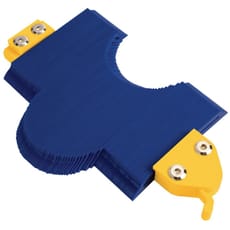
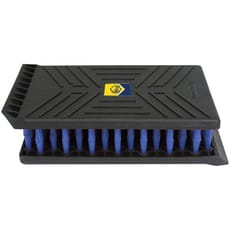
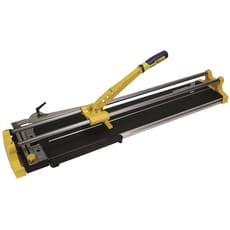
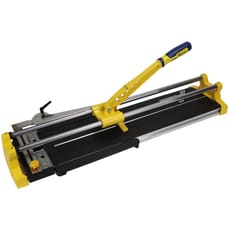
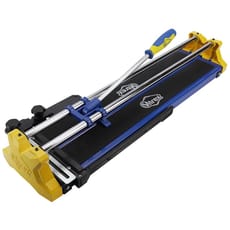
The selection at Tooled-Up.com covers every stage of the tiling process, including manual tile cutters for straight cuts, tile saws for intricate shapes and curves, scoring tools for smaller jobs, and tile pliers for snapping off unwanted sections. Preparation and installation tools such as tile gauges help ensure consistent spacing and alignment, whilst tile spacers maintain uniform grout lines throughout the project. The range also includes grouting floats for applying grout smoothly, grout rakes for removing old grout during refurbishment work, grout finishers for creating neat professional joints, and specialised cleaning sponges for removing excess grout without disturbing newly filled joints.
Whether undertaking a small bathroom refresh or a large-scale commercial floor installation, having access to quality tiling tools significantly improves both the efficiency of the work and the standard of the finished result. Many professional tilers invest in complete tile tool sets that provide all the essential equipment in one convenient package, whilst experienced professionals often prefer to select individual premium tools that suit their particular working methods and the specific demands of different tile materials and substrates.
Jargon Buster
- Grout Lines: The gaps left between tiles that are filled with grout to seal joints, prevent moisture ingress, and provide a finished aesthetic appearance. Width typically ranges from 2mm for rectified tiles to 10mm or more for rustic designs.
- Scoring: The technique of cutting a controlled line across the glazed surface of a tile using a carbide or diamond-tipped scorer, creating a weak point that allows the tile to be snapped cleanly along the scored line.
- Nibbling: The process of removing small pieces of tile using tile pliers or nippers to create curved cuts, notches, or irregular shapes that cannot be achieved with straight-cutting tools.
- Rectified Tiles: Tiles that have been mechanically cut or ground after firing to ensure perfectly square edges and uniform dimensions, allowing installation with minimal grout lines (typically 2-3mm).
- Spacer Lugs: Small plastic or rubber tabs placed between tiles during installation to maintain consistent grout line width throughout the project, removed once adhesive has set sufficiently.
- Grout Haze: The cloudy residue left on tile surfaces after grouting, caused by cement particles in the grout mixture. Removed using specialised grout cleaning sponges and repeated rinsing with clean water.
Who Uses Tiling Tools?
- Professional Tilers: Specialist tradespeople who focus exclusively on wall and floor tiling in domestic, commercial, and industrial settings
- Bathroom Fitters: Multi-skilled tradespeople who install complete bathroom suites including tiled walls, floors, and shower enclosures
- Kitchen Fitters: Specialists who require tiling tools for splashbacks, worktop upstands, and kitchen floor installations
- General Builders: Main contractors who undertake tiling work as part of broader renovation and construction projects
- Shopfitters: Commercial specialists who install tiling in retail environments, restaurants, and hospitality venues
- Property Maintenance Teams: Council workers, housing association staff, and facilities managers who carry out tiling repairs and refurbishment
- Keen DIY Enthusiasts: Homeowners tackling their own bathroom, kitchen, or conservatory tiling projects to save on labour costs
- Landlords and Property Developers: Individuals managing rental portfolios or renovation projects who perform their own tiling work
How to Choose the Right Tiling Tools
Tile Material and Thickness: Consider what types of tiles you'll be working with most frequently. Porcelain and natural stone are considerably harder than standard ceramic and require more robust cutting tools with diamond-coated or tungsten carbide components. Check the maximum tile thickness capacity of cutters and saws before purchasing.
Project Scale and Frequency: Occasional DIY users can achieve excellent results with budget-friendly manual tile cutters and basic hand tools, whilst professional tilers working daily benefit from investing in premium brands like Rubi, Sigma, or Montolit that offer superior durability, precision, and ergonomic design. High-quality tools maintain their cutting performance over thousands of tiles rather than requiring frequent blade or wheel replacement.
Cutting Requirements: Straight cuts on standard wall tiles can be handled efficiently with manual score-and-snap cutters. However, jobs involving intricate shapes, large format tiles, thick porcelain, or numerous curved cuts may justify investing in a hand tile saw or even considering electric wet tile saws for the cleanest, chip-free results. Tile pliers and nippers are essential for detailed notching work around pipes and outlets.
Grouting Tools: The quality of grouting floats, finishing tools, and cleaning sponges directly affects the final appearance of tiled surfaces. Rubber floats suit most standard grouting work, whilst specialist finishers with shaped edges create consistently neat joints. High-density grouting sponges with rounded edges prevent grout being pulled from joints during cleaning.
Accuracy and Consistency: Tile spacers are available in numerous sizes to match your desired grout line width, whilst tile gauges and measuring tools help maintain consistent spacing and alignment across large areas. Tooled-Up stocks both traditional cross-shaped spacers and newer levelling systems that prevent lippage on large format tiles.
Popular Accessories
- Replacement Tile Cutting Wheels: Spare scoring wheels and blades for manual tile cutters to maintain clean cuts
- Tile Saw Blades: Diamond-coated and tungsten carbide replacement blades for hand tile saws
- Tile Adhesive Application Tools: Notched trowels and spreaders for applying adhesive at the correct depth
- Mixing Paddles: Drill attachments for thoroughly mixing tile adhesive and grout to lump-free consistency
- Grout Colourants: Pigments for tinting grout to match or contrast with tile colours
- Tile Cleaning Solutions: Specialised cleaners for removing grout haze, adhesive residue, and construction debris
- Knee Pads: Essential PPE for floor tiling work to prevent knee strain and injury during extended kneeling
- Protective Gloves: Chemical-resistant gloves for handling adhesives and grouts containing cement
- Tile Trim and Edging: Plastic and metal profiles for creating neat external corners and transitions
- Spirit Levels: Essential for checking tile alignment during installation
Safety Information
Manual Handling: Boxes of tiles are extremely heavy and awkward to manoeuvre. Always use proper lifting techniques, bend at the knees rather than the waist, and seek assistance with particularly heavy loads to prevent back injuries. Store tiles on stable surfaces at waist height wherever possible.
Sharp Edges and Cutting Hazards: Freshly cut tiles have extremely sharp edges that can cause deep lacerations. Always wear cut-resistant gloves when handling cut tiles, and dispose of broken tile pieces carefully in appropriate containers. Keep tile cutting tools sharp, as blunt blades require excessive force that increases the risk of slips and injuries.
Dust and Respiratory Protection: Cutting and drilling tiles generates fine silica dust that poses serious long-term respiratory health risks. Work in well-ventilated areas, use dust extraction where possible, and wear appropriate RPE (respiratory protective equipment) rated for fine dust particles in accordance with HSE guidance on respirable crystalline silica exposure.
Chemical Safety: Tile adhesives and grouts contain cement and other chemicals that can cause skin irritation, burns, and allergic reactions. Always wear chemical-resistant gloves, avoid skin contact, and wash any splashes off immediately with clean water. Refer to product COSHH data sheets for specific handling and first aid information.
Frequently Asked Questions
What's the difference between ceramic and porcelain tile cutters?
Whilst many manual tile cutters can handle both materials, porcelain tiles are significantly harder and denser than standard ceramic tiles, requiring cutters with more robust construction, higher pressure capacity, and superior quality scoring wheels. Look for models specifically rated for porcelain with tungsten carbide or diamond-coated scoring wheels. Budget ceramic-only cutters will struggle with porcelain and may produce chipped or incomplete cuts.
What size tile spacers should I use?
Spacer size depends on tile type and desired aesthetic. Rectified tiles with perfectly straight edges can be laid with 2-3mm spacers for minimal grout lines. Standard ceramic wall tiles typically use 3-5mm spacers, whilst rustic or handmade tiles often require 5-10mm spacers to accommodate slight size variations. Floor tiles generally use slightly wider spacing (3-6mm minimum) than wall tiles for both practical and visual reasons.
Can I cut natural stone tiles with standard tile cutting tools?
Natural stone varies enormously in hardness and cutting characteristics. Softer stones like limestone and travertine can often be cut with good quality manual cutters, whilst harder materials like granite require diamond-coated blades and ideally wet cutting methods to prevent chipping. Slate's layered structure can be unpredictable with score-and-snap methods. For best results with natural stone, consider investing in a hand tile saw or electric wet cutter with appropriate diamond blades.
How do I remove old grout for re-grouting?
Grout rakes featuring tungsten carbide or diamond-coated blades efficiently remove old, damaged, or discoloured grout from joints without damaging tile edges. Hold the rake at a shallow angle and work along the joint with steady pressure. For very hard or epoxy grout, consider using an oscillating multi-tool with a grout removal blade attachment. Always wear safety glasses as removed grout particles can flick up towards the face.
What's the best way to clean tiles after grouting?
Use a proper grouting sponge rather than standard household sponges, as these have the correct density and rounded edges to clean tile faces without pulling grout from joints. Work diagonally across tiles rather than along grout lines, rinse the sponge frequently in clean water, and change the water regularly. Allow grout to firm up slightly before cleaning (typically 15-30 minutes depending on conditions), but don't leave it so long that removal becomes difficult. A final polish with a clean, dry cloth removes any remaining haze once the surface has dried.