

Timing Lights
Pay in 3 interest-free payments on purchases from £30-2000 with  . Learn more.

 Loading...
End of content
Error - No more pages to load
About Timing Lights
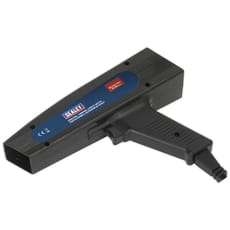
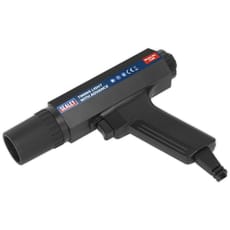
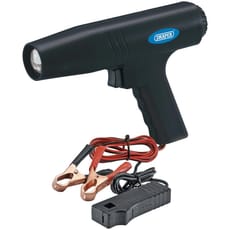
Timing lights are specialised diagnostic instruments used by automotive professionals to check and adjust ignition timing on petrol engines with distributor-based ignition systems. These tools work by producing a bright xenon strobe flash that synchronises with the firing of the number one spark plug, effectively "freezing" the rotating timing marks on the crankshaft pulley. This allows mechanics to verify that the spark occurs at precisely the correct moment in the engine cycle, ensuring optimal performance, fuel economy, and smooth running. The timing light connects to the vehicle's 12V battery and uses an inductive pickup clamp that fits around the spark plug lead, detecting the high-voltage pulse without breaking into the ignition circuit.
Tooled-Up.com stocks professional-grade timing lights from Sealey, one of the UK's most trusted names in automotive workshop equipment. The range includes both traditional analogue timing lights with pistol-grip designs and advanced digital models that display precise degree measurements on an LCD screen. Digital timing lights provide numerical readings of ignition advance or retard, making it considerably easier to achieve accurate adjustments without estimating the position of timing marks. Whether you're servicing classic cars, maintaining agricultural machinery, or diagnosing timing-related faults such as poor starting, rough idling, or pinking under acceleration, these instruments deliver the precision required for professional results.
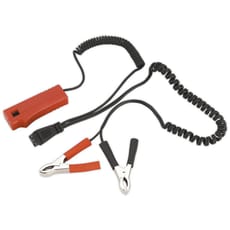
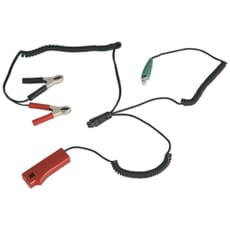
To support the long-term serviceability of timing equipment, replacement lead sets are available for specific Sealey timing light models including the TL85 and TL93. These replacement components include inductive coupling clamps, battery connection leads, and power cables, allowing technicians to maintain their diagnostic tools rather than replacing entire units when leads become worn through regular workshop use. This practical approach reduces long-term costs and ensures your timing light remains operational for years of reliable service.
Jargon Buster
- Ignition Timing: The precise moment when the spark plug fires in relation to piston position within the cylinder, measured in degrees before top dead centre (BTDC). Correct timing is essential for optimal combustion efficiency, power output, and fuel economy.
- Xenon Strobe: A high-intensity flash tube that produces extremely brief, brilliant pulses of light synchronised with spark plug firing. This creates a stroboscopic "freeze frame" effect on rotating engine components, making timing marks appear stationary.
- Inductive Pickup: A non-invasive clamp that fits around the outside of a spark plug lead to detect the high-voltage pulse electromagnetically, eliminating the need to pierce or disconnect ignition components during testing.
- Timing Marks: Reference indicators stamped, cast, or scribed onto the crankshaft pulley and timing cover that show degrees of crankshaft rotation. When illuminated by the timing light, these reveal the actual ignition timing whilst the engine runs.
- Advance/Retard: Terms describing ignition timing adjustment direction. Advancing timing causes the spark to occur earlier in the compression stroke, whilst retarding delays it. Digital timing lights display these adjustments as numerical degree values.
- TDC (Top Dead Centre): The uppermost point of piston travel within the cylinder. Static ignition timing is typically set at a specified number of degrees before TDC to allow time for combustion to develop maximum pressure as the piston descends.
Who Uses Timing Lights?
- Motor Mechanics: Professional technicians in independent garages and franchised dealerships servicing petrol engines with conventional ignition systems
- Classic Car Restorers: Specialists working on vintage and classic vehicles with distributor-based ignition requiring regular timing adjustments
- Mobile Mechanics: Tradespeople providing on-site diagnostic and repair services who need portable, reliable testing equipment
- Agricultural Engineers: Technicians maintaining farm machinery, generators, and equipment powered by petrol engines
- Marine Engineers: Professionals servicing inboard and outboard petrol boat engines requiring accurate timing setup
- MOT Testers: Vehicle inspectors checking engine performance and emissions as part of roadworthiness testing
- Motorsport Technicians: Race car mechanics fine-tuning competition engines where precise timing adjustments affect performance
- Groundcare Engineers: Specialists maintaining ride-on mowers, turf equipment, and commercial garden machinery
- Automotive Enthusiasts: Dedicated DIYers maintaining their own classic cars, kit cars, and project vehicles at home workshops
How to Choose the Right Timing Lights
The first consideration when selecting a timing light is whether you require a basic analogue model or a digital version with an LCD display. Analogue timing lights provide a strobe flash synchronised with spark plug firing, allowing you to observe timing mark position visually. Digital models offer the same strobe function but additionally display the advance or retard value in degrees on screen, making precise adjustments far easier without needing to estimate mark positions. For performance engine work or when absolute accuracy matters, digital timing lights are the professional choice.
Ensure compatibility with UK 12V automotive electrical systems, which is standard across the Sealey range available from Tooled-Up. Examine the inductive pickup design—it should feature a robust clamp that fits securely around spark plug leads of various diameters without damaging the insulation. Lead length is important for practical workshop use; longer cables provide better reach when working on larger vehicles, vans, or engines with restricted access around the number one cylinder.
Consider your typical working environment when choosing a timing light. If you're a mobile mechanic or frequently work outdoors or in poorly lit areas, select a model with a powerful xenon strobe that remains clearly visible even in daylight conditions. The build quality of the housing matters considerably—professional-grade timing lights with impact-resistant composite or metal casings withstand the inevitable knocks and drops of busy workshop environments.
Don't overlook the availability of replacement parts when making your purchase. Timing light leads experience regular flexing, exposure to engine heat, oils, and workshop chemicals, causing eventual wear. Choosing established brands like Sealey, which offer readily available replacement lead sets for specific models such as the TL85 and TL93, ensures your investment remains serviceable long-term. Check that replacement leads are stocked before purchasing to avoid future frustration.
Popular Accessories
- Replacement Lead Sets: Model-specific leads for Sealey timing lights including battery clamps, inductive pickups, and connecting cables (TL80/L for TL85, TL93/08 for TL93)
- Compression Testers: Diagnostic equipment for assessing cylinder condition and compression ratios alongside ignition timing checks
- Engine Timing Pin Sets: Locking tools for securing crankshafts and camshafts during timing belt replacement work
- Automotive Multimeters: Essential electrical testing instruments for diagnosing ignition system faults, checking coil output, and testing distributor components
- Spark Plug Gap Tools: Precision wire and feeler gauges for setting correct electrode gaps to manufacturer specifications
- Distributor Adjustment Tools: Specialist spanners and allen keys for accessing and adjusting distributor clamp bolts
- Rechargeable Inspection Lamps: LED workshop torches and magnetic work lights for illuminating engine bays during diagnostic procedures
- Cable Management: Reusable cable ties, clips, and organisers for routing timing light leads safely away from hot or rotating engine components
- Contact Cleaner: Aerosol solvents for cleaning distributor contacts, rotor arms, and timing light connections
Safety Information
Always ensure the vehicle is parked on level ground with the parking brake firmly applied and wheels chocked before using a timing light. Never wear loose clothing, jewellery, watches, or ties that could become entangled in rotating engine components whilst the engine is running. Keep hands, tools, and timing light leads well clear of moving pulleys, drive belts, cooling fans, and other rotating parts. Position timing light cables away from hot exhaust manifolds and turbochargers that could melt insulation.
Disconnect the timing light from the battery terminals before making any adjustments to the distributor or ignition system. The high voltages present in ignition systems—often exceeding 20,000 volts—can cause severe electric shocks, particularly in damp conditions. Always handle spark plug leads with insulated tools and avoid touching exposed terminals, distributor caps, or coil connections whilst the engine is running. If you must work near ignition components with the engine running, use properly insulated tools and keep your body clear of potential earth paths.
Ensure adequate ventilation when running engines indoors or in enclosed spaces, as exhaust fumes contain lethal carbon monoxide gas. Open workshop doors, use extraction equipment, or work outdoors whenever possible. Follow the manufacturer's instructions precisely when connecting the timing light to avoid reverse polarity, which can permanently damage the instrument's electronic components. Store timing lights in their protective cases when not in use, and regularly inspect all leads for cracks, abrasion, or damage that could compromise safety or measurement accuracy. When working on vehicles raised on ramps or over inspection pits, ensure full compliance with HSE guidelines for working at height and in confined spaces.
Frequently Asked Questions
Do timing lights work on modern cars?
Timing lights are designed for older petrol engines with distributor-based ignition systems. Most modern vehicles manufactured after the mid-1990s use electronic engine management systems with computer-controlled ignition timing that cannot be adjusted manually, making conventional timing lights unnecessary. However, they remain essential for classic cars, vintage vehicles, older machinery, and any engine with adjustable mechanical or electronic distributors.
What's the difference between analogue and digital timing lights?
Analogue timing lights produce a xenon strobe flash synchronised with spark plug firing, allowing you to observe timing mark position visually and make adjustments based on where marks appear. Digital timing lights provide the same strobe function but additionally display the advance or retard measurement in degrees on an LCD screen, offering more precise readings and easier adjustment verification without estimating mark positions. Digital models are particularly valuable for performance tuning where accuracy is critical.
Can I use a timing light on diesel engines?
No, timing lights are designed exclusively for petrol engines with spark ignition systems. Diesel engines use compression ignition without spark plugs, so timing lights cannot be connected or used for diesel timing procedures, which require completely different specialist equipment such as diesel timing gauges, dial indicators, or electronic diagnostic tools specific to injection pump timing.
How often should engine timing be checked?
For vehicles with adjustable ignition timing, checks should be performed during routine servicing, typically every 12 months or 12,000 miles, whichever comes first. You should also check timing whenever you notice symptoms such as difficult starting, rough idling, pinking or knocking under acceleration, loss of power, or increased fuel consumption. Always verify timing after replacing the distributor, timing belt, spark plugs, or any ignition system components, as these can affect ignition timing accuracy.
Why do timing light leads need replacing?
Timing light leads experience regular flexing during use, exposure to engine bay temperatures, and contact with oils, fuels, and workshop chemicals. Over time, this harsh environment causes insulation to crack and become brittle, clips and clamps to weaken or break, and internal conductors to corrode or fracture. Worn leads produce inaccurate readings, intermittent operation, or complete failure. Replacing leads when they show signs of wear maintains reliable performance and prevents electrical hazards whilst ensuring measurement accuracy.