

Toggle Clamps
Pay in 3 interest-free payments on purchases from £30-2000 with  . Learn more.
 Loading...
End of content
Error - No more pages to load
About Toggle Clamps
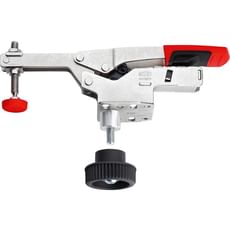
Toggle clamps are essential workshop fixturing devices designed to hold workpieces securely in place during fabrication, assembly, woodworking, and manufacturing processes. Unlike traditional clamps that require continuous manual pressure or time-consuming screw adjustments, toggle clamps use a lever-actuated mechanism that allows operators to apply and release clamping force in seconds. This makes them indispensable in production environments where speed, repeatability, and consistency are paramount.
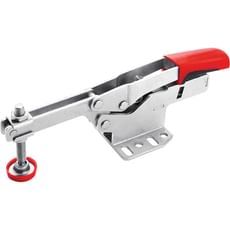
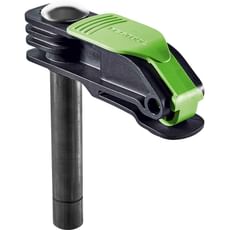
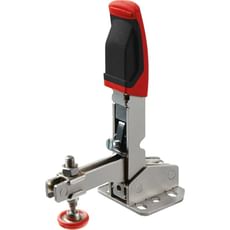
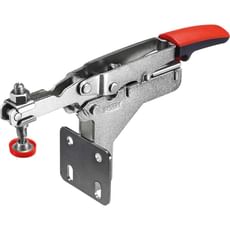
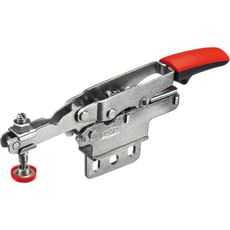
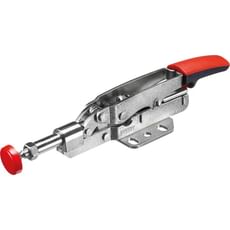
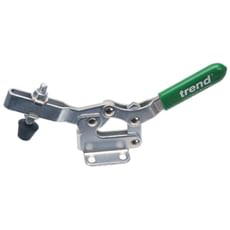
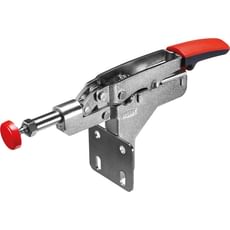
The range available from Tooled-Up.com includes various configurations to suit different applications: vertical hold-down clamps that press workpieces flat against benches or jigs, horizontal clamps that secure items from the side, push-pull toggle clamps that can apply force in multiple directions, and angled base models that accommodate awkward workpiece geometries. Leading manufacturers like Bessey, Festool, and Trend produce toggle clamps with features such as self-adjusting mechanisms that maintain constant clamping force regardless of workpiece thickness variations, and interchangeable arms that allow customisation for specific tasks.
Toggle clamps are typically mounted semi-permanently or permanently to workbenches, drill press tables, welding jigs, router tables, and dedicated fixtures using bolts or screws. This fixed installation creates repeatable work-holding stations that dramatically improve productivity when performing identical operations on multiple workpieces. The ergonomic lever operation reduces operator fatigue compared to manual clamping methods, while the mechanical advantage provided by the toggle mechanism delivers substantial clamping force with minimal effort.
Jargon Buster
- Hold-Down Clamp: A vertical toggle clamp design where the clamping arm moves downward to press a workpiece flat against a work surface, commonly used in drilling, routing, and assembly operations.
- Push-Pull Toggle Clamp: A horizontal configuration that can apply clamping force either towards or away from the mounting base, ideal for holding workpieces against fences or positioning components during welding.
- Clamping Force: The amount of pressure (typically measured in kilograms or Newtons) that a toggle clamp can apply to a workpiece when the handle is locked in the closed position. Most industrial toggle clamps provide between 100kg and 500kg of clamping force.
- Self-Adjusting Mechanism: An advanced feature found in premium toggle clamps that automatically compensates for variations in workpiece thickness whilst maintaining consistent clamping pressure, eliminating the need for manual adjustment between different sized components.
- Base Plate Angle: The orientation of the mounting base relative to the clamping arm—available in vertical, horizontal, or angled configurations to accommodate different mounting positions and workpiece geometries.
- Spindle/Arm: The adjustable rod or shaft that makes contact with the workpiece. Tooled-Up stocks toggle clamps with interchangeable spindles of different lengths to accommodate varying workpiece heights and reach requirements.
Who Uses Toggle Clamps?
Toggle clamps are used across numerous trades and industries where secure, repeatable work-holding is essential:
- Cabinet Makers and Joiners: For securing timber during routing, drilling, and assembly operations on repeated components
- Metal Fabricators and Welders: To hold components in precise alignment during tack welding and fabrication processes
- Production Machinists: For rapid workpiece changeover on milling machines, drill presses, and CNC equipment
- Furniture Manufacturers: Creating assembly jigs that ensure consistent positioning of components during gluing and fastening
- Automotive Restorers: Holding panels and brackets during repair, modification, and assembly work
- Picture Framers: Securing frame components during mitring, joining, and finishing operations
- Workshop Technicians: Building custom fixtures and jigs for repetitive maintenance and repair tasks
- DIY Enthusiasts: Advanced hobbyists who want to improve accuracy and efficiency in their home workshops
- Educational Facilities: Schools, colleges, and training centres teaching manufacturing and fabrication skills
How to Choose the Right Toggle Clamps
Selecting appropriate toggle clamps depends on several key factors related to your specific application:
Clamping Direction and Base Configuration: Determine whether you need vertical hold-down force, horizontal side pressure, or angled clamping. Consider the available mounting surface and how the clamp will be positioned relative to your workpiece. Vertical base clamps work well on horizontal benches, whilst angled base models accommodate sloped or vertical mounting surfaces.
Clamping Force Requirements: Match the clamp's rated capacity to your application. Light-duty woodworking might only require 100-200kg of force, whilst metalworking and welding applications often demand 300-500kg. Remember that excessive clamping force can damage delicate workpieces or cause distortion in thin materials.
Reach and Throat Depth: Measure how far the clamping arm needs to extend to reach your workpiece and the clearance required around the clamp body. Toggle clamps are available with various arm lengths and spindle extensions—ensure you have adequate reach without the clamp mechanism interfering with tools or other fixtures.
Adjustment Requirements: If you're working with workpieces of varying thicknesses, consider self-adjusting models that automatically maintain clamping force across a range of heights. For dedicated single-purpose jigs, standard adjustable toggle clamps with set screws may be more economical.
Brand and Build Quality: Professional brands like Bessey offer superior durability, smoother operation, and more precise manufacturing tolerances compared to economy alternatives. For production environments where clamps will be actuated hundreds of times daily, the investment in quality pays dividends in reliability and longevity. Festool toggle clamps are engineered to integrate seamlessly with their multifunction table systems, whilst Trend produces versatile models suited to general workshop applications.
Mounting Method: Check the base plate dimensions and fixing hole pattern. Most toggle clamps mount via bolts through pre-drilled holes, but ensure your work surface can accommodate the fastener size and spacing required.
Popular Accessories
- Spindle Extensions: Additional length adaptors that increase the reach of the clamping arm for deeper workpieces
- Rubber Contact Pads: Protective tips that prevent the spindle from marking delicate surfaces or damaging finished workpieces
- U-Shaped Pressure Pads: Wider contact surfaces that distribute clamping force over larger areas, ideal for thin or flexible materials
- V-Block Attachments: Fixtures that convert flat clamping surfaces to hold cylindrical workpieces like pipes and dowels
- Mounting Plates and Brackets: Adapter plates that allow toggle clamps to be mounted at different angles or on curved surfaces
- Toggle Clamp Accessory Sets: Comprehensive kits containing multiple spindles, pads, and adapters for maximum versatility (such as those available with certain Bessey models)
- Workshop Benches and MFT Tables: Professional work surfaces with integrated clamping systems, including Festool's multifunction tables designed to work with their lever clamps
- Workbench Dogs and Hold-Downs: Complementary work-holding accessories for applications where toggle clamps aren't suitable
Safety Information
Whilst toggle clamps are inherently safe tools when used correctly, observe these important precautions:
Secure Mounting: Always bolt toggle clamps firmly to a stable work surface using appropriately sized fasteners. Inadequately secured clamps can become projectiles under load or allow workpieces to shift unexpectedly during machining operations.
Clamping Force Limits: Never exceed the manufacturer's rated clamping capacity. Over-tightening the adjustment screw can cause structural failure of the clamp mechanism or damage to your workpiece. Conversely, insufficient clamping force allows workpiece movement that can lead to machining errors or dangerous kickback.
Lever Position Awareness: Keep fingers and hands clear of the lever path during operation. The toggle mechanism moves rapidly and can pinch fingers between the handle and base plate. When closing the clamp, ensure the handle locks fully into position—a partially engaged toggle can release unexpectedly under vibration.
Regular Maintenance: Inspect toggle clamps periodically for wear, particularly at pivot points and the locking mechanism. Apply light machine oil to moving parts to maintain smooth operation. Replace any clamp showing signs of cracking, bending, or mechanism wear, as failure under load poses significant safety risks.
Workpiece Stability: Toggle clamps only secure the workpiece at the point of contact. Ensure workpieces are adequately supported along their entire length and cannot tip, rotate, or lever upward during operations. Use multiple clamps or supplementary supports for large or irregularly shaped items.
Frequently Asked Questions
What's the difference between horizontal and vertical toggle clamps?
Vertical toggle clamps (hold-down clamps) press workpieces downward against a flat surface, ideal for drilling, routing, and assembly tasks. Horizontal toggle clamps apply side pressure, pushing workpieces against fences or stops—commonly used in welding jigs and edge-working operations. The choice depends on the direction you need to apply clamping force relative to your workpiece and work surface.
Can I adjust the clamping force on toggle clamps?
Yes, most quality toggle clamps feature an adjustment screw at the lever pivot point that allows you to increase or decrease clamping pressure to suit different materials and applications. Self-adjusting models automatically maintain consistent force across varying workpiece thicknesses. Always start with lighter pressure and increase gradually to avoid workpiece damage.
How many toggle clamps do I need for a typical jig?
This depends on workpiece size, geometry, and the forces involved during machining. As a general rule, secure at least three points on any workpiece to prevent rotation or shifting—four or more for larger items. Position clamps to counteract the direction of tool forces; for example, when routing an edge, place clamps opposite the router's feed direction to prevent workpiece movement.
Will toggle clamps mark or damage my workpieces?
Metal spindles can mark soft materials like timber or damage finished surfaces. Prevent this by fitting rubber or plastic protective caps to the spindle tip, or use wooden sacrificial pads between the clamp and workpiece. Purpose-made pressure pads are available from Tooled-Up that distribute force over a wider area whilst protecting delicate surfaces.
Can toggle clamps be used with power tools that create vibration?
Yes, toggle clamps are specifically designed for machining operations involving routers, drills, and sanders. However, ensure the clamp is rated for the forces involved and that the handle is fully locked in position. Vibration can sometimes cause poorly adjusted toggle mechanisms to release, so verify the lock is properly engaged and check clamp security periodically during extended operations.