

Tripod Lights
Pay in 3 interest-free payments on purchases from £30-2000 with  . Learn more.
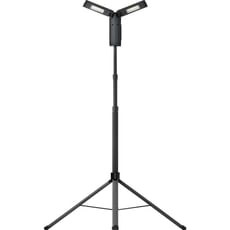
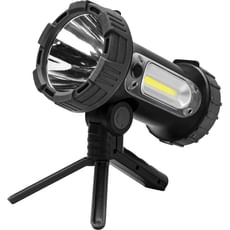
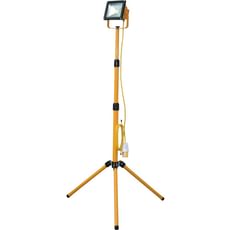
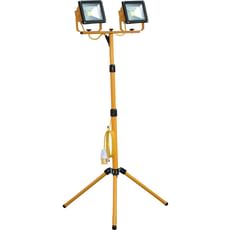

 Loading...
End of content
Error - No more pages to load
About Tripod Lights
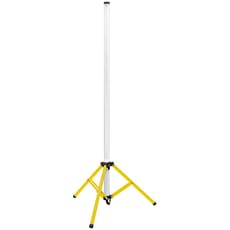
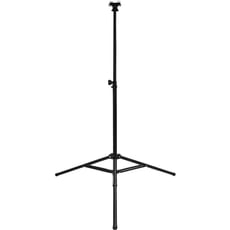
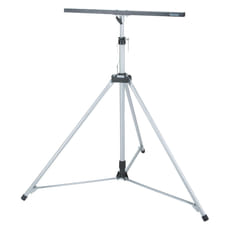
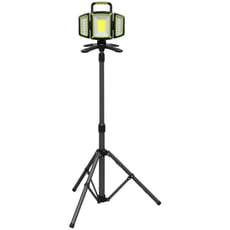
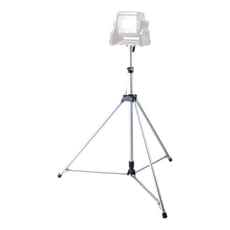
Tripod lights are essential portable lighting solutions designed to illuminate work areas with powerful, adjustable light from an elevated position. Mounted on stable three-legged stands that typically extend from 0.6m to 1.7m in height, these versatile work lights provide hands-free illumination across construction sites, workshops, events, and emergency situations. Modern tripod lights predominantly feature energy-efficient LED technology, delivering bright, cool white light whilst consuming significantly less power than traditional halogen alternatives – typically 95% more efficient.
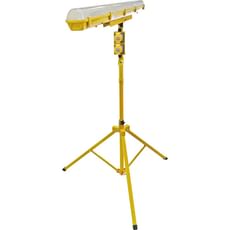
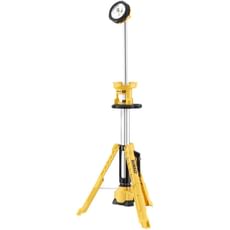
The selection at Tooled-Up.com includes single and twin-head configurations from trusted manufacturers including Draper, Defender, Sealey, Makita, DeWalt, and Scangrip. Available in various power options – from compact rechargeable cordless models to robust 240v mains-powered units – tripod lights cater to different working environments and power availability. Wattages range from economical 10W models suitable for smaller spaces through to powerful 50W units capable of illuminating large work areas. Many feature 360-degree rotating heads with locking mechanisms, allowing precise light direction exactly where it's needed.
Tripod site lights combine portability with stability, featuring collapsible tripod bases and lightweight construction for easy transportation between job sites. Frosted, shatterproof lenses ensure safe operation in demanding environments, whilst SMD LED technology provides consistent, flicker-free illumination with colour temperatures around 6500k – ideal for detailed work requiring accurate colour rendition. The slim, fold-flat design of most models facilitates compact storage in vans and site storage containers.
Jargon Buster
- SMD LED – Surface Mounted Device Light Emitting Diode. A modern LED technology where diodes are mounted directly onto circuit boards, providing brighter, more efficient illumination with better heat dissipation than older LED designs.
- Lumens – The measurement unit for total light output. Higher lumen ratings indicate brighter lights. A typical 20W tripod LED light produces approximately 1,600-2,000 lumens, sufficient for most general site work.
- Colour Temperature (K) – Measured in Kelvin, this indicates the colour appearance of light. Most tripod site lights operate at 6500k, producing a cool white light that enhances visibility and reduces eye strain during extended work periods.
- IP Rating – Ingress Protection rating indicating resistance to dust and moisture. Look for IP54 or higher for outdoor and site use, ensuring protection against dust ingress and water splashing from any direction.
- Telescopic Tripod – A height-adjustable stand with nested legs that extend and lock at various positions, allowing light positioning from ground level up to approximately 1.7m high for maximum coverage.
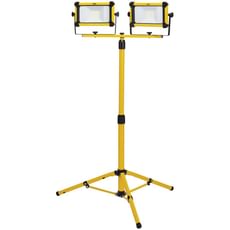
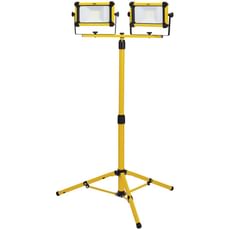
- Twin-Head Configuration – Models featuring two separate light heads mounted on a single tripod, effectively doubling light output and allowing illumination of different areas simultaneously or concentrated in one direction for maximum brightness.
Who Uses Tripod Lights?
- Builders and General Contractors – For illuminating construction sites, particularly during winter months with reduced daylight hours or when working in unlit buildings
- Electricians – Essential for providing safe working light when mains power isn't yet connected or when working in locations without permanent lighting fixtures
- Plasterers and Decorators – Bright, even illumination reveals surface imperfections and ensures consistent application of materials
- Plumbers and Heating Engineers – For lighting work areas in basements, lofts, and other poorly-lit spaces during installation and maintenance
- Event and Exhibition Installers – Portable lighting for setting up venues, staging, and displays before permanent lighting is operational
- Emergency Services – Fire, rescue, and utility workers requiring immediate, powerful lighting at incident scenes
- Mechanics and Vehicle Technicians – Illuminating workshop areas and providing focused light for detailed automotive work
- DIY Enthusiasts and Homeowners – For home renovation projects, outdoor events, and emergency backup lighting
- Filming and Photography Crews – Providing supplementary illumination for location shoots and video production
How to Choose the Right Tripod Lights
Power Source: Determine whether 240v mains-powered or cordless rechargeable models suit your working environment. Mains-powered units provide unlimited runtime ideal for extended projects with accessible power supplies, whilst cordless models offer maximum portability for remote locations. Tooled-Up stocks both options, including DeWalt 18v XR cordless models compatible with existing battery platforms, eliminating additional battery investment.
Light Output: Match wattage and lumen output to your workspace size. 10-20W units (approximately 800-1,600 lumens) suit smaller workshops and focused task lighting, whilst 30-50W models (2,400-4,000 lumens) illuminate larger construction sites and open areas. Consider twin-head configurations for maximum coverage or when lighting multiple work zones simultaneously.
Build Quality and Durability: Look for robust telescopic tripods with secure locking mechanisms and wide-stance bases for stability on uneven ground. Shatterproof lenses and durable housings withstand the knocks and impacts typical of site environments. Check IP ratings – minimum IP54 for outdoor use ensures adequate protection against dust and moisture.
Portability and Storage: Consider weight and folded dimensions if transporting lights regularly between sites. Slim, fold-flat designs store efficiently in vehicle storage systems. Integrated carry handles and reasonable weight (typically 2-5kg) facilitate single-person transportation and setup.
Height Adjustment: Most tripod lights extend from approximately 0.6m to 1.7m. Verify maximum height suits your typical working conditions – higher positions provide broader light spread but may be less stable in outdoor environments with wind exposure.
Additional Features: 360-degree rotating heads with locking positions allow precise light direction. Some models feature adjustable brightness settings for different tasks or extended battery life. Cable management systems on mains-powered units prevent trip hazards around busy work areas.
Popular Accessories
- Replacement Bulbs and LED Modules – Spare components ensuring continuous operation when lamps reach end-of-life
- Extension Leads and Cable Reels – Heavy-duty 240v extensions rated for site use, providing power access in locations distant from sockets
- Replacement Batteries and Chargers – Additional battery packs for cordless models, enabling continuous operation whilst depleted batteries recharge
- Protective Carry Cases – Padded storage bags protecting lights during transportation and preventing damage in vans and site storage
- RCD Safety Adaptors – Essential safety devices providing electrical protection when using mains-powered lighting on construction sites
- Spare Tripod Components – Replacement leg sections, locking collars, and mounting brackets for maintaining equipment
- Portable Generators – Providing 240v power for mains-operated lights in remote locations without electrical infrastructure
Safety Information
Always inspect tripod lights before use, checking for damaged cables, cracked lenses, or loose tripod connections. When using 240v mains-powered models on construction sites, connect through an RCD (Residual Current Device) rated at 30mA or less, as required by HSE guidelines and BS 7671 wiring regulations. This provides essential protection against electric shock in potentially damp or outdoor environments.
Position tripod bases on stable, level ground with legs fully extended to prevent toppling. Never exceed manufacturer-specified maximum extension heights, particularly in outdoor locations exposed to wind. Maintain safe distances from flammable materials – although LED lights generate minimal heat compared to halogen alternatives, housings can still become warm during extended operation.
Allow lights to cool before folding and storing. When working overhead or in confined spaces, secure lights to prevent accidental displacement. Ensure cables from mains-powered units don't create trip hazards – use cable ties or protective conduits where necessary. Always disconnect from power supplies before performing maintenance or changing components. For cordless models, use only manufacturer-approved batteries and chargers to prevent overheating and potential fire risks.
Frequently Asked Questions
What's the difference between single and twin-head tripod lights?
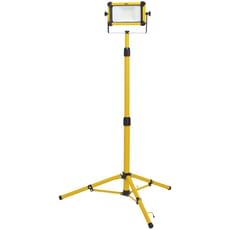
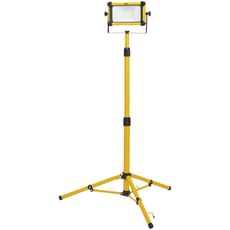
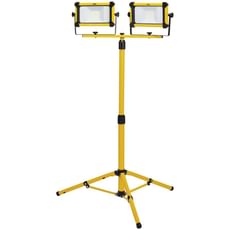
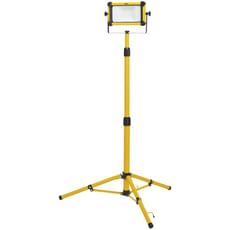
Single-head models feature one light unit, typically suitable for focused illumination of specific work areas. Twin-head configurations mount two lights on one tripod, effectively doubling light output. They're ideal for larger spaces requiring broader coverage or can be angled to illuminate two separate areas simultaneously, offering greater versatility whilst requiring only one tripod stand.
How much more efficient are LED tripod lights compared to halogen?
Modern LED tripod lights are approximately 95% more efficient than equivalent halogen models. A 20W LED unit produces similar light output to a 100W halogen, consuming far less electricity and generating minimal heat. This translates to lower running costs, reduced load on electrical circuits or generators, and longer runtime for battery-powered models.
Can I use cordless tripod lights with batteries I already own?
Many professional brands including DeWalt and Makita manufacture tripod lights compatible with their existing battery platforms. If you already use 18v tools from these manufacturers, their tripod lights accept the same battery packs, eliminating additional investment in separate battery systems and maximising the utility of your existing power tool batteries.
What height should I set my tripod light for best illumination?
For general area lighting, position lights at maximum safe extension (typically 1.5-1.7m) to achieve broadest light spread. For detailed work requiring focused illumination, lower positions between 1.0-1.3m concentrate light more intensely on the work surface. Always prioritise stability – reduce height if working outdoors in windy conditions or on uneven ground.
Are tripod lights suitable for outdoor use in bad weather?
Models with IP54 or higher ratings provide adequate protection for outdoor use in rain and dust, making them suitable for construction sites in typical UK weather conditions. However, avoid using electrical equipment in extreme weather or standing water. Always position lights to prevent water pooling on horizontal surfaces, and never submerge any part of the unit. For prolonged outdoor use, choose models specifically marketed as weatherproof or outdoor-rated.