

Trolley Jacks
Pay in 3 interest-free payments on purchases from £30-2000 with  . Learn more.
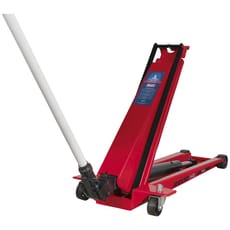
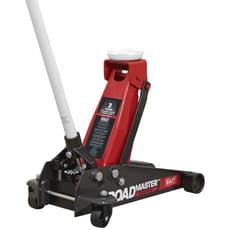
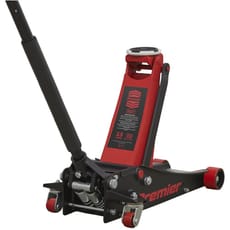
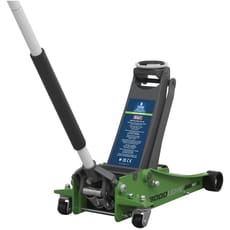

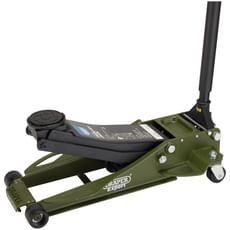
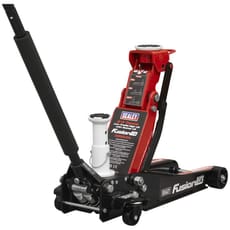
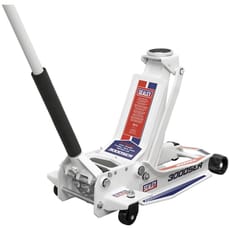
 Loading...
End of content
Error - No more pages to load
About Trolley Jacks
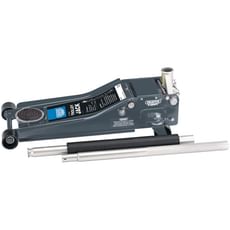
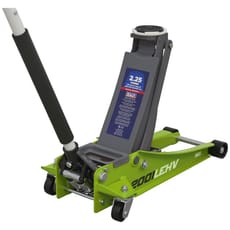
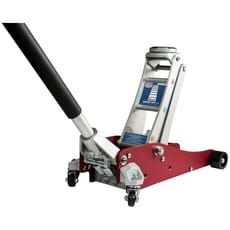
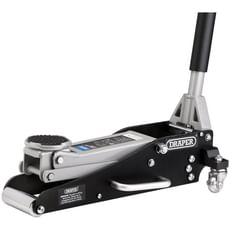
Trolley jacks are indispensable lifting devices designed to raise vehicles safely for maintenance, repairs, and tyre changes. Combining hydraulic power with a wheeled chassis, these jacks allow mechanics and DIY enthusiasts to position lifting equipment precisely under vehicle jacking points with minimal effort. Unlike static bottle jacks, trolley jacks offer superior manoeuvrability and stability, making them the preferred choice for workshops, garages, and home mechanics working on cars, vans, and light commercial vehicles.
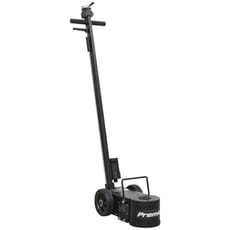
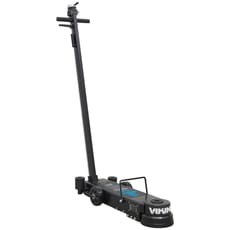
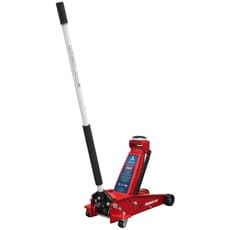
The trolley jack selection at Tooled-Up.com spans from compact 2-tonne models suited to smaller vehicles and occasional home use, through to robust 3-tonne heavy-duty garage jacks designed for professional workshops. Low-profile designs cater specifically to sports cars and modified vehicles with reduced ground clearance, whilst pneumatic models powered by compressed air deliver rapid, effortless lifting for busy commercial environments. Leading brands including Draper, Sealey, and Bahco feature throughout the range, offering everything from economical light-duty jacks to professional-grade equipment incorporating quick-lift mechanisms, safety overload valves, and reinforced steel construction.
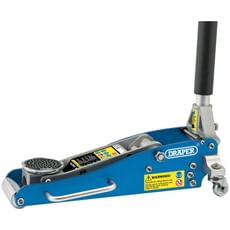
Modern trolley jacks incorporate numerous design innovations to enhance safety and efficiency. Dual-pump quick-lift systems reduce the number of handle strokes required by up to 50%, significantly speeding up lifting operations in busy workshops. Rubber saddle pads protect vehicle jacking points from damage whilst preventing slippage, and precision-engineered hydraulic systems ensure smooth, controlled lifting and lowering. Aluminium racing jacks offer exceptional strength-to-weight ratios for motorsport applications, whilst long-chassis models provide extended reach for larger vehicles or those with custom suspension setups.
Jargon Buster
- Tonne Rating: The maximum safe working load the jack can lift, typically 2 tonnes (2000kg) for light vehicles or 3 tonnes (3000kg) for heavier cars and vans. Always verify your vehicle's kerb weight and select a jack rated above this capacity for safe operation.
- Low Profile / Low Entry: The minimum height of the jack when fully lowered, usually between 75-100mm for low-profile models compared to 130-150mm for standard jacks. Essential for sports cars, modified vehicles, or any car with minimal ground clearance.
- Lifting Height: The maximum height the jack can raise a vehicle, generally 400-500mm for standard models. Greater lifting heights provide additional working space beneath vehicles and accommodate larger wheels or tyres.
- Quick Lift / Fast Lift: A dual-pump hydraulic mechanism that halves the number of handle pumps needed to raise a vehicle, dramatically improving efficiency in professional workshop environments where time savings are crucial.
- Saddle: The padded lifting point that contacts the vehicle's chassis or designated jacking point. Quality saddles feature rubber padding to protect the underside from scratches and prevent the jack from slipping during operation.
- Pneumatic Jack: A trolley jack powered by compressed air rather than manual pumping. These offer rapid lifting speeds with minimal physical effort, making them ideal for high-volume garages performing numerous daily vehicle lifts.
Who Uses Trolley Jacks?
- Professional Mechanics and Motor Technicians: For daily servicing, repairs, brake work, and general vehicle maintenance in commercial garages and workshops
- Mobile Mechanics: Requiring reliable, portable lifting equipment for on-site vehicle repairs and servicing calls
- MOT Testing Stations: For quick, safe vehicle positioning during statutory inspections and underside examinations
- Tyre and Exhaust Fitters: Essential equipment for wheel removal and undercarriage access in fast-fit centres and tyre specialists
- Fleet Maintenance Engineers: Maintaining commercial vehicle fleets, company vans, and pool cars for businesses and local authorities
- Car Enthusiasts and Home Mechanics: For DIY servicing, modifications, brake pad changes, and general vehicle maintenance at home
- Classic Car Restorers: Often requiring specialist low-profile or long-reach jacks for vintage vehicles with non-standard ground clearance
- Motorsport Professionals: Using lightweight aluminium racing jacks for rapid pit work, vehicle setup, and race preparation
- Agricultural and Plant Engineers: Maintaining small tractors, ATVs, and compact agricultural machinery
How to Choose the Right Trolley Jacks
Selecting the appropriate trolley jack begins with understanding your vehicle's weight. Check the kerb weight in your owner's manual or online specifications, then choose a jack with a tonne rating comfortably above this figure. Most family cars up to 1500kg are adequately served by a 2-tonne jack, whilst larger saloons, estate cars, and small vans typically require 2.5 to 3-tonne capacity. Heavier 4x4s and commercial vehicles demand 3-tonne models or higher for safe operation with an appropriate safety margin.
Ground clearance is critical when choosing between standard and low-profile jacks. Measure the height at your vehicle's jacking points—if it's less than 130mm, you'll need a low-entry model that can slide beneath. Sports cars, modified vehicles with lowered suspension, and some modern aerodynamic designs all require low-profile jacks starting from around 75-100mm minimum height. Conversely, verify the maximum lifting height provides sufficient working space for your typical tasks, particularly if you need to remove wheels or access underside components comfortably.
Build quality varies considerably across price points. Professional-grade jacks from manufacturers like Draper Expert and Sealey feature reinforced steel chassis, precision-engineered hydraulic rams, and heavy-duty castors that glide smoothly across concrete workshop floors. Aluminium racing jacks offer excellent strength-to-weight ratios, combining robust lifting capacity with easier manoeuvrability. For occasional home use, a light-duty model may suffice, but busy commercial workshops benefit from investing in heavy-duty garage jacks engineered to withstand daily use and harsh working environments.
Consider whether specialist features would enhance your workflow. Quick-lift or fast-lift mechanisms with dual-pump systems halve the number of strokes needed to raise vehicles, saving considerable time and physical effort—particularly valuable for professional mechanics performing multiple lifts daily. Pneumatic jacks eliminate manual pumping entirely, operating via compressed air for effortless, rapid lifting, though they require an air compressor on site. Long-chassis models provide extended reach for larger vehicles or those with custom suspension, whilst compact designs suit smaller workshops with limited storage space.
Popular Accessories
- Axle Stands (Jack Stands): Essential safety equipment—never work beneath a vehicle supported only by a jack; always use correctly-rated axle stands to prevent crush injuries
- Wheel Chocks: Prevent vehicle movement during lifting operations by securing wheels firmly in place on level ground
- Rubber Saddle Pads: Protective inserts that prevent damage to vehicle jacking points and improve grip between jack and chassis
- Jacking Beams: Allow simultaneous lifting of an entire vehicle end using a single trolley jack positioned centrally
- Hydraulic Jack Oil: Replacement fluid for maintaining jack performance, preventing seal degradation, and ensuring smooth operation
- Workshop Creepers: Wheeled platforms that enable mechanics to slide comfortably beneath raised vehicles whilst working
- Inspection Lamps and Work Lights: LED work lights and rechargeable inspection lamps essential for illuminating underside areas safely
- Pneumatic Air Hose and Fittings: Quick-release connectors and air hoses required for connecting pneumatic trolley jacks to compressors
- Jack Storage Trolleys: Purpose-designed storage solutions that keep trolley jacks accessible yet safely stored when not in use
Safety Information
Working beneath vehicles presents serious crush hazards that demand strict safety protocols. According to HSE guidance, hydraulic trolley jacks are designed for lifting only—never work beneath a vehicle supported solely by a trolley jack. Always position correctly-rated axle stands beneath secure jacking points immediately after lifting, and lower the vehicle onto the stands before commencing any maintenance work. This simple precaution prevents catastrophic injury should hydraulic seals fail or the jack shift position.
Before operating any trolley jack, conduct a thorough visual inspection for hydraulic leaks, damaged castors, bent frames, or worn saddle padding. Position the jack on firm, level ground—never attempt to lift on slopes, soft surfaces, gravel, or uneven terrain where the jack could slip or tip. Ensure the saddle is correctly centred on the vehicle's designated jacking point as specified in the manufacturer's handbook; incorrect positioning can cause expensive vehicle damage or dangerous instability during lifting.
Always observe the jack's rated capacity and never exceed the maximum load—doing so risks catastrophic hydraulic failure and potential injury. When lifting, keep all body parts clear of potential crush zones between the vehicle and ground, and ensure bystanders maintain a safe distance from the work area. Apply the vehicle's handbrake firmly and place the transmission in park (automatic) or first gear (manual), using wheel chocks on the wheels remaining on the ground to prevent rolling.
Regular maintenance according to manufacturer specifications ensures continued safe operation. Check hydraulic fluid levels periodically, replace worn seals promptly, and lubricate moving parts to maintain smooth operation. Store jacks with the release valve open to reduce pressure on internal seals when not in use, extending equipment service life whilst maintaining safety. Professional workshops should maintain service records for all lifting equipment to demonstrate compliance with workplace safety regulations.
Frequently Asked Questions
What tonne rating trolley jack do I need for my vehicle?
Check your vehicle's kerb weight in the owner's manual or online specifications. For most family cars up to 1500kg, a 2-tonne jack provides adequate capacity with a safety margin. Larger saloons, estate cars, and small vans typically require 2.5-tonne jacks, whilst 4x4s, large vans, and commercial vehicles need 3-tonne capacity or greater. Always choose a jack rated comfortably above your vehicle's weight—this safety margin accounts for uneven weight distribution and provides reassurance during operation.
Can I use a standard trolley jack on my lowered or sports car?
Standard trolley jacks typically have a minimum height of 130-150mm when fully lowered, which won't fit beneath sports cars or vehicles with lowered suspension. You'll need a low-profile or low-entry model specifically designed for reduced ground clearance. These specialist jacks start from around 75-100mm minimum height, allowing access to modified vehicles, sports cars, and modern aerodynamic designs with minimal clearance. Tooled-Up stocks various low-profile models from Draper and Sealey suitable for these applications.
What's the difference between light-duty and heavy-duty garage jacks?
Heavy-duty garage jacks feature reinforced steel construction, larger hydraulic rams, superior castors, and enhanced safety mechanisms engineered for daily professional use. They offer greater durability, smoother operation under load, and significantly longer service life when subjected to the rigours of busy commercial workshops performing multiple daily lifts. Light-duty jacks are perfectly adequate for occasional home maintenance but may not withstand continuous professional use. The investment in heavy-duty equipment pays dividends through reliability and longevity in demanding environments.
Are pneumatic trolley jacks worth the extra cost?
For home workshops and garages performing occasional vehicle maintenance, manual trolley jacks are perfectly adequate and represent excellent value. However, pneumatic jacks dramatically reduce physical effort and save considerable time in busy commercial environments where mechanics perform numerous lifts daily. If you have compressed air available and perform frequent lifting tasks, pneumatic models significantly improve efficiency and reduce operator fatigue. They're particularly popular in tyre-fitting centres, MOT stations, and high-volume workshops where speed and ease of operation justify the additional investment.
How often should I service my trolley jack?
Inspect your jack before each use for visible damage, leaks, or operational issues—this takes moments but prevents accidents. Perform thorough maintenance every 12 months or after 100 uses (whichever comes first), checking hydraulic fluid levels, replacing worn seals, lubricating moving parts, and testing safety mechanisms. Professional workshops with heavy jack usage should consider six-monthly servicing to ensure continued safe operation and compliance with workplace safety regulations. Keep records of maintenance for insurance purposes and to demonstrate duty of care to employees.