

Try Squares

Pay in 3 interest-free payments on purchases from £20-£3000 with  . Learn more.
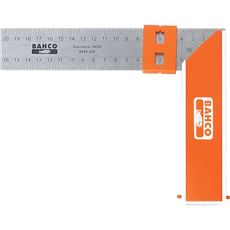
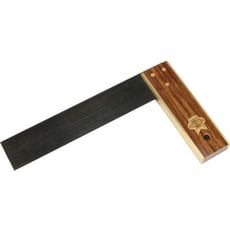
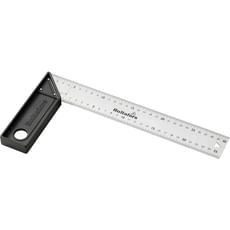
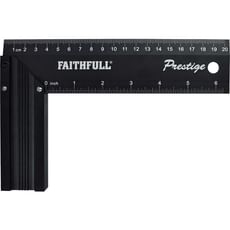
 Loading...
End of content
Error - No more pages to load
About Try Squares
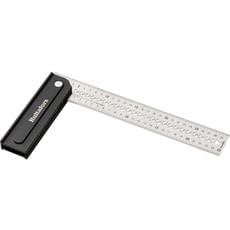
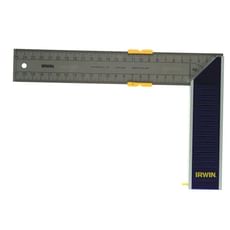
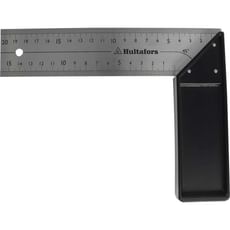
A try square is a fundamental precision measuring tool used to mark and verify 90-degree angles in woodworking, metalworking, and general construction work. Consisting of a straight blade (also called a tongue) fixed at a perfect right angle to a thicker stock (the handle portion), these indispensable tools enable tradespeople and DIY enthusiasts to check corner squareness, mark perpendicular lines, and ensure accurate joinery work. Whether you're a professional joiner working on bespoke cabinetry, a site carpenter installing door frames, or a home improver building garden furniture, a reliable try square is one of those essential tools that earns its place in every toolkit.
Tooled-Up.com stocks an extensive range of try squares from trusted manufacturers including Hultafors, Faithfull, Draper, Bahco, Starrett, Stanley, and Irwin. The selection spans from lightweight aluminium models ideal for on-site carpentry to precision-engineered steel squares for exacting metalwork and engineering applications. Available in various sizes typically ranging from 150mm to 300mm blade lengths, you'll find options suited to every trade and budget, from apprentice-level tools through to professional-grade instruments designed to maintain accuracy over decades of use.
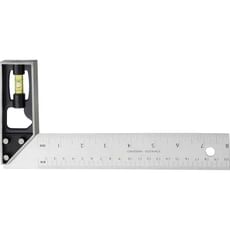
Modern try squares come in several configurations, including traditional all-steel construction for maximum durability, aluminium body versions with stainless steel blades offering an excellent balance of weight and precision, and combination try and mitre squares that provide additional 45-degree angle-checking functionality. Many feature imperial and metric graduated markings etched or screen-printed onto the blade, whilst premium models like the Hultafors Quattro 270 offer adjustable designs that allow you to set custom angles beyond the standard 90 degrees, adding versatility for specialised applications.
Jargon Buster
- Stock: The thicker, handle portion of the try square that sits against the edge of your workpiece. Usually manufactured from aluminium, steel, or hardwood with a brass facing plate to prevent wear and maintain accuracy.
- Blade (Tongue): The flat, measuring edge of the try square that extends perpendicular to the stock. Typically made from hardened steel or stainless steel with graduated markings for precise measurement.
- True Square: A term indicating that the blade and stock meet at an exact 90-degree angle. Quality try squares are precision-ground to maintain this accuracy to within fractions of a degree, often manufactured to BS3322 specifications.
- Mitre Square: A variation that includes a 45-degree angle in addition to the standard 90-degree configuration, particularly useful for marking mitred joints in picture frames, skirting boards, and coving work.
- Engineer's Try Square: A more robust, all-steel version designed for metalworking applications where accuracy and durability are paramount. Often features precision ground faces conforming to BS 939 standards.
- Graduated Markings: The measurement scales etched or printed along the blade, typically showing both metric (millimetres) and imperial (inches) measurements. Etched graduations offer superior longevity compared to screen-printed versions.
Who Uses Try Squares?
Try squares are fundamental tools across numerous trades and applications:
- Carpenters and Joiners: For marking out timber joints, checking door frames, and ensuring cabinet corners are perfectly square during installation work.
- Cabinet Makers and Furniture Makers: Essential for precision work where tight tolerances and perfect right angles are critical to professional results and seamless joinery.
- Metalworkers and Engineers: Using precision steel try squares to mark out components and verify that machined edges meet exact specifications in fabrication work.
- Bricklayers and Stonemasons: Checking corner accuracy when laying blockwork and stone, ensuring walls rise true and square from foundation to roof level.
- Shop Fitters and Kitchen Installers: Setting out kitchen units, wardrobes, and commercial fixtures where square installations are essential for proper door alignment and aesthetic appeal.
- Site Carpenters: Marking cut lines on structural timber, checking stud work, and verifying that first-fix carpentry maintains accuracy throughout construction projects.
- DIY Enthusiasts: Tackling home improvement projects from building decking to installing shelving, where accurate right angles ensure professional-looking results.
- Students and Apprentices: Learning fundamental marking-out techniques in construction, engineering, and manufacturing courses.
How to Choose the Right Try Squares
Size and Blade Length: Consider the scale of work you typically undertake. A 150mm (6") try square suits smaller joinery and detailed work, whilst 250-300mm (10-12") models are better for larger timber sections and site carpentry. Many professionals keep multiple sizes for different applications, with 250mm being the most versatile all-rounder.
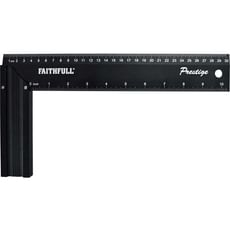
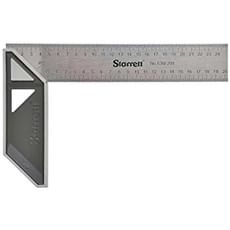
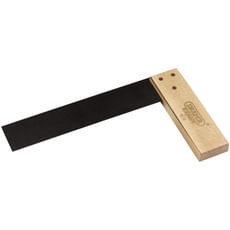
Material and Construction: Steel try squares offer maximum durability and precision, ideal for engineering and metalwork. Aluminium-bodied versions with stainless steel blades provide an excellent balance of accuracy and weight for site work. The Hultafors Lightweight models are particularly popular with chippies who carry their tools throughout the day, whilst Starrett and Faithfull Prestige ranges cater to those requiring engineering-grade precision. Beechwood stock versions like those from Draper Expert offer traditional aesthetics with brass-faced durability.
Accuracy and Quality Standards: Professional-grade try squares are precision-ground to extremely tight tolerances and maintain their accuracy over years of use. Models conforming to BS3322 or BS 939 standards guarantee verified accuracy. Budget options are adequate for occasional DIY use but may not offer the same long-term reliability. Look for models with the stock and blade securely welded rather than riveted, as these maintain accuracy better under workshop conditions.
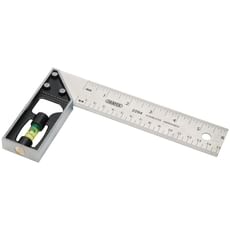
Features and Graduations: Consider whether you need metric, imperial, or dual markings on the blade. Etched or machined graduations last far longer than screen-printed versions which can wear off with heavy use. Combination models like the Draper Try and Mitre Square or Irwin Try and Mitre Square offer additional 45-degree angles, adding versatility without carrying multiple tools. The Hultafors Quattro 270 Adjustable Try Square goes further, allowing custom angle settings for specialised marking-out tasks.
Application-Specific Needs: Site carpenters may prioritise lightweight aluminium construction for reduced fatigue during all-day use, whilst furniture makers might prefer the heft and precision of all-steel models. Metalworkers should opt for engineer's try squares with hardened, ground faces for durability against steel workpieces. For general DIY and home improvement, a mid-range carpenters try square from Faithfull or Stanley offers excellent value and sufficient accuracy for most projects.
Popular Accessories
- Marking Knives: Used alongside your try square to scribe precise lines in timber, creating a cleaner, more accurate mark than pencils for fine joinery work.
- Combination Squares: Complementary measuring tools offering adjustable blades, spirit levels, and scriber functions for more complex marking-out tasks and angle transfer.
- Sliding Bevels: Allow you to transfer and mark angles other than 90 degrees, working alongside your try square for complex joinery and roof carpentry.
- Engineer's Blue: Layout fluid applied to metal surfaces before marking out with your try square, making scribed lines clearly visible on steel and aluminium.
- Carpenter's Pencils: Flat pencils that won't roll away on sloped surfaces, ideal for marking lines against your try square blade on timber work.
- Spirit Levels: Work in conjunction with try squares to ensure both square and level installations for door frames, cabinets, and shelving units.
- Tool Rolls and Cases: Protect your precision squares from damage during transport and storage, maintaining their accuracy and preventing blade edge damage.
- Framing Squares: Larger squares for checking room corners, roof pitches, and staircase layouts where try squares are too small for the application.
Safety Information
Whilst try squares themselves present minimal safety hazards, observe these guidelines for safe workshop practice:
- Keep blades free from burrs and sharp edges that could cause cuts when handling; file down any sharp corners on steel models using a fine file.
- Store try squares carefully to prevent the blade edges becoming damaged or the square being knocked out of true, which would compromise accuracy.
- Never use a try square as a straightedge for cutting operations, particularly with Stanley knives or rotary cutters, as this can damage the precision edge and void any accuracy guarantees.
- When using try squares in conjunction with power tools for marking cut lines, ensure machinery is switched off and disconnected from 240v supply before measuring and marking.
- Avoid using damaged or bent try squares, as inaccurate measurements can lead to poorly fitting joints and potentially dangerous structural weaknesses in load-bearing applications.
- Keep fingers clear of the area where you're striking a marking knife against the try square blade to avoid injury from slipping tools.
- In metalworking applications, ensure the try square is suitable for use with the workpiece to prevent damage to precision faces from harder materials.
Frequently Asked Questions
What's the difference between a try square and an engineer's square?
Try squares typically feature a wooden or aluminium stock with a steel blade, designed primarily for woodworking applications. Engineer's squares are manufactured entirely from hardened steel with precision-ground faces, offering greater accuracy and durability for metalworking applications where tolerances are more critical. Engineer's squares generally conform to BS 939 standards for precision, whilst carpenters try squares follow BS3322 specifications.
How do I check if my try square is still accurate?
Draw a line along a straight edge using your try square, then flip the square over and align it with the same line from the opposite direction. If the blade aligns perfectly with your original line, the square is accurate. Any gap indicates the square is out of true. You can also hold the stock against a known straight edge and check if light passes between the blade and a perpendicular surface—no light should be visible on an accurate square.
What size try square should I buy for general carpentry work?
A 250mm (10") try square is the most versatile size for general carpentry and site work, large enough to span common timber widths whilst remaining portable and manageable. Many professionals also keep a smaller 150mm (6") version for detailed work and tight spaces. If you're just starting out or working on a budget, a single 250mm model from the Tooled-Up range will cover most applications effectively.
Can I use a try square to check if walls and corners are square during construction?
Yes, try squares are excellent for checking internal corners, door frames, and smaller wall sections. However, for checking larger wall runs and room corners, you'll get more accurate results using the 3-4-5 triangle method with a tape measure, or investing in a builder's square (also called a framing square) which has much longer arms suitable for larger-scale construction verification.
Why do some try squares have holes in the blade?
Holes or slots serve multiple purposes: they reduce weight without compromising rigidity (important for all-day site use), allow the tool to be hung for organised storage, and can be used as crude radius guides for drawing small circles. Some also include hanging holes specifically positioned to allow the square to hang flat against a wall or pegboard, keeping your workshop tidy and tools easily accessible.