
Turning Sets

Pay in 3 interest-free payments on purchases from £20-£3000 with  . Learn more.
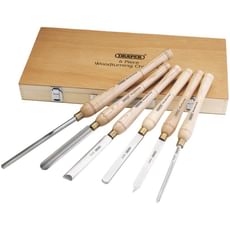
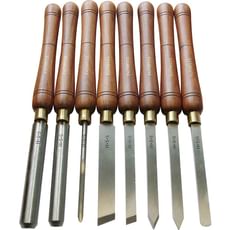
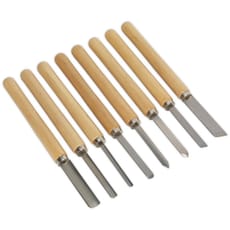
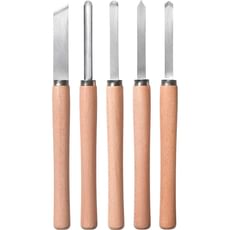
Loading...
End of content
Error - No more pages to load
About Turning Sets
Turning sets are essential collections of wood turning chisels and tools designed for shaping and finishing timber on a lathe. These comprehensive sets typically include a range of gouges, chisels, scrapers and parting tools, each with a specific purpose in the turning process. From creating decorative spindles and chair legs to crafting beautiful bowls and platters, a quality turning set provides woodworkers with the fundamental tools needed to transform raw timber into functional or artistic pieces.
The turning sets available from Tooled-Up.com typically feature high-speed steel (HSS) blades that maintain their sharp edge even under the friction and heat generated during turning operations. Most sets come with hardened blades fitted with brass ferrules that prevent handle splitting, mounted on comfortable ash or hardwood handles that provide excellent grip and control during extended turning sessions. These tools are supplied in convenient storage cases or wooden boxes, keeping the sharp edges protected and the set organised for workshop or site work.
Sets range from compact 5-piece collections ideal for beginners or those with limited turning requirements, through to comprehensive 8-piece sets that equip experienced turners with a complete arsenal of tools for tackling any project. Common tools found in turning sets include bowl gouges for hollowing work, roughing gouges for quickly removing material, spindle gouges for detailed shaping, parting tools for sizing and separating work, skew chisels for smooth finishing cuts, and scrapers for final surface refinement.
Jargon Buster
- High-Speed Steel (HSS): A specialised tool steel alloy that maintains its hardness and cutting edge even at high temperatures, making it ideal for turning tools where friction generates significant heat. HSS tools hold their edge longer than standard carbon steel alternatives.
- Roughing Gouge: A large-profile gouge with a shallow flute used for quickly removing material and reducing square stock to a round profile at the beginning of a turning project. Typically used only on spindle work between centres, never on bowl work.
- Bowl Gouge: A deep-fluted gouge with a rounded profile specifically designed for hollowing and shaping the inside and outside of bowls, platters and hollow vessels. The deep flute provides strength and better chip clearance during heavy cutting.
- Parting Tool: A narrow-bladed chisel used for sizing work to specific diameters, creating grooves, and separating completed work from waste stock. Essential for accurate dimensional work and finishing operations.
- Skew Chisel: A flat chisel with an angled cutting edge used for smoothing cuts, creating fine details, and producing a polished surface finish on spindle work. Requires practice to master but produces superior results.
- Brass Ferrule: A metal collar fitted between the blade tang and wooden handle that prevents the handle from splitting under the stress of turning operations, significantly extending tool life.
Who Uses Turning Sets?
- Professional Wood Turners: Craftspeople producing bowls, platters, furniture components and decorative items for sale
- Cabinet Makers and Joiners: Tradespeople creating custom furniture pieces with turned components such as legs, spindles and finials
- Pattern Makers: Specialists producing wooden patterns for foundry work and manufacturing applications
- Restoration Specialists: Professionals replicating period furniture components and architectural details
- DIY Enthusiasts: Home woodworkers exploring wood turning as a hobby or creating custom pieces for their homes
- School and College Workshops: Educational institutions teaching woodworking and turning skills
- Furniture Restorers: Craftspeople repairing or replacing turned components in antique and vintage furniture
- Musical Instrument Makers: Luthiers creating components for woodwind instruments, guitars and other musical pieces
How to Choose the Right Turning Sets
Consider the number of pieces in the set based on your experience level and intended projects. Beginners may find a 5 or 6-piece set sufficient to learn fundamental techniques, whilst experienced turners or those tackling diverse projects will benefit from 8-piece sets offering greater tool variety and specialisation.
Blade material is crucial for performance and longevity. High-speed steel (HSS) is the professional standard, maintaining sharp edges significantly longer than carbon steel alternatives. Tooled-Up stocks sets from trusted brands including Faithfull, Draper, Sealey and Einhell, all featuring hardened HSS blades suitable for both softwoods and hardwoods.
Handle design affects comfort during extended turning sessions. Look for sets with substantial ash or hardwood handles that provide good grip and balance. Brass ferrules are essential features that prevent handle splitting and extend tool life considerably. The handle length should suit your working style, with longer handles providing better leverage for bowl work.
Storage solutions vary between sets, from simple cloth rolls through to fitted wooden boxes. Proper storage protects sharp edges from damage and keeps your tools organised. Consider where you'll store the set and how you'll transport it if working at different locations.
Tool selection within the set should match your intended work. Spindle turners need roughing gouges, spindle gouges and skew chisels, whilst bowl turners require bowl gouges and scrapers. Comprehensive sets covering both applications offer the greatest versatility for varied projects.
Popular Accessories
- Sharpening Equipment: Bench grinders, slow-speed wet grinders, diamond stones and honing compounds for maintaining sharp cutting edges
- Sharpening Jigs: Specialised jigs that hold turning tools at consistent angles for accurate and repeatable sharpening
- Tool Rests: Additional or specialised tool rests for supporting tools at optimal angles during different turning operations
- Calipers and Measuring Tools: Digital and vernier calipers for accurate sizing, along with thickness gauges and measuring templates
- Safety Equipment: Face shields, dust extraction systems, respiratory protection and workshop aprons
- Finishing Supplies: Sanding materials, friction polishes, oils and waxes for completing turned projects
- Tool Handles: Replacement handles or unhandled blades for creating custom tool configurations
- Chuck Systems: Lathe chucks and jaw sets for secure work holding during bowl and hollow form turning
Safety Information
Wood turning requires strict adherence to safety protocols as it involves sharp rotating tools and workpieces spinning at high speed. Always wear a full-face shield or safety goggles to protect against flying chips and debris. Avoid loose clothing, jewellery and tie back long hair to prevent entanglement with the rotating lathe.
Ensure turning tools are sharp before use, as blunt tools require excessive force and are more likely to catch or dig in unexpectedly. Always cut from larger to smaller diameters and move the tool rest close to the work to minimise the distance tools must bridge unsupported. Never adjust the tool rest whilst the lathe is running.
Wood dust presents respiratory hazards, particularly from exotic hardwoods and spalted timber. Use adequate dust extraction and wear appropriate respiratory protection in accordance with HSE guidance. Inspect timber stock carefully before mounting on the lathe, checking for splits, knots, embedded metal or other defects that could cause dangerous failures during turning.
Maintain proper stance and body position when turning, keeping your body to the side of the rotating workpiece rather than directly in line with it. Start the lathe at low speed when mounting new work, gradually increasing speed once you've confirmed the piece is secure and balanced.
Frequently Asked Questions
What's the difference between spindle and bowl turning tools?
Spindle turning tools are designed for work mounted between centres (table legs, chair spindles), whilst bowl turning tools are built stronger with deeper flutes to handle the interrupted cuts and overhang forces involved in faceplate and bowl work. Roughing gouges should only be used for spindle work, never bowl turning, as they can catch dangerously on interrupted cuts.
How often do turning tools need sharpening?
This depends on the timber being turned and the duration of use. Dense hardwoods dull edges faster than softwoods. Professional turners may sharpen tools several times during a single session, whilst occasional users might sharpen every few hours of use. Tools should be sharpened as soon as they stop cutting cleanly and begin to tear rather than slice the timber.
Can I use turning sets on a mini lathe?
Yes, standard turning sets work perfectly well on mini lathes. The tool size remains the same regardless of lathe size, though you may find full-length handles less manoeuvrable on very small lathes. Some turners prefer shorter-handled tools for mini lathe work, but the standard sets at Tooled-Up work effectively across all lathe sizes.
Are turning sets suitable for beginners?
Absolutely. A quality turning set provides beginners with all the essential tools needed to learn fundamental techniques without the expense of purchasing tools individually. Starting with a 6-piece set offers enough variety to explore different turning styles whilst keeping initial investment manageable. As skills develop, individual specialist tools can be added to complement the starter set.
What's the advantage of HSS over carbon steel turning tools?
High-speed steel maintains its hardness and cutting edge at much higher temperatures than carbon steel, meaning HSS tools stay sharp significantly longer during use. This reduces sharpening frequency, improves cutting performance, and ultimately proves more economical despite the higher initial cost. HSS is now the professional standard for turning tools.