

Tyre Depth Gauges & Pressure Gauges

Pay in 3 interest-free payments on purchases from £20-£3000 with  . Learn more.




Loading...
End of content
Error - No more pages to load
About Tyre Depth Gauges & Pressure Gauges
Tyre depth gauges and pressure gauges are essential diagnostic tools for anyone responsible for vehicle maintenance and safety. Whether you're running a professional garage, operating a fleet of vehicles, or simply maintaining your own car, these precision instruments help ensure tyres are properly inflated and have adequate tread depth to meet UK legal requirements and optimise safety on the road. Regular monitoring with quality gauges prevents premature tyre wear, improves fuel efficiency, and significantly reduces the risk of accidents caused by under-inflated or worn tyres.
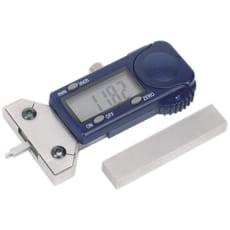
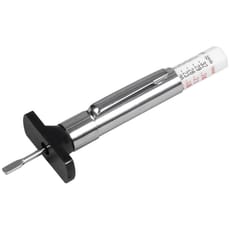
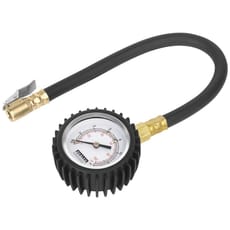
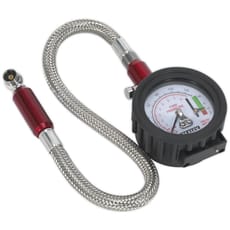
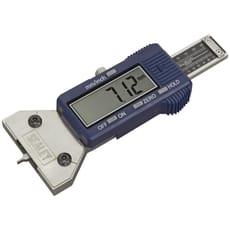
Tyre pressure gauges measure the air pressure inside tyres, typically displayed in PSI (pounds per square inch), BAR, or KPA. Maintaining correct tyre pressure is crucial for fuel efficiency, tyre longevity, and safe handling characteristics. Meanwhile, tyre tread depth gauges measure the remaining depth of tyre tread grooves, helping you determine when tyres need replacing. In the UK, the legal minimum tread depth is 1.6mm across the central three-quarters of the tread width, though many professionals recommend replacing tyres at 3mm for optimal wet weather performance. Tooled-Up.com stocks both types of gauge individually and in convenient combination tools that measure both parameters.
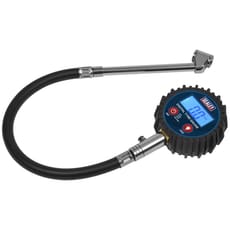
The range available from Tooled-Up includes digital and analogue models from trusted brands including Sealey, Draper, Faithfull, and Facom. From basic pencil-style pressure gauges perfect for keeping in your van or toolbox, to professional digital combination gauges like the Sealey Digital Tyre Pressure and Tread Depth Gauge, these instruments suit mobile mechanics, tyre fitters, fleet maintenance teams, and DIY enthusiasts who take vehicle safety seriously. Digital models offer precise LCD readouts with auto shut-off features, whilst analogue dial gauges provide durability without battery dependency—ideal for busy workshop environments.
Jargon Buster
- PSI (Pounds per Square Inch) - The imperial unit of pressure measurement commonly used for tyre inflation in the UK, alongside BAR. Most vehicle manufacturers specify tyre pressures in both units, typically ranging from 28-35 PSI for standard cars.
- BAR - A metric unit of pressure approximately equal to atmospheric pressure at sea level. 1 BAR equals approximately 14.5 PSI. Many European vehicles specify recommended pressures in BAR, making dual-display gauges particularly useful.
- Tread Depth - The vertical measurement from the top of the tyre's tread rubber to the bottom of the tyre's deepest grooves, measured in millimetres. UK law requires a minimum of 1.6mm across the central three-quarters of the tread width.
- Cold Pressure - Tyre pressure measured when tyres are cold (haven't been driven for at least two hours). This is the recommended state for checking pressures as driving heats tyres and increases pressure readings by 2-4 PSI.
- Digital Gauge - An electronic measuring instrument with an LCD display that provides precise digital readings, often featuring automatic shut-off, backlit screens, and memory functions for comparing multiple readings.
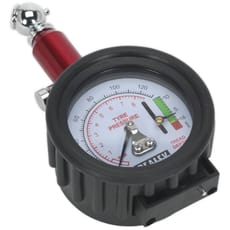
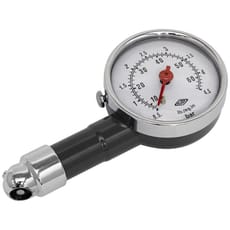
- Dial Gauge - An analogue gauge with a circular dial and needle pointer, prized for durability and reliability in workshop environments without requiring batteries. Often features side or top mounting configurations.
Who Uses Tyre Depth Gauges & Pressure Gauges?
- Mobile Mechanics - Performing roadside vehicle checks and pre-MOT inspections
- Tyre Fitters and Specialists - Daily use in tyre centres and fast-fit operations
- Fleet Maintenance Technicians - Regular safety checks on company vehicle fleets
- MOT Testers - Verifying tyre condition meets legal standards during annual tests
- Garage and Workshop Owners - General vehicle servicing and safety inspections
- HGV and PSV Mechanics - Maintaining commercial vehicle fleets to operator licence standards
- Recovery and Breakdown Services - Diagnosing tyre-related issues at roadside callouts
- Driving Instructors - Teaching vehicle maintenance checks and ensuring learner vehicle safety
- DIY Enthusiasts and Home Mechanics - Regular personal vehicle maintenance and pre-journey checks
- Caravan and Motorhome Owners - Seasonal checks for leisure vehicles with specific pressure requirements
- Agricultural Engineers - Maintaining farm vehicles and equipment with varying pressure specifications
How to Choose the Right Tyre Depth Gauges & Pressure Gauges
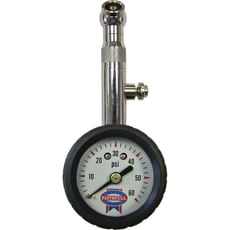
Digital vs Analogue: Digital gauges like the Draper DTG Digital Tyre Pressure Reader offer precise readings and are easy to read in any lighting conditions, making them ideal for mobile work and detailed diagnostics. Analogue dial gauges such as the Faithfull Tyre Pressure Dial Gauge are extremely durable, never need batteries, and are often preferred in busy workshop environments where they can withstand knocks and drops without calibration issues.
Measurement Range: For standard cars and light commercial vehicles, a pressure gauge reading up to 60 PSI is usually sufficient. If you work with HGVs, agricultural vehicles, or specialist equipment, you'll need gauges with higher maximum readings, typically 100-160 PSI. Check the gauge specifications match your typical working pressures.
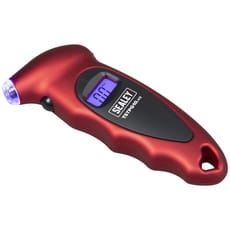
Unit Display: Choose gauges that display in your preferred units. Many digital models show PSI, BAR, and KPA simultaneously, which is particularly useful when working with a mix of UK and European vehicles with different manufacturer specifications. The Sealey Digital Tyre Pressure Gauge offers multi-unit display as standard.
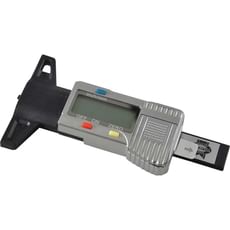
Combination Tools: Several models combine both pressure and tread depth measurement in a single compact unit. The Sealey Digital Tyre Pressure and Tread Depth Gauge provides excellent value for mobile mechanics and saves valuable space in your toolbox or van storage. Alternatively, kits like the Draper 3 Piece Tyre Service Kit bundle separate tools together.
Build Quality and Brand: Professional-grade gauges from manufacturers like Sealey, Draper, and Facom are calibrated for accuracy and built to withstand daily workshop use. Cheaper gauges may drift out of calibration quickly, potentially leading to incorrect readings and safety issues. Look for models with robust housings and protective rubber sleeves.
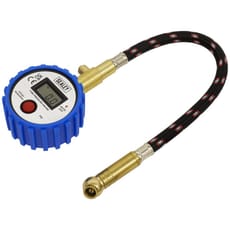
Additional Features: Consider features like backlit displays for working in poor light conditions, automatic shut-off to preserve battery life in digital models, pressure release valves for adjusting over-inflated tyres, flexible hoses for awkward valve positions, and protective storage cases. The Expert by Facom Digital Tyre Pressure Gauge offers many professional features in a compact design.
Popular Accessories
- Tyre Inflators and Air Compressors - Once you've measured pressure, you'll need equipment to adjust it correctly
- Valve Caps and Valve Core Tools - Essential items for complete tyre maintenance and preventing air loss
- Tyre Service Kits - Combined sets including gauges, inflators, and repair tools for comprehensive maintenance
- Air Line Connectors and Quick-Release Couplings - Professional workshop fittings for efficient operation with compressed air systems
- Protective Tool Cases and Storage - Keep precision instruments safe during transport and storage to maintain calibration
- Tyre Levers and Bead Breakers - Complementary tools for complete tyre servicing and removal
- Replacement Batteries - Keep digital gauges operational with spare AG13 or equivalent power sources
- Tyre Repair Kits - Puncture repair equipment for emergency roadside fixes
Safety Information
Always check tyre pressure when tyres are cold, as pressure increases significantly with heat generated during driving—typically by 2-4 PSI after even short journeys. Be aware that over-inflated tyres can burst unexpectedly, particularly when hot, so never exceed the maximum pressure marked on the tyre sidewall. When measuring tread depth, ensure the vehicle is on level ground with the handbrake applied and engine off.
Remember that UK law requires a minimum tread depth of 1.6mm, but HSE guidance for commercial vehicles often recommends replacement at 3mm for improved wet weather safety. Regular tyre checks aren't just about legal compliance—they're essential for preventing accidents, reducing fuel consumption, and extending tyre life. Failing to maintain proper tyre condition can result in MOT failures, fixed penalty notices, and three penalty points per defective tyre.
When using pressure gauges with air lines in workshop environments, always wear appropriate PPE including safety glasses, as compressed air systems can cause debris to become airborne. Ensure compressed air equipment is properly maintained and regulated to prevent over-inflation. Never exceed 40 PSI when seating tyre beads, and always use appropriate safety cages or restraints when inflating tyres off the vehicle.
Frequently Asked Questions
How often should I check my tyre pressure?
You should check tyre pressures at least monthly and before any long journeys. Many professionals recommend weekly checks for commercial vehicles and fleet operations. Always check when tyres are cold for accurate readings, and don't forget the spare tyre. Seasonal temperature changes can affect pressure, so check more frequently during autumn and spring transitions.
What's the difference between a pencil gauge and a dial gauge?
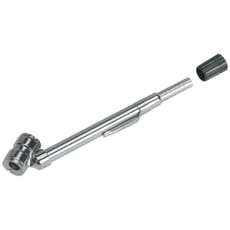
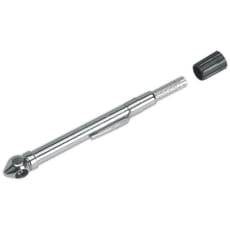
Pencil gauges like the Draper Pencil Type Tyre Pressure Gauge are compact, affordable, and perfect for occasional use or keeping in your glovebox. Dial gauges such as the Draper TPG101 are more accurate, easier to read at a glance, and better suited to frequent professional use. Both types are reliable when properly maintained and from quality manufacturers, though dial gauges typically offer better long-term accuracy.
Do digital tyre gauges need calibrating?
Yes, all gauges—digital and analogue—should be checked for accuracy periodically, particularly if used professionally. You can verify accuracy against a known-good reference gauge or have them professionally calibrated annually. Digital gauges are generally very accurate out of the box with tolerances of ±1%, but can drift over time if dropped or exposed to extreme temperatures.
Can I use the same gauge for cars and commercial vehicles?
Standard car gauges typically read up to 50-60 PSI, which is sufficient for most cars and light vans. Commercial vehicles, especially HGVs and those with dual rear wheels, often require pressures of 80-120 PSI, so you'll need a gauge with an appropriate range for these applications. Always check the gauge's maximum reading matches your requirements.
What tread depth should I replace tyres at?
While the UK legal minimum is 1.6mm, most tyre manufacturers and safety organisations including the HSE recommend replacing tyres at 3mm. Below this depth, wet weather performance deteriorates significantly, increasing stopping distances by up to 44% and the risk of aquaplaning on wet roads. For commercial vehicles, 3mm is often the practical minimum for insurance and duty of care compliance.