

VDE Hex & Torx Keys

Pay in 3 interest-free payments on purchases from £20-£3000 with  . Learn more.
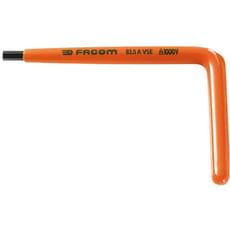
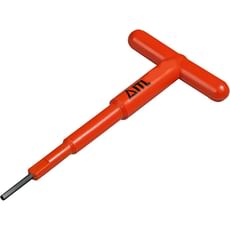
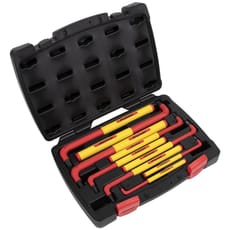
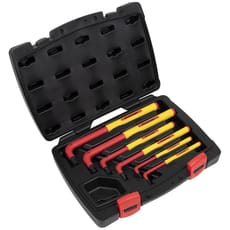
 Loading...
End of content
Error - No more pages to load
About VDE Hex & Torx Keys
VDE hex and Torx keys are essential insulated hand tools designed specifically for electrical work where live circuits may be present. Unlike standard hex keys, VDE-approved tools are individually tested to 10,000V and certified safe for use on electrical systems up to 1,000V, providing crucial protection for electricians and engineers working on 240v installations and higher voltage industrial equipment. These specialised tools combine the precision and torque application of traditional hex and Torx drivers with the safety features demanded by electrical work, featuring insulated handles and shafts that meet stringent European safety standards.
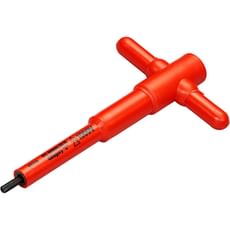
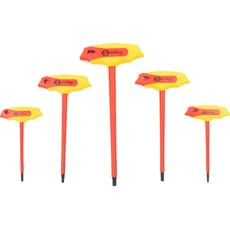
The category encompasses both hex (Allen) keys and Torx keys in various configurations, including T-handle designs for enhanced leverage and ergonomic comfort during extended use. Tooled-Up.com stocks VDE hex and Torx keys from trusted brands including Sealey, CK Tools, Facom, and ITL, offering both individual keys and comprehensive sets. These tools are manufactured from premium quality S2 steel, tempered and hardened for exceptional strength and durability, with dual-component ergonomic handles that provide excellent grip and control whilst maintaining electrical insulation.
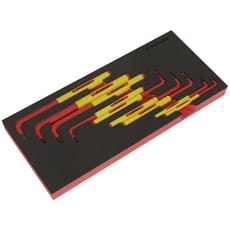
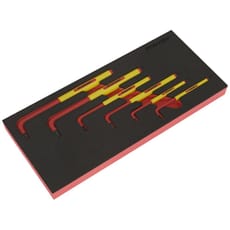
Available in metric sizes covering the most commonly encountered fastener dimensions, these tools are supplied in various formats including module trays for workshop storage systems, portable cases for site work, and extra-long versions for accessing recessed fasteners in electrical panels and control cabinets. The precise hexagon and Torx profiles ensure a secure fit in fasteners, minimising the risk of cam-out and fastener damage whilst working in potentially hazardous environments.
Jargon Buster
- VDE Approval: Certification from VDE Testing and Certification Institute (Germany) confirming that tools have been individually tested to 10,000V and are safe for working on live electrical circuits up to 1,000V. This is the gold standard for insulated hand tools used by electricians.
- S2 Steel: A high-quality tool steel alloy containing silicon, known for its excellent shock resistance and ability to withstand repeated impacts without fracturing. S2 steel is preferred for hex and Torx keys as it provides the ideal balance of hardness and toughness.
- T-Handle Design: A handle configuration where the shaft is perpendicular to the handle, forming a "T" shape. This design provides significantly better leverage and torque application than L-shaped keys, whilst reducing hand fatigue during repetitive use.
- Torx Profile: A six-pointed star-shaped fastener and tool profile that provides superior torque transfer compared to hex keys, reducing the risk of cam-out and fastener damage. Commonly found in modern electrical equipment and automotive applications.
- Cam-Out: The tendency of a tool to slip out of a fastener head when torque is applied, potentially causing damage to the fastener or injury to the user. VDE tools with precise profiles minimise this risk.
- Module Tray: A foam or plastic insert designed to fit within drawer-based tool storage systems, keeping tools organised and visible whilst protecting them from damage. Popular with workshop users and mobile service vans.
Who Uses VDE Hex & Torx Keys?
- Electricians and Electrical Contractors: For installing, maintaining and repairing electrical panels, consumer units, and control systems where live circuits may be present
- Industrial Maintenance Engineers: Servicing machinery, motor control centres, and production equipment operating at 240v and higher voltages
- Renewable Energy Technicians: Working on solar panel installations, wind turbines, and battery storage systems with high-voltage DC circuits
- Automotive Electricians: Repairing modern vehicle electrical systems, particularly hybrid and electric vehicles with high-voltage battery systems
- Facilities Maintenance Teams: Maintaining building services, HVAC controls, lighting systems, and emergency power supplies
- Instrumentation Engineers: Installing and calibrating electrical control systems, sensors, and monitoring equipment in industrial settings
- Rail and Transport Engineers: Working on signalling systems, traction equipment, and electrical infrastructure in the transport sector
- Telecommunications Engineers: Maintaining power supplies, battery systems, and electrical infrastructure in communications installations
How to Choose the Right VDE Hex & Torx Keys
Certification and Safety Standards: Always verify that tools carry genuine VDE approval markings and are individually tested to 10,000V. This certification is non-negotiable for professional electrical work and ensures compliance with HSE guidelines for safe working practices on electrical installations.
Size Range Requirements: Consider which fastener sizes you encounter most frequently. Comprehensive sets available at Tooled-Up typically include metric hex sizes from 3mm to 10mm and Torx sizes from T10 to T40, covering the majority of electrical equipment. Specialised applications may require specific individual sizes.
Handle Design: T-handle designs provide superior leverage and are ideal for accessing recessed fasteners in electrical panels and equipment housings. They're particularly beneficial for repetitive work as they reduce hand strain. L-shaped keys are more compact for confined spaces but offer less torque application.
Shaft Length: Extra-long keys are essential for reaching recessed terminals and fasteners deep within electrical cabinets and control panels. Standard length keys are adequate for surface-mounted equipment, but industrial applications often demand extended reach tools.
Material Quality: Premium S2 steel tools offer the best combination of strength and durability, resisting wear and deformation even under high torque loads. Cheaper alternatives may strip or break, potentially creating hazardous situations when working with live circuits.
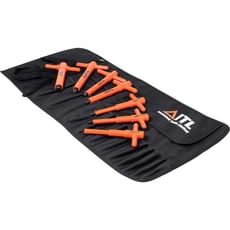
Storage and Organisation: Consider how you'll transport and store your tools. Module trays are excellent for workshop drawers and van racking systems, keeping tools organised and instantly accessible. Portable cases or wallets are better suited to site work where tools move between locations frequently.
Brand Reputation: Established brands like Wiha, CK Tools, Facom, and Sealey have proven track records in manufacturing reliable VDE tools. Investing in quality from reputable manufacturers ensures long-term reliability and genuine safety certification.
Popular Accessories
- VDE Screwdriver Sets: Complement hex and Torx keys with insulated screwdrivers for slotted and Pozidrive fasteners commonly found in electrical installations
- Insulated Pliers and Cutters: VDE-approved pliers, side cutters, and wire strippers for safe electrical work
- Voltage Testers and Multimeters: Essential for verifying circuits are isolated before work begins and testing electrical systems safely
- Tool Storage Systems: Professional toolboxes, module drawer systems, and tool bags designed for organising and protecting precision hand tools
- Electrician's Tool Rolls and Wallets: Portable storage solutions for transporting VDE tools safely between job sites
- Lock-Off Devices: Circuit breaker locks and isolation tags for securing electrical panels during maintenance work
- Inspection Torches: LED work lights for illuminating electrical cabinets and confined spaces during installation and repair work
- Anti-Fatigue Matting: Insulated rubber mats providing additional electrical protection when working on switchgear and distribution panels
Safety Information
Voltage Limitations: VDE hex and Torx keys are certified for use up to 1,000V AC/DC. Never exceed this voltage rating. Always verify the voltage of circuits before commencing work using appropriate voltage testing equipment, and treat all circuits as live until proven otherwise.
Visual Inspection: Before each use, carefully inspect tools for any damage to the insulation, including cracks, cuts, abrasions, or wear. Compromised insulation renders VDE tools unsafe and they must be withdrawn from service immediately. Never attempt to repair damaged insulation with tape or other makeshift solutions.
Working Environment: Insulated tools provide protection against electric shock but do not eliminate all electrical hazards. Always follow proper isolation procedures where possible, and comply with HSE Electricity at Work Regulations 1989. Wet conditions significantly increase electrical risks, so ensure tools and working areas are dry.
Tool Condition: VDE certification applies only to tools in good condition. Worn or damaged tools, even if they once carried VDE approval, no longer provide reliable protection. Replace tools showing signs of wear, damage, or deformation rather than risk compromising safety.
Training and Competence: VDE tools are designed for use by qualified, competent persons with appropriate electrical training. Understanding electrical hazards, safe working practices, and emergency procedures is essential before undertaking any work on electrical installations.
Regular Replacement: Even with careful use, insulated tools have a finite service life. Consider implementing a replacement schedule based on frequency of use and working conditions to ensure tools maintain their protective properties.
Frequently Asked Questions
What does VDE approval actually mean, and why is it important?
VDE approval means each tool has been individually tested to 10,000V by the VDE Testing and Certification Institute in Germany, and is certified safe for working on live electrical systems up to 1,000V. This testing ensures the insulation won't break down under electrical stress, protecting users from electric shock. It's the recognised international standard for insulated hand tools and is essential for compliance with UK electrical safety regulations when working on or near live circuits.
Can I use VDE hex keys on standard mechanical applications, or are they only for electrical work?
VDE hex and Torx keys can absolutely be used for non-electrical applications. The high-quality S2 steel and robust construction make them excellent general-purpose tools that often outlast standard hex keys. However, it's good practice to maintain a dedicated set specifically for electrical work to ensure the insulation remains in pristine condition when needed for live circuit work, whilst using separate tools for potentially abrasive or harsh mechanical applications.
How do I know when VDE tools need replacing?
Replace VDE tools immediately if you notice any damage to the insulation including cracks, cuts, gouges, or exposed metal beneath the insulation. Also replace tools if the insulation becomes loose, if the tool shaft is bent or twisted, or if there's any degradation of the handle material. Before each use, perform a visual inspection. Many professionals replace heavily-used VDE tools every 2-3 years as a precautionary measure, even without visible damage.
What's the difference between hex keys and Torx keys, and which do I need?
Hex keys fit hexagonal sockets (six flat sides), whilst Torx keys fit star-shaped sockets with six rounded points. Torx fasteners generally provide better torque transfer and are less prone to cam-out than hex fasteners, making them increasingly common in modern electrical equipment and control systems. Most electricians need both types as hex fasteners remain widespread in older installations and many control panels, whilst Torx fasteners are standard in newer equipment, particularly from European and Asian manufacturers.
Are extra-long VDE keys necessary, or will standard lengths suffice?
Extra-long VDE keys are essential for industrial electrical work where fasteners are often deeply recessed within control cabinets, distribution boards, and equipment housings. Standard length keys work fine for surface-mounted equipment and domestic installations, but if you regularly work on industrial switchgear, motor control centres, or large electrical panels, the additional reach of extra-long keys prevents frustration and allows proper access without improvising or resorting to unsafe practices like using extensions on standard keys.