

Wall Fans

Pay in 3 interest-free payments on purchases from £20-£3000 with  . Learn more.
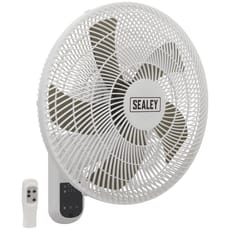
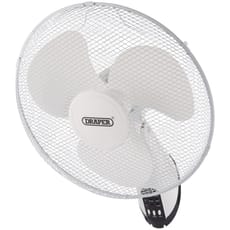
 Loading...
End of content
Error - No more pages to load
About Wall Fans
Wall fans provide an effective and space-saving solution for cooling workshops, warehouses, garages, factories, and commercial premises. Unlike floor-standing or desk fans, wall-mounted fans are permanently installed at an elevated position, delivering powerful air circulation without taking up valuable floor space. This makes them particularly suitable for busy work environments where floor space is at a premium and there's a risk of portable fans being knocked over or obstructed.
Modern wall fans combine robust construction with practical features designed for professional and demanding environments. Most models feature oscillating heads that sweep from side to side, ensuring air circulation across a wider area, while tilt adjustment allows users to direct airflow exactly where it's needed. Remote control operation has become increasingly common, enabling convenient adjustment of fan speed, oscillation, and timer settings without the need to access the unit directly—particularly useful when fans are mounted at height.
The wall fans available from Tooled-Up.com are designed for straightforward installation using supplied mounting brackets, and feature fully guarded blades to meet safety requirements in professional settings. Powered by 240v mains electricity, these fans deliver consistent performance throughout extended periods of use, with quiet-running motors that won't disrupt work environments. Advanced features such as timer functions and sleep modes provide additional convenience and energy efficiency.
Jargon Buster
- Oscillation: The automatic side-to-side sweeping motion of the fan head, typically covering a 90-degree arc, which distributes airflow across a wider area rather than in a fixed direction.
- CFM (Cubic Feet per Minute): A measurement of airflow volume indicating how much air the fan moves. Higher CFM values mean more powerful air circulation suitable for larger spaces.
- Blade Diameter: The measurement across the circular sweep of the fan blades, typically ranging from 16 to 18 inches for wall fans. Larger diameters generally move more air but require more mounting space.
- Sleep Mode: A programmable function that gradually reduces fan speed over time, providing a quieter and more comfortable cooling experience, particularly useful in rest areas or offices.
- Timer Function: Allows users to preset automatic shut-off times, typically ranging from 30 minutes to 4 hours, improving energy efficiency and convenience.
- Tilt Adjustment: The ability to angle the fan head up or down to direct airflow at the optimal height for the space, whether towards floor level or across upper areas of a room.
Who Uses Wall Fans?
Wall fans are essential equipment across a wide range of professional and commercial settings:
- Motor mechanics and vehicle technicians working in garages and workshops
- Warehouse operatives and logistics staff in storage and distribution facilities
- Manufacturing workers in factories and production environments
- Tradespeople including electricians, plumbers, and joiners in their workshops
- Facilities managers responsible for workplace comfort and ventilation
- Gym owners and leisure facility operators
- Restaurant and commercial kitchen staff requiring ventilation
- Retail shop owners maintaining comfortable environments for staff and customers
- Agricultural workers in barns, stables, and farm buildings
- DIY enthusiasts with dedicated workshop spaces or garages
How to Choose the Right Wall Fans
Selecting the appropriate wall fan depends on several key considerations:
Room Size and Airflow Requirements: Larger spaces require fans with higher CFM ratings and bigger blade diameters. A 16-inch fan typically suits smaller workshops and garages, while 18-inch models provide greater coverage for warehouses and larger commercial spaces. Consider ceiling height as well—taller rooms may benefit from the extended reach of oscillating models.
Speed Settings: Three-speed fans offer the most versatility, allowing adjustment between gentle air circulation and maximum cooling power depending on conditions and requirements. Variable speed control enables fine-tuning for optimal comfort without excessive noise or energy consumption.
Control Options: Remote control operation significantly enhances convenience, particularly when fans are mounted at height. Look for models with clear, responsive controls and useful features like timer functions and sleep modes. Some units include both remote and manual controls for flexibility.
Build Quality and Durability: Professional environments demand robust construction. Metal guards and housings withstand knocks and exposure better than plastic alternatives. The reputation of established brands like Sealey at Tooled-Up reflects their proven durability in demanding workshop conditions.
Mounting and Installation: Ensure the fan includes suitable mounting hardware and that your chosen location has appropriate wall strength and access to 240v power supply. Consider whether you need the fan positioned centrally or in a specific corner for optimal coverage.
Noise Level: Smooth-running motors with quality bearings operate more quietly, which matters in environments where communication or concentration is important. Ball-bearing motors typically last longer and run quieter than sleeve-bearing alternatives.
Popular Accessories
- Extension leads rated for high-wattage appliances to reach distant power sockets
- Remote control batteries and replacement remotes
- Wall-mounting brackets and reinforcement plates for secure installation
- Cable tidies and clips for neat power cable routing
- Portable air quality monitors to assess ventilation effectiveness
- Dust extraction systems to work alongside fans for improved air quality
- Workshop heaters for year-round climate control
Safety Information
Wall fans must be installed and operated in accordance with UK electrical safety standards. Always ensure the fan is mounted securely to a load-bearing wall using appropriate fixings—plasterboard alone is insufficient and requires backing or proper wall anchors rated for the fan's weight. The unit should be positioned where it cannot be accidentally contacted during normal work activities, particularly when rotating.
Verify that the power supply is a properly earthed 240v circuit with appropriate overcurrent protection. Never operate a fan with damaged guards or exposed blades, and ensure guards remain securely fastened at all times. Keep the fan away from water sources and extremely dusty environments that could clog the motor. In industrial settings, ensure compliance with HSE workplace ventilation guidelines and conduct regular maintenance checks including cleaning of blades and guards to maintain safe, efficient operation.
Frequently Asked Questions
What size wall fan do I need for my workshop?
As a general guide, a 16-inch fan suits spaces up to approximately 20 square metres, while an 18-inch model better serves areas of 25-30 square metres or more. Consider ceiling height, heat sources, and whether you need spot cooling or whole-room circulation. Multiple smaller fans may provide better coverage than a single large unit in L-shaped or partitioned spaces.
Can I use a wall fan outdoors?
Standard wall fans are designed for indoor use only and are not weatherproof. Using them in outdoor locations will void warranties and creates safety hazards from moisture ingress. For covered outdoor areas like garages with open doors, ensure the fan remains completely protected from rain and direct weather exposure.
How high should I mount a wall fan?
For optimal air circulation, mount the fan between 2 to 2.5 metres from the floor. This height allows effective coverage of the occupied zone whilst remaining safely above head height. Ensure adequate clearance around the fan—typically 50cm minimum—for unrestricted airflow and oscillation.
Are wall fans expensive to run?
Wall fans are relatively economical to operate. A typical model draws between 50-100 watts, costing approximately 2-4 pence per hour at current UK electricity rates. Running a fan costs significantly less than air conditioning while still providing effective cooling through improved air circulation.
Do wall fans require regular maintenance?
Periodic cleaning maintains performance and longevity. Disconnect power and wipe down blades and guards monthly to prevent dust accumulation, which can unbalance the fan and strain the motor. Check mounting security and listen for unusual noises indicating bearing wear. Quality models should provide many years of trouble-free service with minimal maintenance.