

Warning Signs
Pay in 3 interest-free payments on purchases from £30-2000 with  . Learn more.



 Loading...
End of content
Error - No more pages to load
About Warning Signs
Warning signs are essential safety products designed to alert people to potential hazards, restricted areas, and dangerous situations in workplaces, public spaces, and construction sites. From simple wet floor cautions to construction site notices and high voltage warnings for electric vehicles, these visual communication tools play a critical role in preventing accidents and ensuring legal compliance with Health and Safety Executive (HSE) regulations. Proper signage isn't just about meeting legal obligations – it's about creating a safer environment for employees, visitors, and the general public.
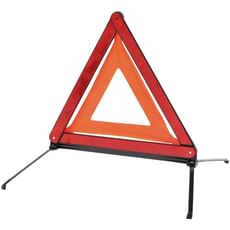
The range available at Tooled-Up.com includes permanent PVC signs for long-term installations, temporary A-board warnings for cleaning operations, vehicle warning triangles for roadside emergencies, and specialised safety barriers for electric and hybrid vehicle work. Modern warning signs utilise bold colours, internationally recognised symbols, and clear text to convey messages quickly and effectively, even in busy or poorly lit environments. Quality signs are manufactured from durable materials that withstand harsh weather conditions, UV exposure, and regular handling on active work sites.
Whether you need to mark construction zones, prevent unauthorised access, warn about CCTV surveillance, or alert people to recently cleaned floors, choosing appropriate warning signage demonstrates professional responsibility and protects both your business and those who enter your premises. Tooled-Up stocks signs from trusted manufacturers including Scan, Sealey, and Draper, ensuring durability and compliance with British Standards.
Jargon Buster
- PVC Signs: Permanent warning signs manufactured from polyvinyl chloride plastic, offering excellent weather resistance and durability for outdoor installations. These rigid signs maintain their appearance for years and can be easily mounted to walls, fences, or posts.
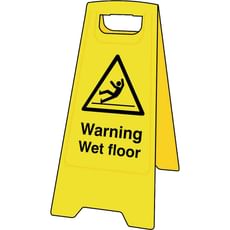
- A-Board: A portable, free-standing sign with an A-frame construction that displays warnings on both sides. Commonly used for temporary hazards like wet floors, these fold flat for easy storage and transport.
- HSE Compliance: Meeting the requirements set by the Health and Safety Executive, the UK's regulatory body for workplace health and safety. Compliant signage follows specific colour codes, symbols, and text standards outlined in the Health and Safety (Safety Signs and Signals) Regulations.
- Reflective Signage: Warning signs incorporating reflective materials that enhance visibility in low-light conditions or when illuminated by vehicle headlights, crucial for roadside and outdoor applications.
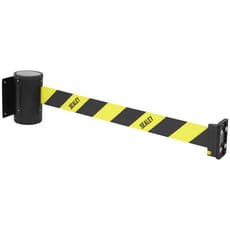
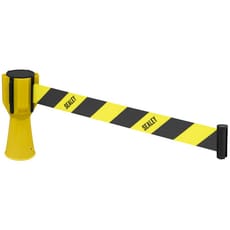
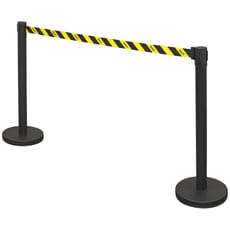
- Retractable Barrier: A portable crowd control system featuring extendable belt barriers mounted on weighted posts, used to cordon off hazardous areas or restrict access to dangerous zones such as electric vehicle charging points.
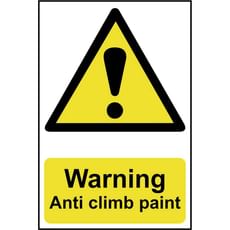
- Anti-Climb Paint Warning: A specific type of sign legally required when anti-vandal paint is applied to surfaces, alerting people that the substance may transfer to clothing and skin.
Who Uses Warning Signs?
- Construction Site Managers: Controlling access, warning the public, and marking hazardous zones on building sites
- Facilities Managers: Maintaining safe premises in commercial buildings, shopping centres, and office complexes
- Cleaning Contractors: Preventing slip hazards with wet floor warnings in public areas
- Property Maintenance Teams: Installing permanent signage for restricted areas, CCTV zones, and private property boundaries
- Electricians and Auto-Electricians: Warning about high voltage hazards when working on electric and hybrid vehicles
- Warehouse Operators: Marking forklift routes, loading bays, and restricted access areas
- Schools and Public Buildings: Meeting duty of care obligations with appropriate hazard warnings
- Retail Managers: Protecting customers from temporary hazards and preventing accidents
- Landlords and Property Owners: Securing premises with deterrent signage and legal notices
- Event Organisers: Creating temporary safety barriers and warning zones at public gatherings
How to Choose the Right Warning Signs
Indoor vs Outdoor Use: Consider where the sign will be positioned. Outdoor signs require UV-resistant materials like rigid PVC that won't fade or deteriorate in sunlight and rain. Indoor signs can use lighter materials but should still be durable enough for frequent handling.
Temporary or Permanent: Wet floor warnings and cleaning hazards require portable, foldable A-boards that can be deployed quickly and stored when not needed. Permanent hazards like construction sites, CCTV zones, or restricted areas need fixed signs that can be securely mounted.
Visibility Requirements: Signs must be clearly visible from appropriate distances. Consider the size, colour contrast, and whether reflective materials are needed for low-light situations. Standard warning signs use yellow and black colour combinations for maximum impact.
Regulatory Compliance: Ensure signs meet HSE requirements for your specific application. Construction sites, electrical hazards, and public warnings have specific legal standards that must be followed to avoid prosecution and insurance issues.
Durability and Build Quality: Professional environments demand signs that maintain their appearance and legibility over time. Heavy-duty construction prevents damage from knocks, weather, and regular movement.
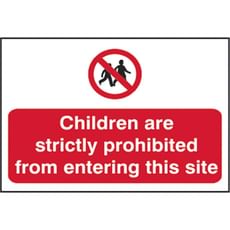
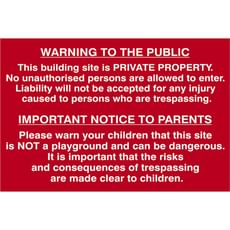
Specialised Requirements: Electric vehicle work requires specific high voltage warnings and safety barriers. Anti-climb paint installations need legally compliant notices. Construction sites must warn parents and children appropriately. Match the sign to your exact legal obligation.
Popular Accessories
- Sign Mounting Fixings: Screws, wall plugs, and adhesive pads for permanent installation
- Sign Posts and Stakes: Free-standing supports for outdoor ground mounting
- Laminating Pouches: Protection for paper notices and temporary signs
- Safety Barrier Posts: Additional posts and belts to extend cordoned areas
- Personal Protective Equipment: Hi-vis vests, hard hats, and safety boots to accompany site warnings
- Security Products: Padlocks, chains, and CCTV cameras that work alongside warning signage
- First Aid Kits: Essential safety equipment for any location requiring hazard warnings
- Floor Marking Tape: Additional visual hazard marking for floors and surfaces
- Replacement Barrier Belts: Spare cassettes for retractable barrier systems
Safety Information
Warning signs are passive safety devices – they alert people to hazards but don't eliminate the danger itself. Always address the underlying hazard through proper risk assessment and control measures. Signs should complement, not replace, active safety management.
Regularly inspect signs for damage, fading, or obscured visibility. Damaged or illegible signs fail to communicate warnings effectively and may compromise legal compliance. Replace worn signs promptly to maintain protection.
Position signs at appropriate heights and locations where they're clearly visible before people enter hazardous areas. Signs placed too high, too low, or obscured by equipment or vegetation serve no protective function.
Understand your legal obligations under HSE regulations. Certain hazards legally require specific signage, and failure to display appropriate warnings can result in prosecution, particularly if accidents occur. Construction sites, electrical work, and public access areas have particularly strict requirements.
Frequently Asked Questions
What's the legal requirement for wet floor signs?
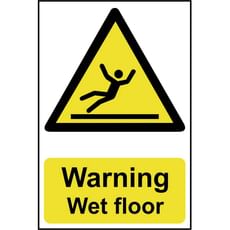
Under the Health and Safety at Work Act and premises liability law, property owners and occupiers must take reasonable steps to prevent slip and trip accidents. Displaying wet floor warnings when cleaning or when spillages occur is considered a reasonable precaution and is standard practice across all commercial premises. Failing to warn of wet floors can result in successful compensation claims if accidents occur.
Do I need specific signs for construction sites?
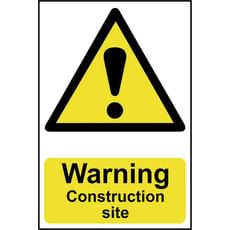
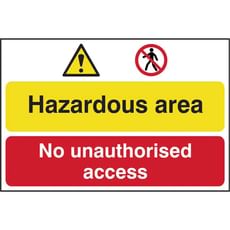
Yes, construction sites require warning signs alerting the public to dangers, prohibiting unauthorised access, and specifically warning parents about dangers to children. The Construction (Design and Management) Regulations 2015 place duties on contractors to secure sites and prevent public access. Site-specific signs from Scan and other manufacturers meet these requirements.
Are CCTV warning signs a legal requirement?
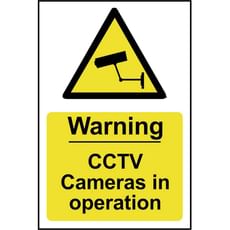
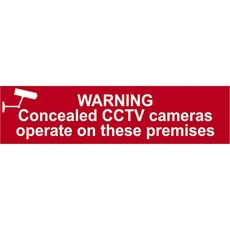
Under UK GDPR and Data Protection Act 2018, you must inform people when CCTV is in operation in a clear and obvious manner. Warning signs are the standard method of providing this notice. Signs should be positioned at entry points before people enter the monitored area, allowing them to make informed decisions about entering.
What signs do I need for electric vehicle repair work?
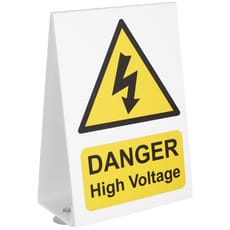
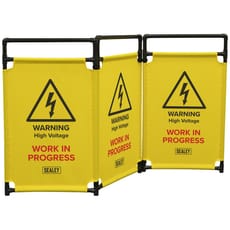
Electric and hybrid vehicles present high voltage hazards, with systems operating at up to 650v DC. When working on these vehicles, you must display high voltage warnings and use safety barriers to prevent unauthorised access. Sealey manufactures specialist floor signs and folding barriers specifically designed for EV work, helping workshops comply with HSE electrical safety requirements.
How long do outdoor warning signs last?
Quality PVC signs with UV-resistant inks typically last 5-7 years outdoors before significant fading occurs. Cheaper materials may deteriorate within 1-2 years. Lifespan depends on sun exposure, weather conditions, and physical wear. Regular inspection ensures signs remain legible and effective throughout their service life.