

Washers
Pay in 3 interest-free payments on purchases from £30-2000 with  . Learn more.




 Loading...
End of content
Error - No more pages to load
About Washers
Washers are essential fastening components that distribute the load of a threaded fastener, such as a bolt or screw, across a larger surface area. These small but critical hardware items prevent damage to surfaces, reduce the likelihood of loosening under vibration, and ensure a secure, long-lasting connection. Available in numerous configurations including standard flat washers, spring washers, penny washers, and square plate washers, these versatile components are fundamental to countless construction, engineering, and maintenance applications across professional and domestic settings.
The selection at Tooled-Up.com encompasses a comprehensive range of washer types to suit every application and material requirement. Standard washers provide basic load distribution, while spring washers offer anti-loosening properties ideal for vibration-prone assemblies. Penny washers feature an enlarged outer diameter perfect for distributing loads across softer materials like timber, and square plate washers deliver maximum surface area coverage for applications requiring substantial load spreading. For convenience and cost-effectiveness, assorted washer packs provide a ready selection of commonly used sizes in a single package.
Manufactured from materials including zinc-plated steel, stainless steel, brass, and nylon, washers must be selected according to the environmental conditions, load requirements, and compatibility with the fasteners and materials being joined. Understanding the specific characteristics and applications of different washer types ensures optimal performance, prevents premature failure, and maintains the structural integrity of assemblies across diverse professional and DIY projects.
Jargon Buster
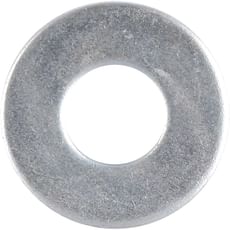
- Flat Washer (Standard Washer): A thin, flat disc with a central hole, designed to distribute fastener load evenly and prevent surface damage. The most commonly used washer type for general applications.
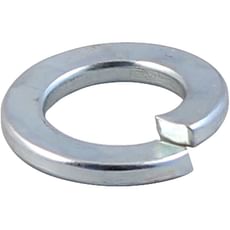
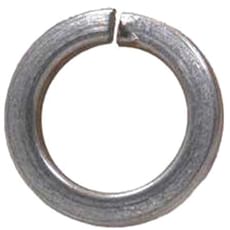
- Spring Washer: A washer with a split and slightly helical shape that provides tension and resistance to loosening caused by vibration. Also known as a lock washer, it creates spring tension between the fastener head and substrate.
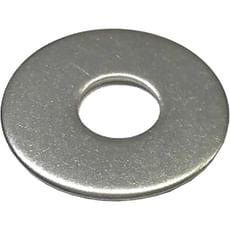
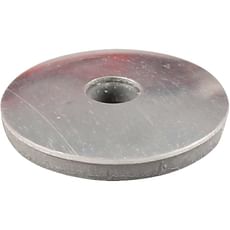
- Penny Washer: A flat washer with a significantly larger outer diameter relative to its inner hole size, providing increased load distribution. Particularly useful when fastening into softer materials like timber or plasterboard.
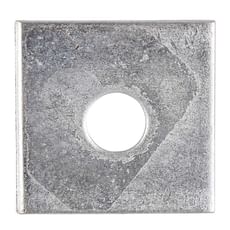
- Square Plate Washer: A square-shaped washer offering maximum surface area for load distribution, commonly used in timber construction and applications requiring substantial bearing surface area.
- Zinc-Plated: A protective coating applied to steel washers through electroplating, providing corrosion resistance suitable for indoor applications and some sheltered outdoor uses.
- Inner Diameter (ID) and Outer Diameter (OD): The ID is the size of the central hole (which must accommodate the bolt or screw shaft), while the OD is the overall width of the washer, determining the load distribution area.
Who Uses Washers?
Washers are indispensable components used across virtually every trade and industry:
- General Builders and Contractors: For structural connections, timber framing, and general construction fastening applications
- Plumbers and Heating Engineers: Securing pipe brackets, mounting boilers, and installing sanitary ware
- Electricians: Mounting electrical equipment, consumer units, and securing cable management systems
- Carpenters and Joiners: Timber construction, furniture assembly, and structural timber connections
- Mechanical Engineers and Fitters: Machine assembly, equipment installation, and maintenance applications
- Automotive and Agricultural Mechanics: Vehicle repairs, machinery maintenance, and fabrication work
- Roofers: Securing roofing timbers, battens, and structural connections
- Facilities Maintenance Teams: General repairs, equipment installation, and building maintenance
- DIY Enthusiasts and Homeowners: Home repairs, furniture assembly, garden projects, and general household maintenance
- Fabricators and Welders: Structural steelwork, framework assembly, and temporary fixings
How to Choose the Right Washers
Selecting the appropriate washer requires consideration of several critical factors:
Material Compatibility: Match the washer material to the fastener and substrate. Zinc-plated steel washers suit general indoor use, stainless steel provides superior corrosion resistance for exterior or marine environments, and brass offers corrosion resistance with electrical conductivity. Avoid galvanic corrosion by ensuring material compatibility between washers, fasteners, and substrates.
Size Requirements: The inner diameter must accommodate the bolt or screw shaft with minimal clearance, while the outer diameter should provide sufficient bearing surface for the application. Tooled-Up stocks metric sizes corresponding to standard bolt dimensions, ensuring proper fit and load distribution.
Washer Type: Standard flat washers suit general load distribution needs, spring washers prevent loosening in vibration-prone applications, penny washers distribute loads across softer materials, and square plate washers offer maximum bearing surface for demanding structural applications.
Application Environment: Consider exposure to moisture, chemicals, temperature extremes, and other environmental factors. Exterior applications require weather-resistant materials like stainless steel or hot-dip galvanised options, while indoor applications may utilise more economical zinc-plated alternatives.
Load Requirements: Heavier loads and higher-stress applications require washers with greater thickness and larger outer diameters to adequately distribute forces and prevent material deformation or fastener pull-through.
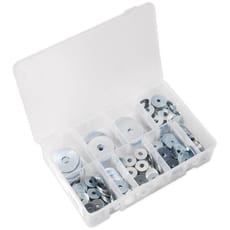
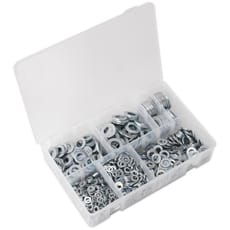
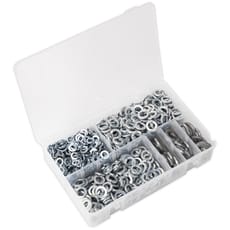
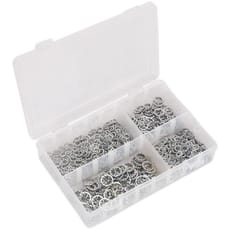
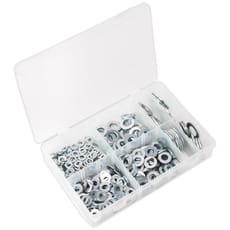
Quantity Considerations: For projects requiring multiple sizes or ongoing maintenance needs, assorted washer packs available from Tooled-Up provide cost-effective variety and ensure the right size is always to hand.
Popular Accessories
- Bolts and Screws: The primary fasteners used in conjunction with washers across all applications
- Nuts: Threaded fasteners that work with bolts and washers to create secure mechanical connections
- Threaded Rod and Studding: For extended connections and adjustable fixing applications
- Anchors and Wall Plugs: Fischer and Rawlplug fixing systems for masonry and concrete substrates
- Torque Wrenches: Ensuring correct tightening torque for critical fastening applications
- Socket Sets and Spanners: Essential hand tools for installing and tightening bolted assemblies
- Cordless Impact Drivers and Wrenches: Makita, DeWalt, and Milwaukee power tools for efficient fastener installation
- Storage Organisers: Stanley, DeWalt TSTAK, and compartmentalised boxes for washer and fastener organisation
- Threadlock and Anti-Seize Compounds: Chemical fastener retention and corrosion prevention products
Frequently Asked Questions
Q: What's the difference between a standard washer and a penny washer?
A: A penny washer has a significantly larger outer diameter relative to its hole size compared to a standard washer. This increased bearing surface area makes penny washers ideal for distributing loads across softer materials like timber or plasterboard, where a standard washer might pull through under load.
Q: When should I use spring washers instead of flat washers?
A: Spring washers (lock washers) should be used in applications subject to vibration or thermal cycling where fasteners may loosen over time. The split, helical design creates spring tension that resists loosening. Common applications include machinery, automotive assemblies, and equipment mounted on vibrating surfaces. For static loads without vibration, standard flat washers are typically sufficient.
Q: Do I need to use washers with all bolts and screws?
A: While not always mandatory, washers are highly recommended for most applications. They prevent fastener heads and nuts from damaging or embedding into softer materials, distribute loads more evenly to prevent stress concentrations, and provide a smooth bearing surface for tightening. Structural connections, timber applications, and assemblies in softer materials particularly benefit from washer use.
Q: What material washers should I use for outdoor applications?
A: For exterior applications exposed to weather, stainless steel washers (typically A2 or A4 grade) provide excellent corrosion resistance. Hot-dip galvanised washers also offer good protection for outdoor use. Standard zinc-plated washers are not recommended for exterior applications as the thin coating provides limited long-term weather protection.
Q: Can I reuse washers, or should I use new ones each time?
A: Standard flat washers can typically be reused if they're undamaged, uncorroded, and not deformed. However, spring washers should generally be replaced as their locking effectiveness diminishes after initial use. For critical structural or safety applications, best practice is to use new washers to ensure optimal performance and reliability.