

Welding Gloves
Pay in 3 interest-free payments on purchases from £30-2000 with  . Learn more.
 Loading...
End of content
Error - No more pages to load
About Welding Gloves
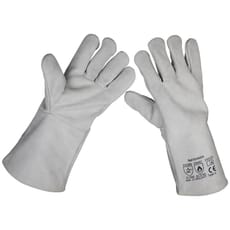
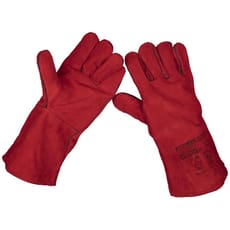
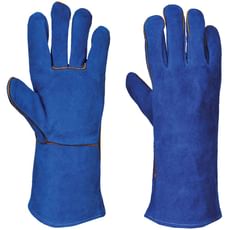
Welding gloves, also known as welding gauntlets, are specialised safety equipment designed to protect hands and forearms from the extreme hazards encountered during welding operations. These heavy-duty gloves provide essential protection against small splashes of molten metal, sparks, spatter, and exposure to radiant, convective and contact heat. Beyond thermal protection, quality welding gloves also safeguard against mechanical risks including abrasion, cuts, punctures and general wear from handling sharp metal edges and rough materials commonly found in welding environments.
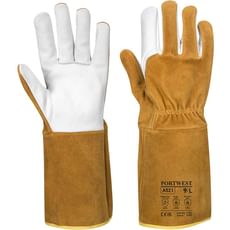
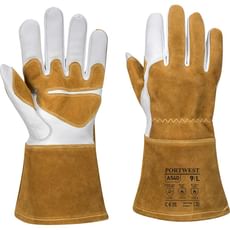
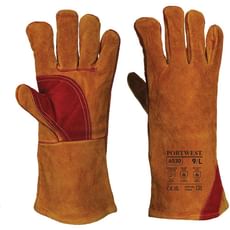
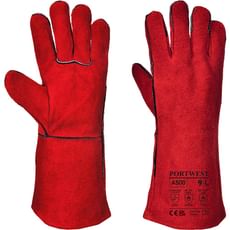
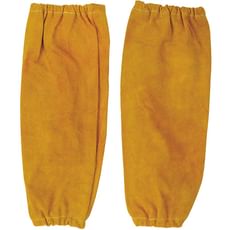
The selection at Tooled-Up.com includes various types of welding gloves tailored to different welding processes and intensity levels. MIG welding gauntlets typically feature thicker leather construction for maximum heat resistance during higher-temperature welding, whilst TIG welding gloves offer greater dexterity and tactile sensitivity for precision work with thinner, more flexible materials. Standard welders gauntlets provide all-round protection for general fabrication tasks, and extended welding sleeves offer additional forearm coverage for overhead or intensive welding applications. Leading manufacturers such as Portwest, Sealey, Draper and Scan produce gloves manufactured to rigorous EN388 and EN407 standards, ensuring reliable protection across professional and demanding DIY welding tasks.
Premium welding gloves are constructed from high-quality leathers including cow hide, pig skin and goat skin, each offering distinct benefits in terms of heat resistance, flexibility and durability. Fully lined options provide enhanced comfort during extended use, whilst reinforced patches at high-wear areas such as the palm, wrist and fingertips significantly extend glove lifespan. Extended cuffs ranging from 150mm to 355mm in total length protect the wrists and lower forearms from sparks and heat, making them indispensable for both professional welders and serious hobbyists working with arc welding, MIG, TIG or oxy-acetylene equipment.
Jargon Buster
- Gauntlet: An extended-cuff glove design that provides protection beyond the wrist, typically covering part of the forearm. Essential for welding to prevent sparks and molten metal from entering the gap between glove and sleeve.
- EN388 Standard: European safety standard rating gloves for mechanical risks including abrasion, cut, tear and puncture resistance. A typical welding glove might be rated EN388 4.2.4.4, with each number representing performance levels in these categories.
- EN407 Standard: European standard specifically for thermal risks, rating gloves against burning behaviour, contact heat, convective heat, radiant heat, small splashes of molten metal and large quantities of molten metal. Welding gloves typically display ratings such as EN407 4.1.3.X.4.X.
- MIG Welding Gloves: Heavier-duty gauntlets designed for Metal Inert Gas welding, offering maximum heat resistance and durability for higher-temperature welding processes that produce more spatter and heat.
- TIG Welding Gloves: Thinner, more flexible gloves designed for Tungsten Inert Gas welding, prioritising dexterity and precision for delicate work whilst maintaining adequate thermal protection for this lower-heat welding method.
- Gusseted Fingers: Additional material sewn between fingers allowing greater flexibility and natural hand movement, reducing fatigue during extended welding sessions and improving grip on welding torches and workpieces.
Who Uses Welding Gloves?
- Professional welders and fabricators working in manufacturing, construction and repair workshops
- Automotive technicians and body shop workers performing welding repairs and custom fabrication
- Metal workers and blacksmiths handling hot materials and forging operations
- Structural steel erectors carrying out site welding on construction projects
- Agricultural and farm maintenance workers repairing machinery and equipment
- Plumbers and pipefitters performing pipe welding and joining operations
- Maintenance engineers in industrial facilities conducting repair and fabrication work
- Railway and marine engineers working on specialist welding applications
- DIY enthusiasts and hobbyists with home welding equipment for repair and creative projects
- Engineering students and trainees learning welding skills in educational workshops
How to Choose the Right Welding Gloves
Welding Process: Match your gloves to your primary welding method. TIG welding demands thinner, more flexible gloves for precision electrode control and delicate work, whilst MIG, stick welding and cutting operations require heavier-duty gauntlets with superior heat resistance due to increased spatter and higher temperatures. Consider keeping separate gloves for different processes if you regularly switch between welding methods.
Safety Standards and Ratings: Always verify that gloves meet both EN388 mechanical protection standards and EN407 thermal protection standards. Professional welders should look for higher numerical ratings in both standards, particularly for contact heat (EN407's second digit) and radiant heat (third digit). HSE guidance recommends appropriate PPE selection based on thorough risk assessment of your specific welding environment and processes.
Leather Quality and Construction: Premium cow hide offers excellent durability and heat resistance for general and MIG welding, whilst goat skin provides superior flexibility for TIG work. Pig skin offers a balance between the two. Look for fully lined gloves for enhanced comfort and insulation, reinforced stress points at palms and fingertips for extended lifespan, and quality stitching using heat-resistant thread such as Kevlar. The leather should be thick enough for protection without being so rigid that it impairs movement.
Cuff Length and Coverage: Standard welding gauntlets typically measure 300-355mm in total length, providing substantial forearm protection. Shorter cuffs around 150mm suit lighter tasks and offer improved mobility, whilst extended welding sleeves provide maximum coverage for overhead welding or particularly hazardous applications. Ensure the cuff design prevents gaps when worn with protective welding jackets or flame-resistant sleeves.
Fit and Dexterity: Gloves available from Tooled-Up come in various sizes - measure around the widest part of your hand excluding the thumb to determine correct sizing. The gloves should fit snugly without restricting blood flow or causing discomfort during extended wear. Gusseted finger construction allows more natural hand movement, whilst pre-curved designs reduce fatigue. Consider trying gloves with your welding torch to ensure adequate grip and control before committing to purchase.
Brand Reputation: Established manufacturers like Portwest, Sealey and Draper have proven track records in producing reliable welding PPE that meets stringent safety standards. These brands consistently deliver gloves with appropriate certifications, quality materials and construction techniques that ensure both protection and reasonable working lifespan, representing better value than uncertified alternatives.
Popular Accessories
- Welding helmets and auto-darkening visors for eye and face protection
- Welding jackets and aprons manufactured from flame-resistant leather or treated fabrics
- Flame-resistant sleeves and arm guards for additional forearm protection
- Welding respirators and fume extraction equipment for respiratory protection
- Welding screens and curtains to protect others from arc flash
- Leather welding spats to protect footwear and lower legs from sparks
- Welding magnets and clamps for positioning workpieces hands-free
- Wire brushes and chipping hammers for post-weld cleaning
- Welding blankets and mats for fire prevention and surface protection
- Safety boots with metatarsal protection rated for hot work environments
Safety Information
Welding gloves are classified as Category III Personal Protective Equipment under UK regulations, indicating protection against risks that may cause serious or irreversible harm. They must display CE marking and conform to relevant EN standards. Always inspect gloves before each use for damage, burn holes, worn areas or deteriorated stitching - compromised gloves provide inadequate protection and should be replaced immediately.
Under the Health and Safety at Work Act 1974 and the Personal Protective Equipment at Work Regulations 1992, employers must provide appropriate welding PPE free of charge and ensure workers are trained in its correct use. The HSE's guidance on welding fume and hot work activities emphasises that welding gloves form just one element of a comprehensive PPE strategy that should also include eye protection, respiratory protection and flame-resistant clothing appropriate to the specific welding process and environment.
Never use damaged, wet or contaminated welding gloves, as moisture significantly reduces thermal protection and can cause steam burns. Oil, grease or chemical contamination may degrade leather and reduce protective properties. Store gloves in a clean, dry location away from direct sunlight and heat sources that could cause leather to dry out and crack. Remember that welding gloves protect against specific welding hazards but are not suitable for electrical work - never use them when working on live electrical equipment or 240v mains circuits, as leather provides insufficient electrical insulation.
Ensure welding gloves are appropriately sized - oversized gloves reduce dexterity and may catch on equipment, whilst undersized gloves restrict movement and may fail to provide adequate coverage. Combine welding gloves with other appropriate PPE including welding helmets, flame-resistant clothing and safety footwear to ensure comprehensive protection during all welding and cutting operations.
Frequently Asked Questions
What's the difference between MIG and TIG welding gloves?
MIG welding gloves are constructed from thicker, more heat-resistant leather to protect against the higher temperatures, increased spatter and greater heat generated during MIG welding processes. TIG welding gloves prioritise flexibility and tactile sensitivity using thinner, more supple leather (often goat skin) because TIG welding produces less spatter and requires greater precision in electrode control and manipulation. Using MIG gloves for TIG work will feel cumbersome and reduce control, whilst TIG gloves lack adequate protection for MIG welding's more aggressive heat and spatter.
How long should welding gloves last?
Lifespan depends heavily on frequency of use, welding processes employed and care taken. Professional welders using gloves daily for MIG or stick welding might replace them every few months, whilst occasional DIY users could see several years of service from quality gloves used for lighter tasks. Regular inspection is essential - replace gloves immediately if you notice burn holes, significant thinning of leather, deteriorated stitching, or reduced flexibility indicating leather degradation. Proper storage away from moisture, direct sunlight and extreme temperatures extends glove life considerably.
Can I wash my welding gloves?
Leather welding gloves should not be machine washed or submerged in water, as this damages the leather, causes shrinkage, and compromises protective properties. For light cleaning, wipe with a slightly damp cloth and allow to air dry naturally away from direct heat sources. Heavily contaminated gloves should be replaced rather than laundered. Some manufacturers offer lined gloves with removable inner linings that can be washed separately - check product specifications for care instructions specific to your gloves.
Do welding gloves provide electrical insulation?
No. Welding gloves are designed for thermal and mechanical protection during welding operations, not electrical insulation. They do not provide adequate protection against electric shock from mains voltage supplies or live electrical equipment. Never use welding gloves when working on energised electrical circuits. For electrical work, use gloves specifically rated and tested for electrical insulation to appropriate voltage levels, clearly marked with their voltage rating and conforming to BS EN 60903 standards.
What do the EN407 numbers on welding gloves mean?
EN407 rates thermal protective gloves across six performance categories, each scored 1-4 (higher is better) or X (not tested/failed). The six digits represent: burning behaviour, contact heat resistance, convective heat resistance, radiant heat resistance, small molten metal splash resistance, and large quantities of molten metal resistance. A typical welding glove rated EN407 4.1.3.X.4.X shows excellent burning resistance (4), basic contact heat protection (1), moderate convective heat protection (3), wasn't tested for radiant heat (X), good small splash resistance (4), and wasn't tested for large molten metal quantities (X). Higher numbers in positions most relevant to your welding process indicate better protection.