

Welding Tool Sets

Pay in 3 interest-free payments on purchases from £20-£3000 with  . Learn more.
 Loading...
End of content
Error - No more pages to load
About Welding Tool Sets
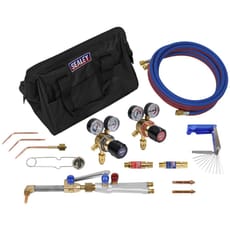
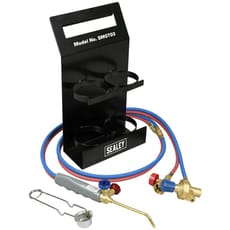
Welding tool sets provide a comprehensive collection of essential equipment for oxy-acetylene gas welding and cutting applications. These complete kits typically include regulators, torches, hoses, nozzles, flashback arrestors, and ignition devices, delivering everything required to perform professional welding, brazing, and metal cutting tasks. Designed for both fabrication workshops and on-site applications, welding tool sets eliminate the need to source individual components separately, ensuring compatibility between all elements of the system whilst offering excellent value compared to purchasing items individually.
The sets available from Tooled-Up.com feature single or twin-stage regulators with dual gauges to monitor both cylinder pressure and working pressure, giving precise control over gas flow. Quality welding tool kits include EN 730 compliant safety features such as flashback arrestors and non-return valves, protecting both equipment and operators from dangerous reverse gas flow. Most comprehensive sets incorporate multiple nozzle sizes for welding and cutting torches, allowing users to tackle various material thicknesses and applications with a single kit.
Professional welding tool sets arrive in organised storage bags or cases, keeping all components protected during transport and storage whilst ensuring easy identification of equipment. This organised approach proves particularly valuable for mobile welders and maintenance engineers who work across multiple sites and require portable, reliable welding equipment that can withstand the rigours of professional use.
Jargon Buster
- Flashback Arrestor: A critical safety device fitted between the regulator and hose that prevents flames from travelling back through the hose towards the gas cylinder in the event of a flashback, protecting against potentially catastrophic cylinder explosions.
- Single-Stage Regulator: A pressure regulator that reduces cylinder pressure to working pressure in one step. Suitable for most general welding applications where constant precision isn't critical, these regulators are simpler and more economical than twin-stage alternatives.
- Working Pressure: The reduced gas pressure delivered to the torch, typically measured in bar or PSI, which determines flame characteristics and heat output. Different applications require specific working pressures for optimal results.
- Cutting Attachment: A specialised torch component designed for cutting rather than welding, featuring an oxygen blast lever that delivers a high-pressure stream to oxidise and blow away molten metal during cutting operations.
- Non-Return Valve (Check Valve): A one-way valve fitted in the gas hose that prevents gases from flowing backwards, stopping oxygen and acetylene from mixing within the hoses where they could create explosive conditions.
- Nozzle Size: Indicates the orifice diameter and heat output capacity of welding and cutting tips, with different sizes suited to various material thicknesses. Larger nozzles produce more intense flames for thicker materials.
Who Uses Welding Tool Sets?
- General fabricators and metalworkers in engineering workshops
- Agricultural engineers performing field repairs on farm machinery
- Automotive restorers and classic car enthusiasts
- Plumbers and heating engineers for pipework brazing and soldering
- Maintenance fitters in manufacturing and industrial facilities
- Plant and machinery mechanics requiring portable cutting equipment
- Steel erectors and structural metalwork contractors
- Railway maintenance teams for track and infrastructure work
- Demolition contractors requiring cutting capabilities
- DIY enthusiasts undertaking metalwork projects and sculpture
- Educational institutions teaching welding and fabrication skills
How to Choose the Right Welding Tool Sets
Consider the primary applications you'll be performing—whether predominantly welding, cutting, or a combination of both. Comprehensive sets with both welding torches and cutting attachments offer maximum versatility, whilst basic welding-only kits suit those with specific requirements. Evaluate the range of nozzle sizes included, as this determines the material thickness capacity you can effectively work with.
Safety compliance should be paramount when selecting welding equipment. Tooled-Up stocks sets with EN 730 compliant flashback arrestors and integrated check valves, which are essential for safe operation and may be required for insurance purposes in professional settings. Verify that regulators feature clear, readable gauges showing both cylinder and working pressures, enabling precise gas flow control.
Hose length proves important for practical working—5-metre twin hoses provide good reach for workshop use, whilst longer hoses benefit mobile applications. Check that hoses incorporate proper strain relief fittings and are manufactured to relevant British Standards. For professional tradespeople, consider sets supplied with robust storage bags or cases that protect components during transportation and keep everything organised on busy sites.
Brand reputation matters significantly with gas welding equipment. Established manufacturers like Sealey produce reliable, well-engineered sets with readily available spare parts and consumables. Consider future requirements for replacement nozzles, check valves, and other consumable components when making your selection.
Popular Accessories
- Replacement welding and cutting nozzles in various sizes
- Spare flashback arrestors and non-return valves
- Tip cleaners and reaming tools for nozzle maintenance
- Welding goggles with appropriate shade ratings
- Striker/spark lighters as replacements
- Hose repair kits and replacement hose sections
- Regulator repair kits and replacement gauges
- Welding gloves providing heat and spark protection
- Fire-resistant welding blankets and curtains
- Gas cylinder trolleys for safe transport
- Key/spanner sets for cylinder valve operation
- Soapstone markers and metal scribers
Safety Information
Oxy-acetylene welding equipment requires strict adherence to safety protocols due to the hazardous nature of compressed gases and open flames. Always ensure flashback arrestors are correctly fitted and in good working condition—these devices are critical for preventing potentially fatal incidents. Never use damaged or worn hoses, and regularly inspect all connections for leaks using approved leak detection fluid, never naked flames.
Maintain adequate ventilation when welding, as fumes can be hazardous. Comply with HSE guidance regarding fume extraction and respiratory protection where necessary. Wear appropriate personal protective equipment including welding goggles with correct shade ratings (typically shade 5 for gas welding), heat-resistant gloves, and flame-retardant clothing. Never wear synthetic fabrics that can melt onto skin.
Store gas cylinders securely in upright positions, away from heat sources and properly restrained. Acetylene cylinders must always remain upright, even during use. Ensure fire extinguishers rated for gas fires are readily accessible in welding areas. Operators should receive proper training in gas welding techniques and safety procedures before using equipment—consider City & Guilds or equivalent welding qualifications for professional applications.
Frequently Asked Questions
What's the difference between welding and cutting with oxy-acetylene equipment?
Welding uses a flame to melt and join metals together, requiring a standard welding torch with appropriately sized nozzles. Cutting employs a specialised cutting attachment that combines a heating flame with a high-pressure oxygen jet to oxidise and blow away metal, effectively slicing through steel plate and section. Many comprehensive tool sets include both capabilities.
Do I need different regulators for oxygen and acetylene?
Yes, absolutely. Oxygen and acetylene require dedicated regulators designed specifically for each gas, as they operate at different pressures and have distinct safety requirements. Oxygen regulators must be completely oil-free to prevent combustion risks. Quality welding tool sets include the correct regulator for each gas with appropriate connection threads—oxygen uses right-hand threads whilst acetylene uses left-hand threads to prevent dangerous cross-connection.
How often should flashback arrestors be replaced?
Flashback arrestors should be replaced immediately after any flashback incident, as the internal mechanisms may be compromised even if external damage isn't visible. As preventative maintenance, manufacturers typically recommend replacement every five years, though this depends on usage intensity. Regular visual inspection for damage, corrosion or contamination is essential, and any suspect arrestors should be replaced immediately as they're critical safety devices.
Can I use oxy-acetylene equipment on all metals?
Oxy-acetylene welding works excellently on mild steel, which is its primary application, and is also suitable for cast iron, copper, brass, and bronze. However, it's less suitable for stainless steel, aluminium, and other specialist alloys, which are better joined using TIG or MIG welding processes. For cutting applications, oxy-acetylene effectively cuts carbon steels but cannot cut stainless steel or non-ferrous metals like aluminium, as these don't oxidise in the same manner.
What nozzle size should I start with as a beginner?
For general learning and working with mild steel between 1-6mm thick (the most common thickness range for beginners), a medium-sized nozzle (typically size 13 or equivalent, depending on manufacturer numbering systems) provides a good starting point. Complete welding tool sets usually include three or more nozzle sizes, allowing you to experiment and determine which works best for your specific applications. Thinner materials require smaller nozzles with gentler flames, whilst thicker sections need larger nozzles producing more concentrated heat.