
Wheelbarrows

Pay in 3 interest-free payments on purchases from £20-£3000 with  . Learn more.

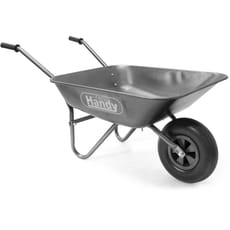
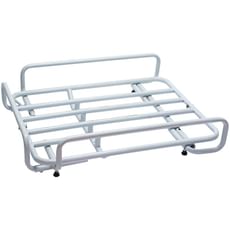
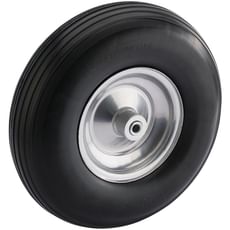
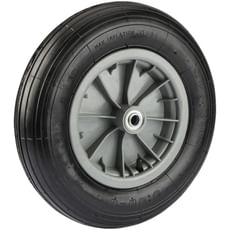
Loading...
End of content
Error - No more pages to load
About Wheelbarrows
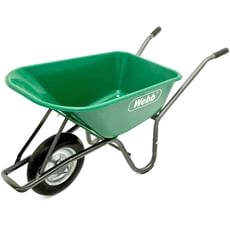
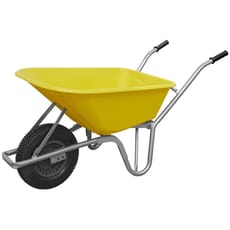
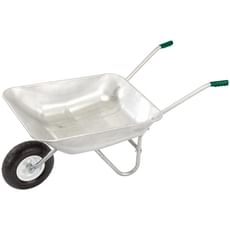
Wheelbarrows remain one of the most essential manual handling tools for anyone working outdoors, whether on construction sites, in landscaping projects, or maintaining gardens. These single-wheeled transport solutions enable users to move heavy loads of soil, aggregate, building materials, rubble and garden waste with minimal physical strain. The classic wheelbarrow design – featuring a tray or pan supported by a wheel at the front and two handles at the rear – has proven its worth over centuries of use, though modern innovations have significantly improved their durability, capacity and ease of use.
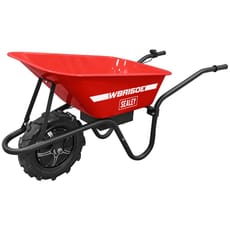
The selection at Tooled-Up.com includes traditional galvanised steel wheelbarrows for heavy-duty contractor use, lightweight plastic tray models for garden maintenance, and even cutting-edge cordless electric wheelbarrows from manufacturers like Makita that eliminate the physical effort of pushing altogether. Capacities range from compact 85-litre garden barrows to substantial 400-litre contractor models capable of handling 750kg loads. Modern wheelbarrows increasingly feature puncture-proof solid wheels or twin pneumatic tyres for improved stability, whilst premium models offer reinforced frames, ergonomic handles and tipping mechanisms for efficient material discharge.
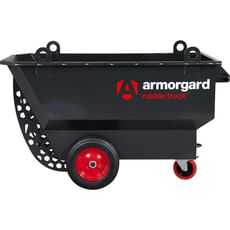
Beyond the traditional wheelbarrow format, this category also encompasses specialist variations such as powered wheelbarrows with battery-operated drive systems, heavy-duty rubble trucks with crane lift eyes for site work, and modular systems with interchangeable frames for different load types. Whether you're a landscaper moving topsoil, a builder transporting bricks and mortar, or a homeowner tackling garden clearance, selecting the right wheelbarrow significantly improves productivity whilst reducing the risk of strain injuries.
Jargon Buster
- Pneumatic Tyres – Air-filled rubber tyres that provide excellent shock absorption and smooth movement over uneven ground, though vulnerable to punctures from sharp objects like nails or thorns.
- Solid Wheels – Puncture-proof wheels made from solid rubber or foam-filled tyres that eliminate deflation issues, ideal for building sites with debris or thorny vegetation, though they provide less cushioning than pneumatic alternatives.
- Galvanised Pan – A wheelbarrow tray treated with a protective zinc coating to prevent rust and corrosion, essential for longevity when used with wet materials like concrete or exposed to outdoor weather conditions.
- Load Capacity – The maximum weight a wheelbarrow can safely carry, typically ranging from 80kg for lightweight garden models to 200kg or more for heavy-duty contractor wheelbarrows.
- Tipping Mechanism – An integrated feature allowing the pan to be easily tilted forward for controlled discharge of contents without lifting or manoeuvring the entire wheelbarrow.
- Twin-Wheel Design – Wheelbarrows fitted with two wheels instead of one, providing enhanced stability when stationary and making them easier to load and unload, though slightly less manoeuvrable than single-wheel designs.
Who Uses Wheelbarrows?
Wheelbarrows serve an enormous range of professionals and enthusiasts across multiple sectors:
- Builders and Construction Workers – transporting bricks, blocks, sand, cement, aggregate and rubble around building sites
- Landscapers and Groundskeepers – moving topsoil, turf, paving slabs, decorative stone and landscaping materials
- Gardeners and Horticulturalists – shifting compost, mulch, plants, pots and garden waste to compost heaps or disposal areas
- Agricultural Workers and Smallholders – transporting feed, bedding, manure and harvested crops around farms and allotments
- Groundworkers and Civil Engineers – handling ballast, hardcore and excavated material on infrastructure projects
- Maintenance Contractors – clearing debris, moving equipment and transporting materials during property maintenance work
- DIY Enthusiasts and Homeowners – tackling garden projects, landscaping improvements and home renovation tasks
- Waste Management Operatives – collecting and transporting site waste, particularly on projects without vehicle access
How to Choose the Right Wheelbarrows
Intended Use and Environment: Consider whether you need a wheelbarrow primarily for garden use with lighter loads like compost and leaves, or heavy-duty construction work involving bricks, concrete and rubble. Building sites require galvanised steel pans with reinforced frames, whilst garden maintenance typically suits lighter plastic tray models.
Pan Material and Capacity: Galvanised steel pans offer superior durability and can handle abrasive materials and high temperatures from fresh concrete or mortar. Plastic pans are lighter, rust-proof and adequate for garden waste and lighter materials. Capacity typically ranges from 85 to 120 litres for domestic use, up to 200+ litres for professional contractor models.
Wheel Type and Configuration: Pneumatic air-filled tyres provide the smoothest ride over rough terrain and absorb shocks well, but require maintenance and can puncture. Solid rubber or foam-filled wheels available from Tooled-Up eliminate puncture concerns – essential for sites with nails, screws or thorny vegetation. Twin-wheel designs offer excellent stability for loading and unloading but sacrifice some manoeuvrability compared to traditional single-wheel models.
Frame Construction: Look for robust tubular steel frames with strong welds and reinforced stress points where the pan attaches. Contractor-grade wheelbarrows feature thicker gauge steel and additional bracing. Ergonomic handle grips reduce hand fatigue during extended use, whilst properly balanced designs minimise lifting strain.
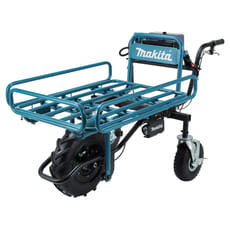
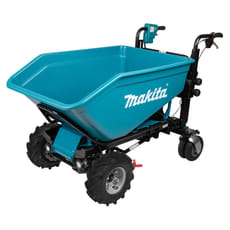
Powered vs Manual: Battery-powered wheelbarrows like the Makita DCU180 and DCU604 models eliminate pushing effort entirely, with motorised drive systems particularly valuable when regularly transporting heavy loads uphill or over long distances. These cordless options run on standard 18v LXT battery platforms, though they represent a significantly higher investment than manual alternatives.
Special Features: Heavy-duty models may include tipping mechanisms for controlled discharge, crane lift eyes for mechanical handling, rubber protection buffers, and stackable designs for efficient storage. Consider whether features like replaceable wearing parts (wheels, handles) are readily available for your chosen model.
Popular Accessories
- Replacement Wheels – both pneumatic and solid spare wheels to maintain wheelbarrow functionality after wear or damage
- Inner Tubes – for repairing punctured pneumatic tyres rather than replacing entire wheels
- Puncture Repair Kits – essential for maintaining air-filled tyres on site
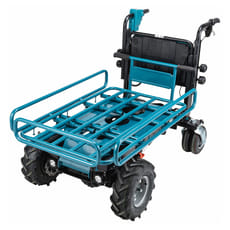
- Alternative Frame Systems – interchangeable bucket frames and pipe frames for Makita powered wheelbarrows to suit different load types
- Work Gloves – protective gloves from brands like Portwest and Scruffs for safe manual handling
- Hi-Vis Workwear – essential PPE when operating wheelbarrows on busy construction sites
- Tarpaulins and Dust Sheets – for covering loads during transport or protecting stored materials
- Battery Packs – additional 18v LXT batteries for extended runtime with cordless wheelbarrow models
Safety Information
Load Limits and Distribution: Never exceed the manufacturer's stated load capacity, as overloading compromises stability and can cause frame failure or loss of control. Distribute weight evenly across the pan and keep loads centred to maintain balance. Heavy, compact loads are safer than awkwardly shaped materials that may shift during transport.
Manual Handling Technique: Use proper lifting technique when picking up wheelbarrow handles – bend your knees, keep your back straight and lift with your legs rather than your back. The HSE recommends assessing manual handling tasks to minimise injury risk, and powered wheelbarrows should be considered for regular heavy loads or where operators have mobility limitations.
Site Awareness: Maintain clear vision over your load and watch for pedestrians, obstacles and ground hazards. Be particularly cautious on slopes, ramps and uneven surfaces where wheelbarrows can tip or become difficult to control. Wear steel toe-capped safety boots in case of dropped loads, and use high-visibility clothing on busy sites.
Maintenance Checks: Regularly inspect frames for cracks or damage, ensure handles are securely attached, check wheel condition and tyre pressure where applicable, and verify that nuts and bolts remain tight. Clean wheelbarrows after use with corrosive materials like cement or fertiliser to prevent deterioration.
Frequently Asked Questions
What's the difference between a wheelbarrow and a builder's barrow?
The terms are often used interchangeably, though "builder's barrow" typically refers specifically to heavy-duty contractor models with galvanised steel pans, robust frames and higher load capacities designed for construction site use, whilst "wheelbarrow" encompasses both professional and lighter domestic garden models.
Should I choose pneumatic or solid wheels?
Pneumatic air-filled tyres provide better shock absorption and smoother movement over rough ground, making them ideal for general purpose use. Solid wheels are puncture-proof and maintenance-free, making them the better choice for building sites with sharp debris, working around thorny plants, or applications where reliability is paramount and you cannot risk deflation.
How do battery-powered wheelbarrows work?
Cordless wheelbarrows like those from Makita feature electric motors powered by rechargeable 18v lithium-ion batteries that drive the wheel, eliminating the need to push. Users simply walk behind guiding the wheelbarrow whilst the motor handles propulsion. The Makita DCU604 twin-battery model offers extended runtime and additional power for heavier loads or inclines.
What capacity wheelbarrow do I need?
For domestic garden use, an 85-100 litre capacity is typically sufficient for moving compost, leaves and light materials. Serious gardeners and landscapers benefit from 100-120 litre models. Professional builders and contractors should look at 120-200+ litre capacity wheelbarrows that can handle bulk materials efficiently whilst remaining manoeuvrable on site.
Can I leave my wheelbarrow outside?
Galvanised steel wheelbarrows are designed to withstand outdoor storage, though their lifespan will be extended if kept under cover when not in use. Plastic pan models are weather-resistant but UV exposure will eventually cause brittleness. Always store wheelbarrows upright or inverted to prevent water accumulation, and release pressure from pneumatic tyres during extended storage periods to prevent flat spots developing.