

Wing Nuts
Pay in 3 interest-free payments on purchases from £30-2000 with  . Learn more.

 Loading...
End of content
Error - No more pages to load
About Wing Nuts
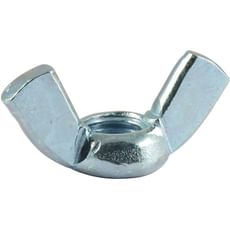
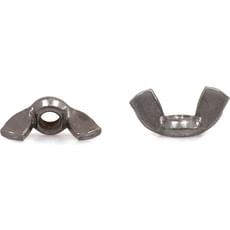
Wing nuts are specialised fasteners featuring two flat, wing-like projections extending from opposite sides of a central threaded hub. These distinctive wings allow for easy hand-tightening and removal without requiring spanners or wrenches, making them ideal for applications where frequent adjustment or disassembly is necessary. The design enables quick finger-tight fastening on bolts and threaded rods, providing a practical solution for temporary assemblies, access panels, and equipment that requires regular maintenance.
The selection at Tooled-Up.com includes wing nuts manufactured from various materials to suit different environmental conditions and load requirements. Stainless steel options, including A2 304 and A4 316 grades, offer excellent corrosion resistance for outdoor applications and marine environments. Brass wing nuts provide superior resistance to tarnishing whilst maintaining good conductivity, making them suitable for electrical enclosures. Bright zinc plated steel wing nuts deliver cost-effective fastening solutions for general purpose applications where moderate corrosion protection is sufficient.
Available in standard metric thread sizes, these fasteners are manufactured to precise specifications ensuring reliable thread engagement and consistent performance. Whether securing temporary guards on workshop machinery, fastening inspection covers on electrical equipment, or assembling jigs and fixtures, wing nuts provide the convenience of tool-free operation whilst maintaining secure fastening under appropriate load conditions.
Jargon Buster
- A2 304 Stainless Steel
- An austenitic stainless steel grade offering good corrosion resistance in most environments. Suitable for general outdoor use but not recommended for marine or highly corrosive conditions.
- A4 316 Stainless Steel
- A marine-grade stainless steel containing molybdenum for enhanced corrosion resistance. Ideal for coastal locations, chemical plants, and environments with chlorides or acidic conditions.
- Bright Zinc Plated
- A steel fastener coated with a thin layer of zinc through electroplating, providing moderate corrosion protection and a shiny finish. Modern variants use trivalent chromium (Cr3) plating, which is more environmentally friendly than hexavalent chromium.
- Metric Thread
- A thread system based on millimetre measurements, denoted as M followed by the nominal diameter (e.g., M6, M8). The standard thread pitch is implied unless otherwise specified.
- Light Duty Fastener
- A fastening component designed for applications with minimal vibration and moderate loading. Not suitable for structural connections or high-stress applications requiring locking features.
- Hand-Tight
- The level of tightness achievable using fingers only, without tools. Provides sufficient clamping force for many non-critical applications but less torque than spanner-tightened fasteners.
Who Uses Wing Nuts?
- Electricians and Electrical Engineers: Securing access panels on distribution boards, control cabinets, and equipment enclosures requiring frequent inspection
- Mechanical Fitters and Maintenance Engineers: Fastening guards, covers, and inspection hatches on machinery and plant equipment
- Fabricators and Welders: Creating jigs, fixtures, and temporary assemblies in workshop environments
- Theatre and Event Technicians: Assembling lighting rigs, staging components, and sound equipment requiring quick setup and breakdown
- Cabinet Makers and Joiners: Securing templates, guides, and temporary fixtures during manufacturing processes
- DIY Enthusiasts and Home Improvers: General projects requiring adjustable or removable fastenings around the home and garden
- Model Makers and Hobbyists: Building adjustable mechanisms and assemblies requiring frequent adjustment
- Marine Engineers: Fastening components on boats and watercraft using stainless steel variants for corrosion resistance
How to Choose the Right Wing Nuts
Material Selection: Consider the environmental conditions where the wing nut will be used. A4 316 stainless steel provides the best corrosion resistance for marine and coastal applications. A2 304 stainless steel suits general outdoor use and most industrial environments. Brass offers excellent corrosion resistance with aesthetic appeal for visible applications. Bright zinc plated steel represents the economical choice for indoor or protected outdoor locations.
Thread Size and Pitch: Match the wing nut thread size precisely to the bolt or threaded rod specification. Standard metric threads are most common in UK applications. Verify both the nominal diameter (e.g., M6, M8) and pitch to ensure proper thread engagement and prevent cross-threading.
Wing Span and Grip: Larger wing spans provide better leverage for hand-tightening, making them preferable for applications requiring frequent adjustment. Consider the available clearance around the fastening point to ensure the wings can rotate freely without obstruction.
Load Requirements: Wing nuts are classified as light-duty fasteners suitable for hand-tightening only. They should not be used in structural applications, high-vibration environments, or where precise torque specifications are critical. For such applications, standard hexagon nuts with appropriate locking features are more appropriate.
Quantity Requirements: Tooled-Up stocks wing nuts from brands including Sirius and Timco in various pack sizes. Consider purchasing in bulk for ongoing projects or maintenance operations to ensure consistency and cost-effectiveness.
Popular Accessories
- Threaded Rod and Studding: Available in matching materials and thread sizes for complete fastening assemblies
- Washers: Flat washers distribute load and protect surfaces; spring washers add resistance to loosening
- Standard Hexagon Nuts: For alternating with wing nuts or permanent sections of assemblies
- Bolts and Machine Screws: Matching fasteners in corresponding materials and thread specifications
- Thread Cutting Taps and Dies: For creating custom threaded components to suit wing nut applications
- Nylon Insert Nuts: For sections requiring vibration resistance alongside tool-free wing nut access points
Frequently Asked Questions
Can wing nuts be used outdoors?
Yes, but material selection is crucial. Stainless steel wing nuts (A2 304 or A4 316 grades) provide excellent corrosion resistance for outdoor applications. Bright zinc plated versions offer moderate protection suitable for sheltered outdoor locations. For coastal or marine environments, always specify A4 316 marine-grade stainless steel.
How tight should wing nuts be fastened?
Wing nuts should be tightened finger-tight only – as much as can be achieved using the wings without tools. They are not designed for high-torque applications. If greater clamping force is required, consider using standard hexagon nuts with a spanner or socket instead.
What's the difference between A2 and A4 stainless steel wing nuts?
A2 304 stainless steel offers good general corrosion resistance suitable for most indoor and outdoor applications. A4 316 stainless steel contains molybdenum, providing superior resistance to chlorides and acids, making it essential for marine environments, coastal locations, and chemical processing applications. A4 fasteners typically cost more but are necessary in harsh corrosive conditions.
Are wing nuts suitable for vibrating equipment?
No, wing nuts are light-duty fasteners unsuitable for applications subject to significant vibration, which can cause them to loosen over time. For vibrating equipment, use standard hexagon nuts with appropriate locking features such as nylon inserts, spring washers, or thread-locking compounds.
Can I use wing nuts on electrical equipment?
Yes, wing nuts are commonly used on electrical enclosures, distribution boards, and equipment housings where frequent access is required for inspection and maintenance. Ensure the wing nut material is appropriate for the environment – brass or stainless steel are often preferred for electrical applications due to their corrosion resistance and non-magnetic properties.