

Workmate Benches

Pay in 3 interest-free payments on purchases from £20-£3000 with  . Learn more.
 Loading...
End of content
Error - No more pages to load
About Workmate Benches
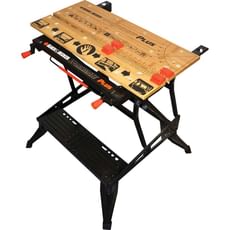
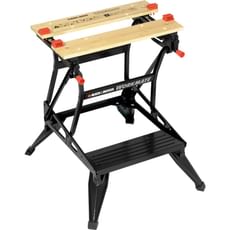
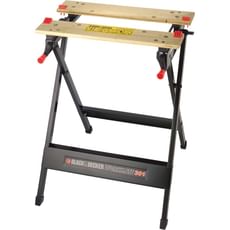
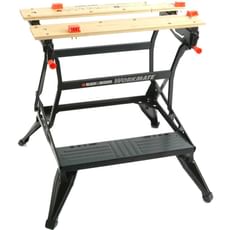
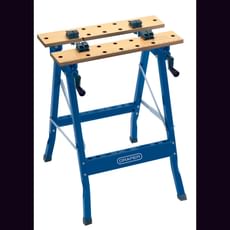
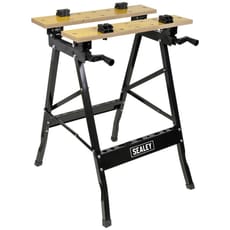
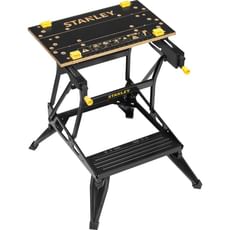
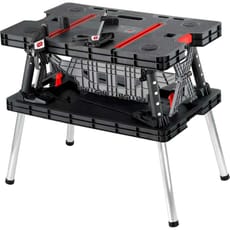
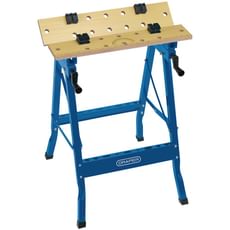
Workmate benches are portable workbenches designed to provide a stable, versatile work surface wherever it's needed. Perfect for tradespeople working on site or DIY enthusiasts tackling projects in garages, gardens or workshops, these folding benches combine practicality with portability. The defining feature of a workmate bench is its ability to fold flat for storage and transport, whilst providing a robust clamping system that holds materials securely during cutting, drilling, sanding and assembly work.
The typical workmate bench features a split worktop with adjustable clamps or vices that can grip materials of varying thicknesses between the two halves. This dual-surface design allows users to secure timber, sheet materials, pipes and other workpieces without needing separate clamping equipment. Most models incorporate height-adjustable legs, enabling comfortable working whether standing or sitting, and many include additional features such as swivel pegs for irregular shapes, jaw retention grooves for secure grip, and reinforced frames for heavy-duty applications.
Tooled-Up.com stocks workmate benches from leading manufacturers including Black & Decker – whose iconic Workmate range has been the benchmark for portable workbenches since the 1970s – alongside models from Draper, Festool, Bosch, Sealey and Stanley. Options range from lightweight, entry-level benches ideal for occasional DIY tasks through to professional-grade models with impressive load capacities and advanced clamping systems suited to demanding trade applications.
Jargon Buster
- Dual Height: A workbench feature allowing the legs to be locked at two different heights, typically around 635mm for seated work and 815mm for standing tasks, providing ergonomic flexibility for different applications.
- Clamping Capacity: The maximum width of material that can be gripped between the bench's jaws or worktop halves, usually ranging from 140mm to 360mm depending on the model's size and specification.
- Load Capacity: The maximum weight the bench can safely support when used as a work surface, typically between 100kg for lightweight models and 250kg for heavy-duty professional benches.
- Jaw Retention Grooves: V-shaped or profiled channels machined into the clamping surfaces that prevent cylindrical or irregularly shaped objects from rolling or slipping during work.
- Swivel Pegs: Adjustable plastic or metal pegs that can be positioned at various points on the worktop to provide additional support or clamping points for awkwardly shaped workpieces.
- Folding Frame: The collapsible leg assembly that allows the entire workbench to fold flat, typically using a scissor-action mechanism with locking pins or latches for quick deployment and storage.
Who Uses Workmate Benches?
- Carpenters and joiners working on-site who need portable work surfaces for cutting and assembly tasks
- Decorators and painters requiring stable platforms for preparing materials and supporting equipment
- Maintenance engineers who need a temporary workbench at multiple locations throughout a facility
- Plumbers and electricians using the bench to support and secure materials during cutting and fitting
- Garden landscapers needing outdoor work surfaces that can be easily transported between jobs
- DIY enthusiasts with limited workshop space who require a bench that stores away when not in use
- Hobbyists and crafters looking for a stable work surface for woodworking, model making and other projects
- Mobile tradespeople such as mobile mechanics or repair technicians working from vans
- Site supervisors and contractors needing versatile temporary work surfaces for multiple trades
- Allotment holders and gardeners requiring a portable bench for potting, repairs and outdoor projects
How to Choose the Right Workmate Benches
Work Type and Frequency: Consider whether you'll use the bench occasionally for light DIY tasks or regularly for professional trade work. Entry-level models like the Black & Decker WM301 suit occasional users, whilst heavy-duty options such as the Black & Decker WM825 Professional or Festool MFT/3 provide the robustness required for daily trade use.
Load Capacity: Match the bench's weight rating to your typical workload. Standard models handle 100-150kg, sufficient for most DIY and light trade applications, but heavier professional benches supporting 200-250kg are essential when working with sheet materials, heavy timber or mounting power tools like mitre saws.
Clamping Range and System: Evaluate the maximum clamping width against the materials you commonly work with. Basic models offer 140-200mm capacity, adequate for standard timber sections, whilst wider-opening benches accommodate sheet materials and larger workpieces. Dual-crank systems provide superior clamping force compared to single-handled mechanisms.
Height Adjustability: Dual-height models are worth the extra investment if you'll be switching between seated detail work and standing tasks. Fixed-height benches are lighter and simpler but less versatile. Some professional models, available from Tooled-Up, offer infinitely adjustable heights for precise ergonomic positioning.
Portability Requirements: Weight matters if you'll frequently transport the bench between sites. Lightweight aluminium frames are easier to carry but may sacrifice some stability, whilst steel-framed models provide greater rigidity at the expense of portability. Consider folded dimensions if boot space or storage area is limited.
Work Surface Features: Look for benches with jaw retention grooves if you work with pipes, dowels or irregular shapes. Swivel pegs add versatility for unusual clamping requirements. Some models include integrated rulers, angle guides or accessory mounting points that enhance functionality for specific tasks.
Build Quality and Durability: Professional tradespeople should invest in robust models with reinforced frames, quality clamping mechanisms and replaceable components. Budget benches suit occasional use but may lack longevity under demanding conditions. Check frame material, joint construction and manufacturer warranty as quality indicators.
Popular Accessories
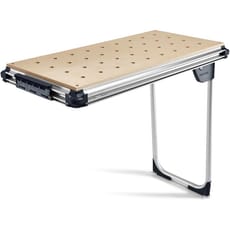
- Workbench extensions: Add-on worktop sections that increase the available work surface area for handling longer materials or larger projects
- Vice attachments: Supplementary vices and clamping accessories that mount to the bench for additional holding options
- Bench dogs and hold-downs: Pegs and clamps that insert into bench holes to secure workpieces flat against the surface
- Mitre saw mounts: Brackets and platforms designed to securely attach chop saws and mitre saws to the workbench
- Tool trays and organisers: Clip-on storage solutions for keeping hand tools, fasteners and accessories within reach
- Replacement jaws and pads: Spare clamping surfaces and protective covers to maintain gripping performance and prevent damage to finished materials
- Transport trolleys: Wheeled carriers that make moving heavier professional benches between locations easier
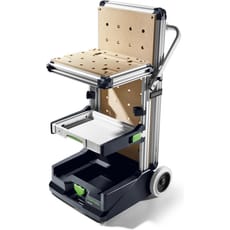
- Systainer storage: Integrated drawer systems and organisers, particularly for Festool Mobile Workshop configurations
- Anti-slip mats: Rubber or foam pads that prevent workpieces sliding on the bench surface during operations
Safety Information
Setup and Stability: Always ensure the workbench is fully deployed and locked before use. Check that all leg mechanisms are properly engaged and the frame is rigid. Position the bench on level, stable ground – uneven surfaces compromise stability and can cause the bench to tip during use. Never exceed the manufacturer's stated load capacity, as overloading can lead to collapse or structural failure.
Clamping Safely: Secure workpieces firmly in the bench's clamping system before beginning any cutting, drilling or sanding operations. Inadequately secured materials can shift or rotate during work, potentially causing injury or damaging the workpiece. When using power tools with workmate benches, ensure the material is clamped well clear of the cutting line to prevent accidentally striking the bench surface or clamping mechanism.
Working Position: Position yourself to maintain good balance and avoid over-reaching across the bench. Ensure adequate space around the workbench for safe movement and tool operation. When working outdoors, be aware of unstable ground conditions, particularly after rain, and consider anchoring or weighting the bench if working in windy conditions.
Maintenance and Inspection: Regularly inspect the bench for damaged components, particularly the clamping mechanism, leg locks and frame joints. Worn or damaged parts should be replaced before continued use. Keep clamping surfaces clean and free from debris that could prevent proper grip. Lubricate moving parts according to manufacturer recommendations to ensure smooth operation and prevent premature wear.
Frequently Asked Questions
What's the difference between standard and professional workmate benches?
Professional models typically feature heavier-duty steel frames, higher load capacities (often 200kg+), more robust clamping mechanisms with dual cranks, and enhanced features such as wider clamping ranges, reinforced joints and replaceable components. Standard benches suit occasional DIY use with lighter materials, whilst professional versions withstand daily trade use and heavier workloads. The price difference reflects the improved durability and performance under demanding conditions.
Can I mount power tools like mitre saws to a workmate bench?
Many workmate benches can support benchtop power tools, but you must check the tool's weight against the bench's load capacity and ensure it's securely fastened. Some models include mounting points or accessory brackets specifically designed for this purpose. The Festool range, for example, incorporates features tailored to integrate with power tools. Always ensure the combined weight of tool and workpiece doesn't exceed capacity, and verify the bench provides adequate stability for the tool's operation.
How much weight can a typical workmate bench hold?
Load capacities vary significantly by model. Entry-level DIY benches typically support 100-150kg, mid-range models handle 150-200kg, and professional heavy-duty benches manage 200-250kg or more. These ratings apply when the bench is correctly set up on level ground. Remember that dynamic loads (such as vigorous sawing) can stress the frame more than static weight, so maintain a safety margin below the maximum rating for active work.
Are workmate benches suitable for outdoor use?
Yes, workmate benches are ideal for outdoor projects and many feature weather-resistant components. However, most aren't designed for permanent outdoor storage – prolonged exposure to moisture can cause rust on steel frames and degradation of wooden or composite work surfaces. After outdoor use, wipe down the bench and store it in a dry location. Some manufacturers apply protective coatings, but these may require maintenance to preserve long-term weather resistance.
What's the maximum width of material I can clamp in a workmate bench?
Clamping capacity varies by model, typically ranging from 140mm on compact benches to 360mm or more on larger professional units. The Black & Decker WM301 offers approximately 145mm capacity, whilst the WM825 Professional provides greater width for larger materials. Consider not just the maximum opening but also the effective clamping force across that range – wider openings may provide less gripping pressure at full extension. Check individual product specifications for precise measurements relevant to your materials.