

18v Planers

Pay in 3 interest-free payments on purchases from £20-£3000 with  . Learn more.
 Loading...
End of content
Error - No more pages to load
About 18v Planers
Cordless 18v planers have revolutionised woodworking on site and in the workshop, combining the power and precision of corded models with complete freedom of movement. These battery-powered tools are designed to shave, smooth, and reshape timber quickly and efficiently, making them essential equipment for carpenters, joiners, and serious DIY enthusiasts. Whether you're fitting doors, chamfering edges, or preparing timber for finishing, an 18v planer delivers professional results without the constraints of trailing cables or the need to locate 240v power sources on site.
The 18v platform has become the industry standard for cordless power tools, offering an ideal balance between power output, battery runtime, and tool weight. Modern brushless motor technology ensures these planers can tackle demanding tasks like rebating and bevelling hardwoods whilst maximising battery efficiency. The selection at Tooled-Up.com features leading manufacturers including Makita, DeWalt, Milwaukee, and Einhell, with models ranging from compact units for light trimming work through to heavy-duty planers capable of removing material at depths up to 2-3mm per pass.
Most 18v cordless planers feature double-edged tungsten carbide or HSS blades, adjustable depth settings, and integrated dust extraction ports for cleaner working. Many professional-grade models now incorporate brushless motors for extended runtime and longer tool life, making them viable alternatives to mains-powered 240v planers for all but the most intensive production work. With planing widths typically ranging from 82mm to 110mm, these versatile tools handle everything from door edges to wider timber boards with equal competence.
Jargon Buster
- Brushless Motor: Advanced motor technology that eliminates carbon brushes, resulting in more efficient power delivery, longer runtime per battery charge, reduced maintenance, and extended tool lifespan. Brushless planers typically offer 25-50% more runtime than brushed equivalents and are the preferred choice for professional tradespeople.
- Planing Width: The maximum width of timber that can be planed in a single pass, typically ranging from 82mm on compact models to 110mm on professional planers. Wider planing widths reduce the number of passes needed for boards and door edges, improving productivity on site.
- Rebating Depth: The maximum depth a planer can cut when its side fence is removed, allowing it to create rebates (recessed edges) in timber. Most 18v planers offer rebating depths between 9-25mm, ideal for fitting hinges and creating joinery details without additional tooling.
- Amp Hour (Ah): A measure of battery capacity indicating how long a battery can deliver current. Higher Ah ratings (4.0Ah, 5.0Ah, 6.0Ah) provide longer runtime between charges, crucial for sustained planing work on site where recharging opportunities may be limited.
- No-Load Speed: The maximum revolutions per minute (RPM) the planer blade rotates when not cutting material, typically between 14,000-17,000 RPM for 18v models. Higher speeds generally produce smoother finishes but may increase tear-out on difficult grain patterns.
- Chamfer Groove: A V-shaped groove machined into the front shoe of the planer, allowing you to create accurate 45-degree chamfers on timber edges in a single pass without additional setup or jigs, essential for decorative edge treatments and arrises.
Who Uses 18v Planers?
Cordless planers are essential tools for a wide range of tradespeople and applications:
- Carpenters and Joiners: For fitting doors, trimming architraves, preparing timber for joinery work, and creating precise bevels and chamfers on site installations where portability is paramount.
- Shopfitters and Fitters: Essential for adjusting timber components during commercial fit-outs where access to 240v mains power may be restricted or impractical, particularly in retail refurbishment projects.
- Kitchen and Bathroom Installers: For scribing worktops, adjusting door frames, and trimming timber fillers to achieve perfect fits around uneven walls in residential installations.
- Decking Specialists: Smoothing rough-sawn timbers, chamfering deck board edges, and preparing posts and rails for finishing treatments, often working outdoors where cordless operation is essential.
- Renovation Contractors: Removing old paint and varnish, levelling uneven floorboards, and restoring historic timber features in period properties where preserving original materials is critical.
- Window Fitters: Adjusting timber window frames and sills, creating precise bevels for weatherproofing, and fitting replacement components in both new builds and renovation projects.
- Stage and Set Builders: Rapid preparation of construction timber for theatrical and events installations where portability and speed are paramount, often working to tight deadlines.
- DIY Enthusiasts: Home woodworkers undertaking projects like furniture restoration, garden construction, and home improvements where cordless convenience enhances productivity without professional budgets.
How to Choose the Right 18v Planers
Selecting the appropriate cordless planer depends on several key factors that affect performance and suitability for your specific applications:
Planing Width and Depth: Consider the typical dimensions of timber you'll be working with. Compact 82mm planers suit door edges and narrow stock, whilst 110mm models handle wider boards more efficiently. Maximum planing depth (typically 1-3mm) determines how quickly you can remove material. Professional users working with hardwoods or undertaking heavy stock removal should prioritise models offering 2mm+ depth capacity for faster work.
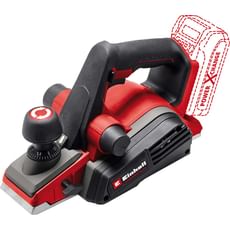
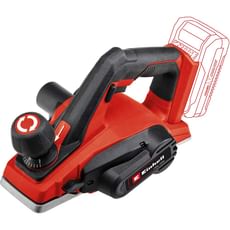
Motor Technology: Brushless motors represent the current benchmark for professional cordless planers, delivering superior runtime, power, and longevity compared to brushed alternatives. The initial investment is worthwhile for tradespeople using their planer daily. DIY users with lighter, intermittent requirements may find brushed motor models like the Einhell TE-PL 18/82 Li offer adequate performance at lower cost.
Battery Compatibility: If you already own 18v tools from Makita, DeWalt, Milwaukee, or Einhell, choosing a planer from the same platform eliminates duplicate battery investment and simplifies charging logistics on site. Tooled-Up stocks bare units (body only) and complete kits with batteries and chargers to suit different requirements.
Rebating and Chamfering Features: Models with removable side fences enable rebating work essential for hinge recesses and joinery. Integrated chamfer grooves in the front shoe facilitate quick 45-degree bevelling without additional setup. Assess whether these features align with your typical applications before committing to a particular model.
Dust Extraction: Quality dust extraction improves visibility of cut lines and maintains healthier working conditions in accordance with HSE guidelines. Look for models with effective dust ports compatible with standard vacuum hose diameters (typically 35mm). Some professional planers include dust bags for applications where vacuum extraction isn't practical.
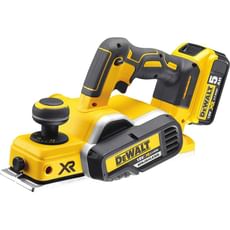
Build Quality and Ergonomics: Aluminium front and rear shoes ensure durability and maintain flatness over time, crucial for accurate results. Rubberised grips, balanced weight distribution, and intuitive depth adjustment mechanisms reduce fatigue during extended use. The DeWalt DCP580 and Milwaukee M18 BP exemplify ergonomic designs optimised for all-day professional use.
Popular Accessories
- Spare Planer Blades: Double-edged reversible blades in tungsten carbide or high-speed steel (HSS). Keep spare sets on hand to maintain productivity when blades dull. TCT blades offer extended life when working with abrasive materials or treated timber.
- Blade Setting Jig: Ensures replacement blades are installed accurately parallel to the shoe, preventing uneven cutting and poor surface finish. Essential for maintaining professional results and maximising blade life.
- Additional 18v Batteries: Higher capacity batteries (5.0Ah or 6.0Ah) extend runtime for demanding applications. Having spare charged batteries eliminates downtime on site, particularly important for first-fix carpentry work.
- Dust Extraction Hoses and Adaptors: Connect your planer to workshop vacuums or site dust extractors for cleaner, healthier working in compliance with COSHH regulations. Adaptors accommodate different hose diameters.
- Parallel Side Fence: Maintains consistent distance from timber edges when rebating or creating grooves, ensuring uniform results across the workpiece length without constant measurement.
- Protective Carrying Cases: Tooled-Up.com offers dedicated storage solutions for transporting your planer between sites, preventing damage and keeping accessories organised in vans and workshops.
- Sharpening Stones: For honing blade edges between replacements, extending blade life and maintaining cut quality, particularly valuable for HSS blades used in production environments.
Safety Information
Planers are powerful cutting tools requiring proper safety precautions to prevent injury:
- Personal Protective Equipment: Always wear safety glasses or a full face shield to protect against wood chips and dust. Hearing protection is advisable during extended use. Avoid loose clothing, jewellery, and gloves that could catch in the rotating blade.
- Dust Control: Wood dust presents respiratory hazards, particularly from hardwoods and treated timber. Connect to suitable dust extraction where possible and wear appropriate respiratory protection in accordance with HSE guidance and COSHH regulations. Ensure adequate ventilation when working indoors.
- Workpiece Security: Always secure timber firmly before planing using clamps, vices, or appropriate work supports. Never attempt to hold small pieces by hand. Ensure the workpiece is free from nails, screws, and other metal objects that could damage blades or cause dangerous kickback.
- Battery Safety: Remove the battery when changing blades, making adjustments, or clearing blockages. Store batteries away from metal objects that could cause short circuits. Use only manufacturer-approved batteries and chargers to maintain warranty coverage and safe operation.
- Blade Handling: Planer blades are extremely sharp. Use proper blade-changing tools supplied with the machine and handle with care. Dispose of worn blades safely, wrapped to prevent injury to other site workers or waste handlers.
- Operating Technique: Allow the planer to reach full speed before contacting the workpiece. Maintain firm grip with both hands and ensure stable footing. Never reach underneath the tool or place hands near the cutting area whilst the blade is rotating.
Frequently Asked Questions
Can 18v cordless planers handle hardwoods like oak and beech?
Yes, modern 18v planers, particularly brushless models from Makita, DeWalt, and Milwaukee, deliver sufficient power for hardwoods. For best results, take shallower passes (0.5-1mm) and ensure batteries are fully charged. Higher capacity batteries (5.0Ah+) maintain consistent power delivery through demanding applications without voltage drop under load.
How long will an 18v planer run on a single battery charge?
Runtime depends on battery capacity, material hardness, and depth of cut. As a guideline, a 4.0Ah battery typically provides 15-25 minutes of continuous planing in softwood, or around 15-30 door edges. A 5.0Ah battery extends this by approximately 25%. Keep a spare battery charged for uninterrupted work on site, particularly important for first-fix carpentry schedules.
What's the difference between brushed and brushless 18v planers?
Brushless motors use electronic controllers instead of carbon brushes, delivering 25-50% longer runtime per charge, more consistent power under load, and significantly extended tool life. They require no brush replacement and generate less heat. Brushless planers cost more initially but offer better value for professional users through superior performance and durability over years of daily use.
Do I need to buy batteries and charger separately?
Many planers are available as "body only" (bare units) for tradespeople who already own compatible batteries within that manufacturer's platform. Complete kits including batteries and charger are also offered, typically better value for those starting with a new battery system. Check product listings carefully to understand what's included before purchasing.
How often should I replace or sharpen planer blades?
Blade life varies with usage intensity and material type. Professional users working daily may need to replace or rotate blades weekly, whilst DIY users might get months of service. Signs requiring blade attention include tear-out, burning, or requiring excessive pressure. Most planer blades are double-edged and reversible, effectively doubling their lifespan before replacement is necessary.