

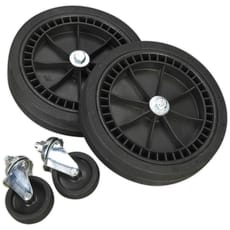
Air Compressor Wheels

Pay in 3 interest-free payments on purchases from £20-£3000 with  . Learn more.
 Loading...
End of content
Error - No more pages to load
About Air Compressor Wheels
Air compressor wheels are practical mobility solutions designed to convert static compressor units into easily manoeuvrable workshop equipment. These retrofit wheel kits enable tradespeople, mechanics, and workshop users to reposition heavy air compressors around their workspace without the physical strain of lifting or dragging substantial machinery. Rather than investing in an entirely new portable compressor, adding a quality wheel kit provides an economical alternative that significantly improves workplace efficiency and equipment accessibility. The ability to move your compressor to different locations means compressed air can be delivered exactly where it's needed, reducing hose lengths and improving overall workshop organisation.
A typical air compressor wheel kit comprises robust castors or wheels engineered to support the considerable weight of compressor units, along with all necessary mounting brackets, fixings, and hardware. Quality kits feature reinforced steel mounting brackets, heavy-duty wheels capable of handling rough workshop floors, and secure locking mechanisms to ensure stability during operation. Most configurations include a combination of fixed and swivel castors – typically two fixed rear wheels for directional stability and two swivel front castors for manoeuvrability – though some kits offer four swivel castors for maximum movement flexibility in confined spaces.
Available from Tooled-Up.com are wheel kits from leading manufacturers like Sealey, specifically designed to accommodate various compressor sizes and models. These kits are engineered to handle the unique challenges of compressor mobility, including vibration during operation, weight distribution, and the need for secure positioning. Whether you're working in an automotive workshop, fabrication shop, construction site cabin, or home garage, adding wheels to your fixed compressor transforms your workspace flexibility without compromising safety or equipment integrity.
Jargon Buster
- Load Capacity: The maximum weight each wheel or complete wheel kit can safely support, typically measured in kilograms. Essential for matching the wheel kit to your compressor's weight, including oil and any mounted accessories. Always choose a kit rated above your compressor's actual weight to provide a safety margin.
- Swivel Castors: Wheels mounted on rotating brackets that allow 360-degree movement, enabling compressors to be manoeuvred in tight spaces and navigated around workshop obstacles. Particularly useful for positioning equipment in crowded workshops or tight corners.
- Locking Mechanism: An integrated braking system that prevents wheel movement once the compressor is positioned. Critical for safety during operation, as compressor vibration and air hose tension can otherwise cause unwanted movement. Quality kits typically feature locks on at least two wheels.
- Fixed Wheels: Non-rotating wheels that only move in a straight line, typically used in combination with swivel castors. This configuration provides directional stability whilst maintaining overall manoeuvrability, preventing the compressor from wandering during movement.
- Mounting Bracket: The reinforced metal framework that attaches wheels to the compressor base, designed to distribute weight evenly and maintain structural integrity. Brackets must be compatible with your compressor's base configuration and mounting points.
- Tread Material: The wheel surface composition, such as rubber, polyurethane, or solid plastic. This affects floor protection, noise levels during movement, rolling resistance, and suitability for different workshop surfaces. Rubber offers quieter operation, whilst polyurethane provides greater durability and chemical resistance.
Who Uses Air Compressor Wheels?
- Automotive Mechanics: Workshop technicians who need to reorganise service bays or reposition compressors between different work areas to accommodate varying job requirements
- Fabricators and Welders: Metalworkers requiring compressed air at various locations for grinding, plasma cutting, air-powered tools, and pneumatic equipment throughout larger workshop spaces
- Carpenters and Joiners: Tradespeople using air-powered nailers, staplers, and brad guns who benefit from mobile compressor access across workshop areas without excessive hose lengths
- Vehicle Body Shops: Panel beaters and spray painters who need optimal compressor positioning when using spray guns, air sanders, and pneumatic bodywork tools
- Manufacturing Facilities: Maintenance teams managing multiple compressor units across production floors where equipment layout flexibility is essential
- DIY Enthusiasts: Home workshop users working in smaller garage spaces where permanent compressor positioning isn't practical and equipment must be stored away between projects
- Site Contractors: Builders and tradespeople working from portable workshops, site cabins, or temporary facilities who need to reconfigure equipment layouts regularly
- Agricultural Engineers: Farm workshop mechanics who service varied equipment and require compressor mobility around larger workshop buildings
How to Choose the Right Air Compressor Wheels
Weight Capacity: Begin by determining your compressor's total weight when filled with oil and with any attached accessories or filtration equipment. Choose a wheel kit with a load capacity exceeding this weight by at least 25-30% to provide a safety margin and account for dynamic loading during movement. Sealey wheel kits, for example, are engineered to handle common fixed compressor weights whilst providing appropriate safety margins.
Compatibility and Mounting: Verify that the wheel kit is compatible with your specific compressor model's mounting points and base configuration. Measure the distance between existing mounting holes and check the base thickness to ensure the brackets will fit correctly. Some manufacturers specify which compressor models their wheel kits accommodate, simplifying the selection process. If mounting holes don't exist, you may need to drill appropriate fixing points, ensuring you don't compromise the tank integrity.
Wheel Configuration: Consider whether you need all swivel castors for maximum manoeuvrability or a combination of fixed and swivel wheels for better directional control. For larger compressors, a setup with two fixed rear wheels and two swivel front castors typically provides the best balance of stability and manoeuvrability. All-swivel configurations suit smaller units in very confined spaces where 360-degree movement is essential.
Wheel Material and Size: Rubber wheels offer better floor protection, shock absorption, and quieter operation than hard plastic alternatives, making them ideal for frequent movement across workshop floors. Polyurethane wheels provide greater durability, chemical resistance, and leave fewer marks on clean surfaces, suiting industrial environments where oil and coolant contamination is common. Larger diameter wheels (100mm+) roll more easily over uneven surfaces, expansion joints, and workshop debris, whilst wider wheels provide better stability for top-heavy compressor units.
Locking Mechanisms: Ensure at least two wheels feature reliable locking brakes. This is critical for safety during compressor operation, preventing unwanted movement caused by vibration or hose tension. Quality locks should engage positively and be easily operated by foot, allowing you to secure the compressor quickly once positioned.
Floor Surface Considerations: Consider your workshop flooring type. Softer rubber wheels work excellently on concrete and provide good vibration damping, but may mark smooth surfaces. Harder polyurethane wheels suit smoother floors, offer easier rolling on level surfaces, and resist workshop chemicals and oils. For outdoor or rough surface use, larger pneumatic tyres may be appropriate, though these are less common for fixed compressor applications.
Popular Accessories
- Anti-Vibration Pads: Rubber or foam pads placed under wheels or compressor feet to reduce noise transmission and vibration when the compressor is stationary and operating
- Hose Reels: Wall-mounted or portable reels that keep air hoses organised, prevent tangling during compressor movement, and extend hose life by preventing kinks and damage
- Air Hoses: Additional or replacement hoses in various lengths to maximise the working radius of your newly mobile compressor, reducing the need to reposition the unit frequently
- Quick-Connect Fittings: Fast-coupling connectors and airline manifolds that make it easier to switch between multiple pneumatic tools without repositioning the compressor
- Compressor Covers: Protective dust covers to keep debris and moisture out of your compressor when stored between uses or in multi-use workshop spaces
- Pneumatic Tool Oil: Regular maintenance products to keep both your compressor and air-powered tools operating efficiently and extending equipment life
- Pressure Regulators and Gauges: Monitoring and control equipment to maintain optimal air pressure for different applications and prevent tool damage from excessive pressure
- Inline Air Filters: Filtration equipment to remove moisture and contaminants from compressed air, particularly important for spray painting and precision pneumatic tools
Safety Information
Installation Precautions: Always disconnect the compressor from 240v mains power and fully release all air pressure before attempting to fit wheel kits. Ensure the unit is properly supported throughout installation using appropriate lifting equipment or assistance to prevent crushing injuries. Follow the manufacturer's torque specifications when tightening mounting bolts – insufficient tightening can lead to wheel detachment during movement, whilst over-tightening may damage the compressor tank or mounting points. Never attempt installation alone on larger units.
Weight Distribution and Stability: Be aware that adding wheels raises the compressor's centre of gravity, potentially making it more prone to tipping, particularly with vertical tank designs. Never attempt to move a compressor whilst it's running or under pressure, as this creates instability and safety hazards. Ensure all locking mechanisms are fully engaged before operating the compressor to prevent vibration-induced movement. Some high centre-of-gravity compressors may not be suitable for wheel retrofitting – consult manufacturer guidance before proceeding.
Movement and Handling: Exercise caution when moving compressors on slopes, ramps, or uneven surfaces. The combined weight can make control difficult on inclines, and momentum can cause injury if the unit runs away. Always have adequate assistance when manoeuvring heavy equipment, and keep clear pathways free from trip hazards, hoses, and obstacles. Plan your route before moving the compressor and ensure adequate clearance through doorways and around corners.
Regular Maintenance and Inspection: Periodically check wheel mounting bolts for tightness, as vibration during operation can cause fixings to loosen over time. Inspect wheels for wear, damage, or flat spots that could affect stability or manoeuvrability. Verify that locking mechanisms function correctly and engage fully. Replace worn or damaged wheels promptly, as failure during movement could result in the compressor tipping, causing equipment damage or serious injury. The Tooled-Up range of wheel kits includes quality components designed for longevity, but regular inspection remains essential.
HSE Considerations: Employers should conduct risk assessments before retrofitting wheels to compressors, particularly in commercial workshops. Consider manual handling implications, workspace layout, and whether wheel addition creates any new hazards. Ensure operators are trained in safe compressor movement and positioning procedures.
Frequently Asked Questions
Can I fit wheels to any air compressor model?
Not all compressors are suitable for wheel retrofitting. The compressor must have appropriate mounting points or a base design that accommodates wheel brackets. Some vertical tank compressors with high centres of gravity may become unstable with wheels added. Always verify compatibility with your specific model before purchasing. The Sealey wheel kit available at Tooled-Up.com is designed to fit most static compressors, but checking your compressor's base configuration and weight is essential. Consult your compressor's manual or contact the manufacturer if you're uncertain about suitability.
Will adding wheels affect my compressor's stability during operation?
Quality wheel kits with proper locking mechanisms should not compromise stability when correctly installed and with locks engaged. The key is ensuring at least two wheels have functioning locks that are applied whenever the compressor is operating. However, raising the compressor does slightly elevate the centre of gravity, so it's important to position the unit on level ground and avoid areas where it might be knocked or jarred during operation. Properly installed wheels actually improve safety by eliminating the need to drag or lift heavy compressors.
What's the difference between rubber and polyurethane wheels?
Rubber wheels are typically softer, providing better shock absorption, quieter operation, and superior grip on smooth surfaces. They're ideal for compressors moved frequently across workshop floors and reduce vibration transmission. Polyurethane wheels are more durable, resistant to workshop chemicals and oils, and roll more easily on level surfaces, making them suitable for industrial environments where floor contamination is common. Polyurethane also leaves fewer marks on clean or painted floors. Consider your workshop conditions when choosing – rubber for general workshop use, polyurethane for industrial or potentially contaminated environments.
How much weight can typical air compressor wheels support?
Most quality wheel kits designed for workshop compressors support between 100-300kg total load capacity, with individual wheel ratings typically between 50-100kg. The Sealey wheel kit, for example, is engineered to handle common fixed compressor models whilst providing a suitable safety margin. Always verify the specific load rating of your chosen wheel kit and compare it against your compressor's actual weight (including oil and accessories) plus at least 25-30% safety margin. Under-rating wheels creates serious safety hazards and may lead to wheel failure.
Do I need any special tools to fit air compressor wheels?
Most wheel kits require only standard workshop tools for installation, typically including spanners, socket sets (usually 10-17mm sizes), and possibly a drill if new mounting holes are needed. The supplied fixings and brackets are generally designed for straightforward installation. You may need an adjustable wrench, spirit level to ensure correct alignment, and appropriate personal protective equipment. Some installations benefit from a second person to support the compressor during fitting. Always refer to the manufacturer's instructions, as some installations may require specific techniques to ensure safe and secure mounting. Never attempt installation without proper equipment or assistance for larger units.