

Air Line Filters
Pay in 3 interest-free payments on purchases from £30-2000 with  . Learn more.
 Loading...
End of content
Error - No more pages to load
About Air Line Filters
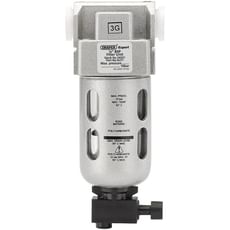
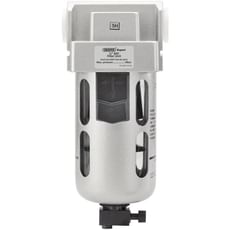
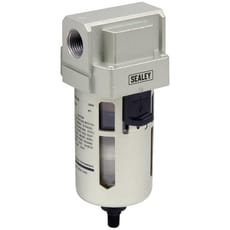
Air line filters are essential components in compressed air systems, designed to remove moisture, oil vapour, and particulate contaminants from the air supply before it reaches pneumatic tools and equipment. Without proper filtration, compressed air can carry water droplets, rust particles, and oil residue that damage expensive air tools, reduce their performance, and compromise the quality of finishing work. Whether operating a spray gun, impact wrench, nail gun, or any other air-powered tool, a quality air line filter protects your investment and ensures consistent, reliable operation across automotive workshops, construction sites, and manufacturing facilities.
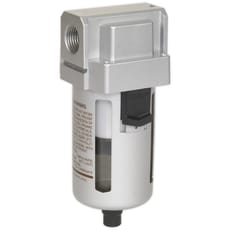
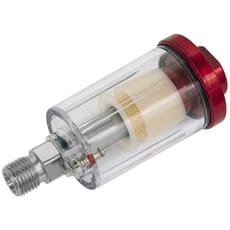
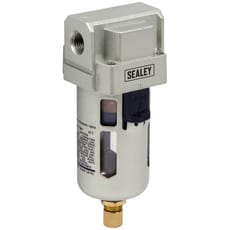
The selection at Tooled-Up.com includes compact inline water trap filters for basic moisture removal, standard air line filters for general workshop use, and heavy-duty filtration units with regulators and lubricators for professional environments. Leading brands like Sealey and Draper offer filters in various BSP sizes, from 1/4" connections suitable for individual tools through to 1/2" and larger fittings for workshop airline systems. Many models feature easily replaceable filter elements, transparent bowls for monitoring contamination levels, and adjustable regulators to maintain optimal working pressure for different applications.
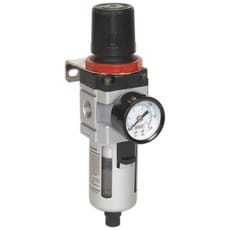
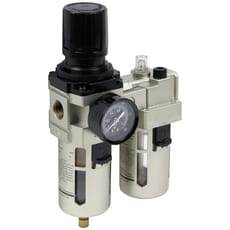
Air line filters can be mounted directly at the point of use on individual tools or integrated into a fixed airline installation serving multiple workstations. Combination FRL units incorporating filters, pressure regulators, and automatic lubricators provide complete air preparation in a single compact assembly, making them ideal for spray booths, automotive workshops, and manufacturing environments where air quality directly affects output quality and surface finish standards.
Jargon Buster
- BSP (British Standard Pipe): The thread standard used on compressed air fittings in the UK. Common sizes include 1/4" BSP for portable tools and 1/2" BSP for fixed installations.
- Micron Rating: Indicates the size of particles the filter can trap, typically ranging from 5 to 40 microns. Lower numbers provide finer filtration, essential for spray painting and precision air tools.
- CFM (Cubic Feet per Minute): Measures the air flow capacity of a filter. The filter must match or exceed your compressor and tool requirements to avoid pressure drops and reduced performance.
- Water Trap/Moisture Separator: A basic filter design that uses centrifugal force and baffles to separate water droplets from compressed air, collecting condensation in a drainage bowl.
- FRL Unit: An integrated assembly combining a Filter, Regulator, and Lubricator to provide complete air preparation and conditioning in one unit.
- Auto Drain: A mechanism that automatically expels collected water and contaminants from the filter bowl, eliminating the need for manual drainage in high-usage environments.
Who Uses Air Line Filters?
Air line filters are indispensable across numerous trades and industries where compressed air powers tools and equipment:
- Automotive Technicians and Body Shops: Essential for spray painting, panel work, and operating pneumatic tools without contamination
- Vehicle Mechanics: Protecting impact wrenches, ratchets, and air-powered diagnostic equipment from moisture damage
- Carpenters and Joiners: Ensuring nail guns and brad nailers operate smoothly without jamming or performance issues
- Fabricators and Welders: Maintaining clean air supply for plasma cutters and pneumatic grinders
- Decorators and Paint Sprayers: Critical for achieving flawless finishes without water spots or contamination
- Manufacturing and Production Facilities: Protecting automated pneumatic systems and production line equipment
- Maintenance Engineers: Servicing and maintaining compressed air systems across industrial sites
- DIY Enthusiasts: Home workshop users operating air compressors and pneumatic tools
- Agricultural and Plant Operators: Maintaining air systems on farm machinery and construction equipment
How to Choose the Right Air Line Filters
Connection Size: Match the BSP thread size to your airline fittings. Quarter-inch BSP suits portable applications and individual tools, whilst 1/2" BSP and larger connections are necessary for workshop installations serving multiple outlets. Always verify your existing fittings before purchasing to ensure compatibility with your compressed air system.
Flow Rate Capacity: The filter must handle your compressor's output and tool requirements without creating a bottleneck. Check the CFM rating against your compressor specifications and the combined demand of tools you'll run simultaneously. Undersized filters cause pressure drops that reduce tool performance and efficiency.
Filtration Level Required: Basic water traps suffice for impact tools and general workshop applications, but spray painting, HVLP guns, and precision pneumatic equipment demand finer filtration to remove oil mist and smaller particles. Consider the micron rating appropriate for your most demanding application—typically 40 micron for general use, down to 5 micron for spray finishing work.
Additional Features: Combination FRL units available from Tooled-Up provide pressure regulation and tool lubrication alongside filtration, simplifying your air preparation system. Transparent bowls allow visual monitoring of contamination levels, whilst metal bowls offer greater durability in demanding environments. Auto-drain mechanisms reduce maintenance requirements in high-usage situations.
Mounting Options: Inline filters install directly in the air hose for portable use, whilst bracket-mounted units suit permanent workshop installations. Consider accessibility for routine drainage and filter element replacement when planning installation locations.
Brand Quality: Established manufacturers like Sealey and Draper offer reliable performance with readily available replacement elements and spare parts, ensuring long-term serviceability of your investment.
Popular Accessories
- Replacement Filter Elements: Spare cartridges for maintaining filtration efficiency as elements become saturated with contaminants
- Air Pressure Regulators: Control and stabilise working pressure for optimal tool performance and longevity
- Airline Lubricators: Deliver precise oil misting to pneumatic tools requiring lubrication
- Quick Release Couplings: Enable rapid tool changes whilst maintaining sealed connections
- Air Hose and Reels: Quality reinforced hose and retractable reels for organised workspace
- Pressure Gauges: Monitor system pressure for efficient compressor and tool operation
- Wall Mounting Brackets: Secure installation hardware for permanent workshop setups
- Drain Valves and Auto-drain Kits: Simplify maintenance and prevent water accumulation
- PTFE Thread Tape: Ensure leak-free connections on all BSP threaded fittings
Safety Information
Whilst air line filters themselves are passive safety devices, proper installation and maintenance are essential for safe compressed air system operation. Always isolate and depressurise the air system before installing, removing, or servicing filters. Compressed air can cause serious injury if fittings are loosened under pressure. Ensure all threaded connections are properly sealed with appropriate PTFE tape or thread sealant to prevent air leaks.
Regularly drain moisture from filter bowls to prevent overflow and maintain filtration efficiency. Accumulated water under pressure can spray forcefully when released—point the drain valve away from yourself and others when opening. Replace filter elements according to manufacturer recommendations, as saturated elements reduce filtration effectiveness and can collapse under pressure.
Never exceed the maximum working pressure rating marked on the filter body, typically 10 bar or 145 psi for standard units. Ensure pressure regulators are correctly set for your tools and applications. Mount filters securely using appropriate brackets, particularly in vibration-prone environments. Check transparent bowls regularly for cracks or damage that could cause sudden failure under pressure. When using filters with spray equipment, ensure adequate ventilation to prevent accumulation of flammable vapours. Follow HSE guidelines for workplace air quality and compressed air system safety in commercial and industrial settings.
Frequently Asked Questions
How often should I drain my air line filter?
This depends on usage intensity and ambient humidity. In typical workshop conditions, check and drain the filter bowl daily during periods of regular use. In high-humidity environments or with heavy use, you may need to drain several times per day. Transparent bowls make monitoring straightforward—drain when condensation becomes visible or reaches the indicated level to maintain optimal filtration performance.
What's the difference between a water trap and a proper air line filter?
A basic water trap or moisture separator removes liquid water droplets through centrifugal action but doesn't filter fine particles or oil mist. A proper air line filter includes filtration media (typically a replaceable element) that captures solid contaminants and aerosol oils down to a specific micron rating, providing comprehensive air cleaning essential for precision tools and spray equipment.
Can I install an air line filter on its side or upside down?
No, air line filters must be installed vertically with the bowl at the bottom to allow gravity-assisted drainage of captured moisture and contaminants. Installing filters horizontally or inverted prevents proper drainage and can allow water to pass through to your tools, defeating the purpose of filtration and potentially damaging pneumatic equipment.
Do I need a filter if my compressor has a built-in water separator?
Yes, especially for quality-critical work. Tank-mounted separators remove bulk moisture but don't address condensation that forms as air cools in the delivery lines, nor do they filter particles and oil carried over from the compressor. Point-of-use filters provide essential final-stage filtration, particularly important for spray guns, sanders, and precision pneumatic equipment.
How do I know when to replace the filter element?
Replace elements according to the manufacturer's schedule, typically every 6-12 months depending on usage. Signs that replacement is overdue include reduced air pressure at tools despite adequate compressor output, visible discolouration of the filter media, or decreased filtration effectiveness evidenced by water or contamination reaching tools. Keep spare elements on hand to minimise downtime during routine maintenance.