

Air Scalers & Surface Preparators

Pay in 3 interest-free payments on purchases from £20-£3000 with  . Learn more.

 Loading...
End of content
Error - No more pages to load
About Air Scalers & Surface Preparators
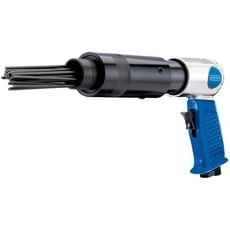
Air scalers and surface preparators are indispensable pneumatic tools for heavy-duty surface preparation, rust removal, and cleaning tasks across industrial, automotive, and construction environments. These compressed air-powered tools excel at eliminating paint, corrosion, weld splatter, and stubborn surface contaminants where manual methods would prove inefficient and exhausting. The category encompasses air needle scalers—which deploy rapid reciprocating needle bundles to chip away unwanted materials—and sandblasting equipment that propels abrasive media at high velocity to clean and profile surfaces for coating applications.
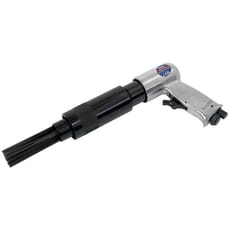
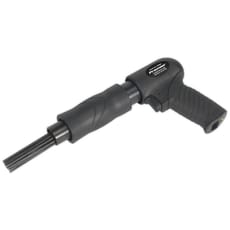
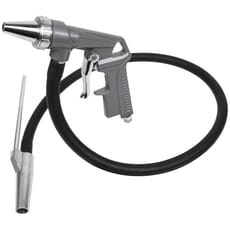
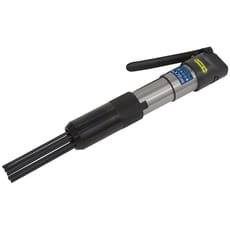
Air needle descalers are available in various configurations, including pistol-grip designs that offer excellent control for vertical and overhead work, plus straight-body models that provide superior access in confined spaces. The percussive action of hardened steel needles makes them particularly effective on welded assemblies, structural steelwork, and concrete surfaces. Sandblasting kits take a different approach, using compressed air to project abrasive materials such as aluminium oxide, glass beads, or steel grit onto surfaces, delivering superior coverage on larger areas whilst creating the precise surface profile required for subsequent coating systems to achieve proper adhesion.
The selection at Tooled-Up.com features reliable brands including Sealey and Draper, with options ranging from entry-level recirculating sandblasting kits through to professional-grade needle scalers built for demanding daily site use. Whether you're preparing structural steel for protective coatings, removing corrosion from vehicle chassis components, or cleaning concrete before repair applications, you'll find surface preparation equipment suited to your specific requirements and working conditions.
Jargon Buster
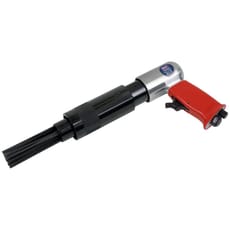
- Needle Scaler – A pneumatic tool fitted with a bundle of hardened steel needles (typically 19 needles) that reciprocate rapidly to chip away rust, paint, and scale without damaging the underlying metal substrate.
- Flux Chipper – A specialised needle scaler designed specifically for removing welding flux and slag from weld seams. Often features a more concentrated needle pattern for precision work on weld beads and heat-affected zones.
- CFM (Cubic Feet per Minute) – The measurement of air consumption for pneumatic tools. Air scalers typically require 4-7 CFM at 90 PSI, so matching your air compressor's output capacity to the tool's requirements is essential for optimal performance and preventing duty cycle interruptions.
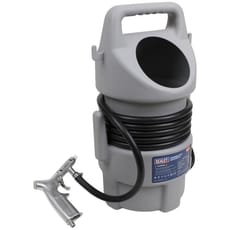
- Recirculating Sandblaster – A contained sandblasting system that collects and recycles the abrasive media, reducing material waste and dust emission. Ideal for workshop environments where COSHH-compliant dust control is paramount.
- Abrasive Media – The material propelled during sandblasting operations, including aluminium oxide, glass beads, steel grit, or walnut shells. Different media types suit different applications and create varying surface profiles measured in microns.
- Surface Profile – The texture or roughness created on a surface after preparation, critical for paint and coating adhesion. Different specifications are required under BS/EN coating standards, with typical profiles ranging from 25-100 microns depending on the coating system.
Who Uses Air Scalers & Surface Preparators?
- Welders and Fabricators – removing welding slag, flux, and splatter from finished welds and preparing joints for subsequent passes on structural and manufacturing projects
- Bodywork Specialists and Vehicle Restorers – stripping paint and rust from chassis, panels, and classic car restoration projects requiring bare metal preparation
- Steel Erectors and Structural Engineers – preparing structural steel for protective coatings and removing corrosion from existing frameworks on construction sites
- Shipbuilders and Marine Engineers – maintaining and preparing vessels, removing marine growth, rust, and old antifouling coatings in dockyard environments
- Industrial Maintenance Teams – routine descaling of machinery, tanks, pipework, and equipment in manufacturing facilities and processing plants
- Concrete Repair Specialists – preparing concrete surfaces, removing laitance, and creating mechanical key for repair mortars and protective coating applications
- Bridge and Infrastructure Maintenance – large-scale surface preparation on steel and concrete structures requiring recoating under highways maintenance contracts
- Pipeline Engineers – cleaning and preparing pipe sections for welding, inspection, and protective coating applications in oil, gas, and water infrastructure
- General Construction Tradespeople – site-based preparation work, cleaning tools and equipment, removing construction residues and preparing surfaces for finishing trades
How to Choose the Right Air Scalers & Surface Preparators
Air Compressor Compatibility: Verify your compressor's CFM output and working pressure before purchasing. Most needle scalers require 4-7 CFM at 90 PSI (6.3 bar) for continuous operation. Undersized compressors cause intermittent operation and reduced effectiveness. Sandblasting equipment typically demands substantially higher CFM ratings—check specifications carefully to ensure your existing compressed air system can support the tool without constant pressure drops.
Tool Configuration: Pistol-grip needle scalers offer excellent control and are ideal for vertical surfaces and overhead applications. Straight-body designs provide better access in confined spaces and prove more comfortable for horizontal surface work. Consider the working positions you'll encounter most frequently—fabrication benches favour straight models, whilst structural site work often benefits from pistol-grip versatility.
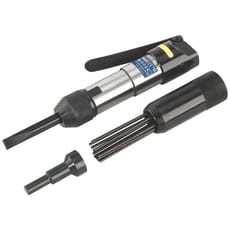
Application Type: Light surface rust and thin paint removal suits standard needle scalers available from Tooled-Up, whilst heavy mill scale and thick corrosion layers may require flux chippers with more aggressive needle configurations. For large area coverage or creating specific surface profiles for coating systems, sandblasting equipment proves significantly more efficient than needle scalers, particularly on complex shapes and large structural elements.
Needle Replacement and Running Costs: Needles are consumable items that wear progressively during use. Check availability and cost of replacement needle sets for your chosen model—Sealey tools benefit from readily available spare parts through UK distribution channels. Professional users should factor ongoing consumable costs into equipment selection, particularly for high-intensity applications that accelerate needle wear.
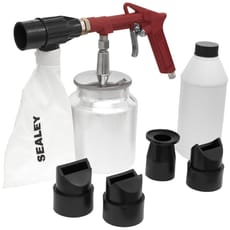
Dust and Debris Management: Needle scalers produce substantial debris and airborne dust. For workshop use, consider extraction requirements and HSE dust control regulations. Recirculating sandblasting kits like the Sealey SG10E contain dust more effectively than open systems, proving essential for COSHH compliance in enclosed spaces. Site-based work may require LEV (Local Exhaust Ventilation) depending on materials being removed.
Ergonomics and Vibration: Extended use of pneumatic scalers involves significant vibration exposure. Look for models with anti-vibration features and ergonomic soft-grip handles. Consider Hand-Arm Vibration Syndrome (HAVS) regulations if using these tools regularly—plan appropriate work-rest cycles as per HSE guidance and maintain exposure records for compliance purposes.
Popular Accessories
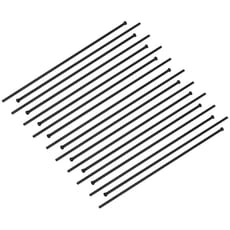
- Replacement Needle Sets – essential consumables to keep in stock; 19-piece sets are standard for most models, with Sealey offering model-specific replacement sets
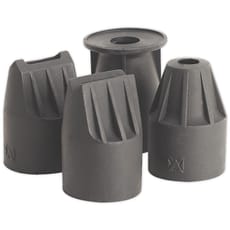
- Contoured Nozzle Sets – specialised nozzles for sandblasting equipment that improve efficiency on curved surfaces, pipe sections, and complex geometries
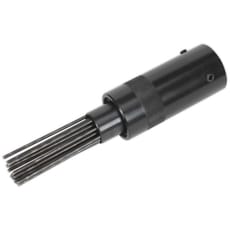
- Needle Descaler Adaptors – convert existing air tools to needle scaling function, offering versatility without purchasing dedicated equipment
- Abrasive Media – various grades of aluminium oxide, glass beads, or steel grit for different sandblasting applications and achieving specified surface profiles
- Air Line Filters and Regulators – ensure clean, dry air at consistent pressure for optimal tool performance and longevity, preventing moisture damage to internal components
- Quick-Release Couplings – quality brass or steel couplings speed up tool changes and reduce air leaks, improving workshop efficiency
- Inline Oilers – automatic lubrication systems that extend pneumatic tool life by delivering oil mist to internal moving parts during operation
- Breathing Masks and Face Protection – essential PPE rated for fine dust particles when using scalers or sandblasting equipment, with higher specifications required for hazardous materials
- Hearing Protection – needle scalers produce noise levels typically exceeding 85dB; quality ear defenders or moulded plugs are mandatory for HSE compliance
Safety Information
Personal Protective Equipment: Always wear appropriate safety glasses or full face protection when operating air scalers and surface preparators, as debris and particles are expelled at high velocity in unpredictable directions. Hearing protection is mandatory—these tools typically exceed 85dB and can reach 100dB in enclosed spaces. Respiratory protection rated for fine dust particles is essential, particularly when sandblasting or working with materials that may contain lead paint or other hazardous substances. Heavy-duty gloves reduce vibration transmission and protect against sharp debris and hot surfaces.
COSHH and Dust Control: Be aware of Control of Substances Hazardous to Health regulations when preparing surfaces that may contain lead paint, chromates, or other hazardous materials. Rust removal creates fine iron oxide particles requiring appropriate respiratory protection. Sandblasting generates substantial airborne dust requiring appropriate extraction, containment, or outdoor working with consideration for environmental discharge regulations. Never use silica sand for blasting in enclosed spaces due to serious respiratory hazards—use alternative media such as aluminium oxide or glass beads.
Hand-Arm Vibration: Prolonged use of needle scalers exposes operators to significant vibration levels. Follow HSE guidance on exposure action values (2.5 m/s²) and exposure limit values (5 m/s²), implementing appropriate work-rest cycles to remain within daily exposure limits. Maintain tools properly and replace worn needles promptly, as excessive wear increases vibration levels. Keep accurate records of exposure times if using these tools regularly as part of your trade—employers have legal obligations under Control of Vibration at Work Regulations 2005.
Air Supply Safety: Ensure compressed air lines are properly rated for working pressure and maintained in good condition. Never exceed the manufacturer's recommended operating pressure, as this can cause tool failure and projectile hazards. Install pressure regulators with gauge displays and check them regularly for accuracy. Whip checks or safety cables should secure all air hose connections to prevent dangerous whipping if couplings fail under pressure—a particular hazard on busy construction sites.
Frequently Asked Questions
What size air compressor do I need for a needle scaler?
Most needle scalers require 4-7 CFM at 90 PSI (6.3 bar) for continuous operation. A 50-litre compressor with a 2-3 HP motor and 240v power supply typically provides sufficient capacity for intermittent workshop use. For continuous professional site use, consider a larger 100-150 litre unit with higher CFM output to prevent duty cycle interruptions that reduce productivity. Always verify the specific tool's air consumption requirements against your compressor's FAD (Free Air Delivery) specifications—nominal tank size alone doesn't determine suitability.
How long do needles last in an air scaler?
Needle longevity depends heavily on usage intensity and materials being removed. Professional tradespeople working daily on heavy rust and mill scale might replace needles every few weeks, whilst occasional DIY users tackling light surface preparation may achieve months or years of service. Needles wear gradually from the working tips—replace the complete set when they've lost approximately 25-30mm of length or when scaling efficiency noticeably decreases. Uneven wear patterns indicate the tool requires servicing or internal component replacement.
Can I use a needle scaler on aluminium or soft metals?
Needle scalers are designed primarily for ferrous metals, concrete, and harder substrates. They will damage soft materials like aluminium, copper, and brass, causing pitting, work-hardening, and permanent surface damage that compromises structural integrity. For aluminium and non-ferrous metals, consider gentler methods such as nylon wire brushing, chemical stripping, or low-pressure media blasting with softer abrasives like plastic media, walnut shells, or bicarbonate of soda which won't deform the base material.
What's the difference between economy and professional sandblasting kits?
Economy recirculating kits like the Sealey SG10E suit occasional workshop use on smaller components, with contained operation that recycles media and controls dust emission effectively. Professional open-loop systems offer higher media flow rates, larger hopper capacity, more robust construction for site environments, and compatibility with a wider range of abrasive media types. Consider project scale and frequency—intermittent small jobs and restoration work suit economy kits, whilst trade users undertaking regular large-scale preparation benefit from professional specification equipment despite higher initial investment.
Do I need special training to use air scalers?
Whilst no formal certification is legally mandated for basic operation, HSE regulations require employers to provide adequate training, particularly regarding vibration exposure management, COSHH compliance for dust and hazardous materials, and proper PPE selection and use. Self-employed tradespeople should familiarise themselves with manufacturer instructions, relevant HSE guidance documents, and safe working practices before commencing work. Many trade colleges and tool suppliers offer practical demonstrations on proper technique to maximise effectiveness whilst minimising health risks.