

Automotive Fuses
Pay in 3 interest-free payments on purchases from £30-2000 with  . Learn more.


 Loading...
End of content
Error - No more pages to load
About Automotive Fuses
Automotive fuses are critical safety components that protect vehicle electrical circuits from overload and short circuit damage. When excessive current flows through a circuit due to a fault, the fuse element melts and breaks the connection, preventing damage to expensive electrical components and reducing fire risk. Whether you're a professional auto electrician, mobile mechanic, or DIY enthusiast maintaining your own vehicle, having the correct automotive fuses readily available is essential for quick diagnosis and effective repairs.
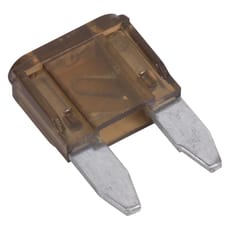
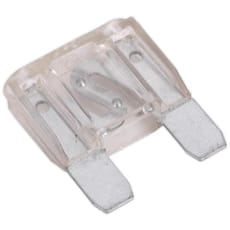
Modern vehicles incorporate increasingly sophisticated electrical systems, from basic lighting and horn circuits to complex engine management systems, infotainment units, climate control, and advanced driver assistance features. This complexity means contemporary cars typically use multiple fuse types and ratings throughout their electrical architecture. The most common types encountered are mini blade fuses for lower current circuits up to 30 amps, standard blade fuses (ATO/ATC) typically handling 1-40 amps, and maxi blade fuses designed for high-current applications up to 80 amps or more, such as alternator feeds and electric vehicle systems.
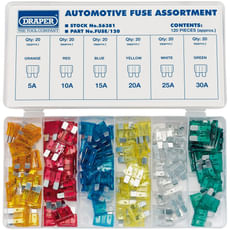
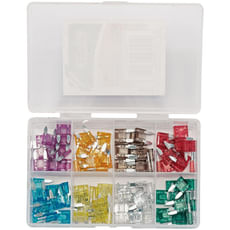
Tooled-Up.com stocks comprehensive automotive fuse assortments from trusted brands like Sealey and Draper, providing complete coverage of the most commonly needed ratings. These professionally organised kits are particularly valuable for mobile mechanics and workshop environments where servicing a wide variety of vehicle makes and models without delay is essential. Quality fuse assortments typically include colour-coded fuses in plastic compartment cases, with many incorporating fuse puller tools for safe removal from tight fuse boxes.
Jargon Buster
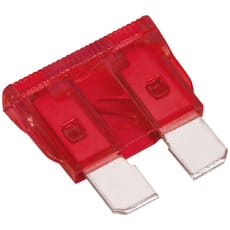
- Blade Fuse: The most prevalent automotive fuse design, featuring two metal prongs that plug into a fuse holder. Available in mini, standard (ATO/ATC), and maxi sizes with colour-coded bodies indicating their amperage rating for quick identification.
- Amperage Rating: The maximum current (measured in amps) that a fuse can safely carry before it blows. Always replace blown fuses with the exact same rating specified in your vehicle handbook - using a higher rated fuse can cause electrical damage or create fire hazards.
- Fuse Box: The central distribution point for a vehicle's electrical circuits, housing multiple fuses that protect different systems. Modern vehicles typically have multiple fuse boxes located in the engine bay and passenger compartment, with each position clearly labelled.
- Breaking Capacity: The maximum fault current a fuse can safely interrupt without causing dangerous arcing or fire hazards. Quality automotive fuses are specifically designed to handle the high currents that can occur during short circuit conditions in vehicle electrical systems.
- Colour Coding: Industry-standard colour system that makes identifying fuse ratings at a glance straightforward. For example, brown indicates 7.5A, red is 10A, blue is 15A, yellow is 20A, and green is 30A.
- Continuous Current: The steady electrical current a fuse can handle indefinitely without failing. Temporary current spikes, such as when starting motors or initially powering heated rear windows, are typically tolerated without blowing the fuse.
Who Uses Automotive Fuses?
- Auto Electricians: Specialists who diagnose and repair vehicle electrical systems, requiring comprehensive fuse assortments for various makes and models
- Mobile Mechanics: Travelling technicians who need portable fuse kits to handle electrical faults at customers' locations or roadside breakdowns
- Motor Vehicle Technicians: General mechanics in workshops and garages who encounter blown fuses during routine servicing, MOT preparation, and repairs
- Fleet Maintenance Teams: Those responsible for keeping commercial vehicle fleets operational, requiring bulk quantities of commonly used fuse ratings across multiple vehicles
- Agricultural Engineers: Technicians maintaining farm machinery, tractors, and agricultural equipment that use similar blade fuse systems
- Caravan and Motorhome Owners: Enthusiasts who maintain their own leisure vehicles and need replacement fuses for 12V electrical systems
- Car Enthusiasts and DIY Mechanics: Home mechanics who prefer to diagnose and fix their own electrical issues rather than visit garages
- Motor Trade Professionals: Dealership technicians, MOT testers, vehicle preparation specialists, and automotive parts retailers
How to Choose the Right Automotive Fuses
Selecting the correct automotive fuses requires careful consideration of several key factors to ensure safe and effective circuit protection:
Fuse Type and Size: Identify whether your vehicle uses mini, standard, or maxi blade fuses by checking your vehicle handbook or inspecting the existing fuse box. The physical size differs between types, so they're not interchangeable. Most modern cars use a combination of mini and standard blade fuses for different circuits.
Amperage Rating: This is the most critical specification - always replace blown fuses with the exact same amp rating. Using a higher rated fuse defeats the safety protection and risks damaging expensive electrical components or causing fires. Common ratings include 5A, 7.5A, 10A, 15A, 20A, 25A, and 30A for standard circuits, with higher ratings for power-hungry systems.
Assortment vs Individual Fuses: For professional use or if you maintain multiple vehicles, the fuse assortments available from Tooled-Up offer excellent value and comprehensive coverage of common ratings. DIY users with a single vehicle might prefer purchasing specific ratings in multi-packs. Look for assortments that include a fuse puller tool for safe removal from tight fuse boxes.
Quality and Brand: Invest in reputable brands like Sealey and Draper that manufacture fuses to automotive industry standards. Quality fuses provide consistent breaking characteristics and won't fail prematurely. Cheap alternatives may not blow when required or could cause dangerous arcing during fault conditions.
Quantity Requirements: Consider how many vehicles you service and how frequently you encounter blown fuses. Workshop environments benefit from larger 120-piece assortments, while mobile mechanics might prefer compact 36-piece or 100-piece kits that don't consume valuable van space.
Popular Accessories
- Fuse Pullers: Plastic extraction tools that safely remove fuses from tight fuse boxes without damaging terminals or the fuse body
- Multimeters: Essential diagnostic equipment for testing circuits, confirming whether fuses have blown, and measuring circuit voltages
- Circuit Testers: Quick-check tools for identifying live circuits and verifying fuse continuity without removing fuses
- Fuse Storage Cases: Organised compartment boxes for keeping different fuse ratings separated and easily accessible in workshops or vehicles
- Crimp Terminals and Connectors: Often needed when repairing the underlying electrical fault that caused the fuse to blow
- Electrical Tape and Heat Shrink: For insulating repaired connections and preventing future short circuits in wiring harnesses
- Wire Strippers and Crimpers: Hand tools for professional electrical repair work alongside fuse replacement
- Inspection Torches: Compact LED lights for illuminating fuse boxes in dark engine bays or under dashboards
Safety Information
Always Disconnect the Battery: Before replacing fuses or investigating electrical faults, disconnect the negative battery terminal to eliminate the risk of short circuits or electric shock. Wait a few minutes for capacitors to discharge, particularly in modern vehicles with complex electronics.
Never Use Incorrect Ratings: Using a fuse with a higher amp rating than specified is extremely dangerous and can result in electrical fires or damage to expensive vehicle systems. If a fuse blows repeatedly, there's an underlying fault that requires professional diagnosis rather than simply fitting higher-rated fuses.
Investigate the Cause: A blown fuse is a symptom, not the problem itself. Always identify and rectify the electrical fault before fitting a replacement fuse, otherwise it will blow again immediately or create a hazardous condition. Common causes include chafed wiring, water ingress, or faulty components.
Avoid Makeshift Solutions: Never bypass a fuse or use improvised conductors like wire or foil - this eliminates circuit protection entirely and creates serious fire risks. Always use proper automotive-grade replacement fuses with the correct rating.
Check for Damage: Inspect fuse holders and terminals for signs of heat damage, corrosion, or loose connections before fitting new fuses. Damaged fuse boxes should be repaired or replaced to prevent future failures and ensure reliable circuit protection.
Frequently Asked Questions
How do I know if an automotive fuse has blown?
Blade fuses have transparent bodies that allow you to see the internal wire element. If this wire is broken or melted, the fuse has blown. Alternatively, use a multimeter set to continuity mode to test the fuse - a working fuse will show continuity between both blade terminals. Many fuse pullers incorporate a small test light for quick checking without removing the fuse.
Can I use a slightly different amp rating if I don't have the exact replacement?
No, never substitute a different amperage rating. Each circuit is protected by a specific fuse rating calculated for that circuit's requirements and the wiring gauge used. Using a higher rating eliminates proper protection and risks component damage or fire. Using a lower rating will cause nuisance blowing. Always use the exact rating specified in your vehicle handbook.
Why do fuses keep blowing in my vehicle?
Repeatedly blown fuses indicate an underlying electrical fault - typically a short circuit caused by damaged insulation, corroded connections, or a failing component drawing excessive current. Common causes include water ingress, chafed wiring harnesses rubbing against bodywork, or faulty accessories. The fault must be diagnosed and repaired by a qualified auto electrician rather than simply replacing fuses repeatedly.
What's the difference between mini, standard, and maxi blade fuses?
The primary difference is physical size and current capacity. Mini blade fuses are the smallest, typically used for low-current circuits up to 30A. Standard (ATO/ATC) blade fuses are medium-sized for general circuits up to 40A. Maxi blade fuses are the largest, designed for high-current applications like alternator feeds or auxiliary power circuits, handling up to 80A or more. They're not interchangeable due to different terminal spacing and holder designs.
How should I store spare automotive fuses?
Store fuses in a dry, organised container that keeps different ratings separated - most quality fuse assortments come in compartmented storage cases with clear labelling. Keep them in your vehicle's glovebox or boot for emergencies, or in your workshop toolbox for professional use. Avoid loose storage where terminals could short together or where moisture might cause corrosion on the metal terminals.